The elections this year in Boulder, Colorado has felt quieter than usual in 2025. Our city government has been making steady progress on their goals, with no major policy controversies. Colorado’s statewide budget has come under significant pressure, and the context of chaos flowing from our federal government seems to be in the forefront of most people’s minds.
In full disclosure, I am very involved in local and statewide politics. I serve on leadership for Boulder Progressives and Better Boulder, and am a co-founder of Colorado Community Research, a Boulder-based polling and political consulting company. Since 2021, I’ve been more involved than ever — working to end discriminatory occupancy limits statewide, running a campaign to move Boulder’s municipal elections to even years, helping pass the city’s library district ballot measure, proposing and supporting a successful effort to set fair wages for city council members, and helping to pass statewide housing reforms. I’ve interviewed or talked with about a dozen candidates running for city council or school board this year as parts of various endorsement processes.
I’ve written a voter guide for every general election in Boulder for the past ten years. I want to start with a thank you to local journalists: news and opinion writers at the Boulder Daily Camera, Boulder Reporting Lab, Richard Valenty, and KGNU Radio. Without their dedication and terrific reporting, guides like this wouldn’t be possible. I’ve also linked to great reporting from Colorado Public Radio, Colorado Sun, Colorado Newsline, Colorado Chalkbeat, The Denver Post and other outlets. Consider subscribing!
If you’re new to my voter guide this year, welcome! A number of viewers may have previously read the Boulder Weekly’s voter guide. Unfortunately, over the summer, the Boulder Weekly fired nearly all of its staff and is no longer printing the paper or creating new stories on its website. However, they have finally posted a voter guide on their website only (no print edition). You can read more reporting from Corey Hutchins here: Boulder Weekly implodes. ‘The newsroom is gone,’ fired editor says. Paper’s future uncertain. That being said, I am happy to have you! Enjoy.
November 4th, 2025 General Election in Boulder, Colorado
City of Boulder Council Candidates – Lauren Folkerts, Matt Benjamin, Nicole Speer
I am voting Lauren Folkerts, Matt Benjamin, Nicole Speer, and a possible vote for a fourth candidate. Boulder’s city leadership has changed a lot since the 2021 election, when these three candidates were first elected. Boulder’s previous City Councils were famously NIMBY:
Boulder, Colorado's city government was a different place back in 2020. so famously NIMBY that Boulder City Council made an appearance in "Better Call Saul":
Under previous city council’s, Boulder was largely the City of No — no action to address our housing crunch, little change to improve transportation, and a city with a cost of living that continued to rise and push out families and less-privileged people. These are big challenges and I won’t pretend that they could be fixed in just four years. But in so many ways, I believe our city is moving in the right direction to tackle our biggest challenges.
Lauren Folkerts, Matt Benjamin, and Nicole Speer were leaders on the most accomplished city councils in decades:
Continued reduction in sales tax revenue and impacts from federal spending cuts
Potential loss of federal transportation funding
Continued demographic shift to older and wealthier populations
Continued steep drops in school enrollment:
A chart of BVSD’s enrollment forecast by CU Boulder Professor Brian C. Keegan, Ph.D.
What organizational endorsements do these Boulder City Council Candidates have?
Should you vote for a fourth candidate, and who might you consider?
I’m undecided on voting for a fourth candidate, so I’ll outline how I’m thinking about things. Of the other candidates in the race, I can put them into two categories:
Candidates backed by conservative-leaning groups:
Mark Wallach
Jennifer Robins
Rob Kaplan
Candidates with limited group backing and fundraising:
Rachel Rose Isaacson
Maxwell Lord
Montserrat Palacios
Rob Smoke
Aaron Stone
Mark Wallach
Mark Wallach is an incumbent city council member first elected in 2019. Mark has relatively strong support in the community from more conservative circles, and will likely be re-elected in 2025. From a policy perspective, he has opposed nearly all of the accomplishments of the current council I listed above, along with some other notable positions:
Opposed a measure to establish Boulder’s public library district
Opposed a measure to move Boulder’s local elections to even years
Opposed a measure to set future council’s pay based on the median city wage
Opposed supporting the groundbreaking statewide housing bill in 2023 and elements in 2024
Opposed Colorado’s law to end discriminatory housing occupancy limits statewide
Opposed Boulder’s transportation maintenance fee to improve our city streets, paths, and sidewalks
Opposed allowing duplexes on transit corridors
Many people in the community appreciate Mark’s willingness to dig into details around policy and budgets, which I believe he will continue to do well if re-elected. It’s difficult for me to vote for someone who has been so oppositional to many of the important changes I have supported or worked on directly.
Jennifer Robins
Jenny Robins is a candidate who ran previously in 2023. I have appreciated that Jenny has considered running again, and got the opportunity to interview her several times during the election cycle, which was helpful. I think Jenny is a solid candidate, although generally her positions in general are a bit more conservative that what Boulder needs. We need transformational thinking to keep making progress on our housing challenges. We need to continue to move away from a transportation system that favors private car usage. We need to be aggressive on worker protections and increasing wages. We need to push forward on our progress to make Boulder a more inclusive community. I think Jenny is capable and qualified for the job, but I am looking for candidates wanting to make systemic change.
Rob Kaplan
Rob Kaplan is a first-time candidate and I’ve had the opportunity to talk with him for several hours total on several occasions during the election cycle. Rob is a relative newcomer to local politics, and I have appreciated him diving in — meeting with as many people as possible, learning, and wrestling with new ideas. Based on his experience and my interactions, I get the sense that Rob is practical and cautious, but wanting to listen and open to being persuaded.
While Rob is not quite as progressive as typical candidates I support, he’s taken some positive positions that resonate with me. In fact, he hasn’t been endorsed by Boulder Elevated, perhaps because they think he is *too* progressive. Rob’s experience as a firefighter and a blue collar worker in the city, as well as his current experience as a father of a student in CU would be very relevant to a member of Boulder City Council. I appreciate his approach and his demeanor, which will be some of his strongest assets if he gets elected.
Rachel Rose Isaacson
Rachel Rose Isaacson is a candidate that brings a different perspective from all of the candidates I’ve discussed so far. She is younger and has a lot of energy to center the needs of a younger generation in Boulder — representation that is strongly needed on city council. I think Rachel has a lot of potential, although I have struggled to get a sense that she is ready to lead on tackling Boulder’s biggest challenges. In conversations about housing, transportation, the budget, and other areas, I think Rachel needs more focus on what policy changes she would lead on to make the change she hopes to see. I think a strong combination of honing this vision and working to learn how to effect change in a city government would help Rachel become a stronger candidate.
Maxwell Lord
Maxwell Lord is an interesting candidate. He’s also one of the younger candidates running, which I appreciate. It’s very difficult to start from a limited level of involvement to become an effective candidate quickly. From my perspective, Max has not been particularly supportive of the city’s direction on housing policy or transportation, although I did not find his critiques very compelling. In general I think I’m aligned with Max’s values, but I think he needs more clarity on the kind of change he wants to see and to figure out how to effect that change.
So how do you decide if you want to vote for a fourth candidate?
Based on what I’ve outlined so far, I strongly support Lauren Folkerts, Matt Benjamin, Nicole Speer for the work they have done and will continue to do. Mark Wallach, the fourth incumbent, will likely be re-elected, as the other candidates in the race are unlikely to have higher levels of support than Wallach. My challenge in voting for a fourth candidate is that it may displace one or more of the three candidates that I would most like to win. But maybe you see things differently. Good luck!
Boulder Valley School District Director District E – Jeffrey Lowe Anderson
I am voting for Jeffrey Lowe Anderson. As the one contested BVSD school district race, I found the race to be challenging to make a decision — both candidates have significant qualities that make either a decent choice to vote for. I will outline the main criteria I looked at:
Participation at the BVSD forum:
The BVSD forum put on by the League of Women Voters Boulder County is a really helpful resource for policy questions and understanding more about the candidates. You can watch the forum here:
Rocky Mountain Equality is a long-time LGBTQ+ advocacy organization. They have a helpful questionnaire for candidates in the 2025 school board elections.
Position on state issues LL and MM (Colorado school meals):
Both candidates strongly support LL and MM, which is a terrific program that provides meals for all kids in BVSD public schools.
Endorsements:
I think the endorsements are significant in this race. Both candidates are endorsed by Rocky Mountain Equality. While Deann Bucher has been endorsed by BVEA / CEA (teachers’ union — for context, Deann is a longtime teacher in BVSD — she retired from the district in 2020 and is currently teaching part-time at a private school), I don’t see any other publicly listed endorsements for her candidacy as of October 12th. While Jeffrey Anderson has not been endorsed by the teachers’ union, he has been endorsed by a number of current and former school board members, a few other notable elected officials, and several notable community members.
“BVSD has made incredible strides in equity, transparency, and accountability over the past several years. This is due in large part to the leadership and vision of our Superintendent, Dr. Rob Anderson. In the race for District E, it is most port to me to select a candidate who supports our superintendent’s vision and who puts a premium on the importance of public education, that candidate is Jeff Anderson. I believe he is best-suited to navigate through this difficult time when our public schools are under enormous threat from the federal government, and to ensure that we stay the course on the important work that is underway.” -Lisa Sweeney-Miran, Former Boulder Valley School District Board of Education Vice-President
(Full disclosure — Lisa is my wife and a member of Boulder Progressives’ Executive Team)
Boulder Valley School District Director District F – Ana Temu Otting (unopposed)
I am voting for Ana Temu Otting. I have been impressed with Ana in the forums and responses I’ve seen this year. I think she will have a positive impact for many reasons, and adding a bilingual woman of color to the BVSD board will be a good outcome here.
Proposition LL: Without raising taxes, may the state keep and spend all revenue generated by the 2022 voter-approved state tax deduction limits on individuals with incomes of $300,000 or more and maintain these deduction limits in order to continue funding the healthy school meals for all program, which pays for public schools to offer free breakfast and lunch to all students in kindergarten through twelfth grade?
Proposition MM: SHALL STATE TAXES BE INCREASED BY $95 MILLION ANNUALLY BY A CHANGE TO THE COLORADO REVISED STATUTES TO SUPPORT ACCESS TO HEALTHY FOOD FOR COLORADO KIDS AND FAMILIES, INCLUDING THE HEALTHY SCHOOL MEALS FOR ALL PROGRAM, AND, IN CONNECTION THEREWITH, INCREASING STATE TAXABLE INCOME ONLY FOR INDIVIDUALS WHO HAVE A FEDERAL TAXABLE INCOME OF $300,000 OR MORE BY LIMITING ITEMIZED OR STANDARD STATE INCOME TAX DEDUCTIONS TO $1,000 FOR SINGLE TAX RETURN FILERS AND $2,000 FOR JOINT TAX RETURN FILERS FOR THE PURPOSES OF FULLY FUNDING THE HEALTHY SCHOOL MEALS FOR ALL PROGRAM TO CONTINUE PAYING FOR PUBLIC SCHOOLS TO OFFER FREE BREAKFAST AND LUNCH TO ALL PUBLIC SCHOOL STUDENTS WHILE ALSO INCREASING WAGES FOR EMPLOYEES WHO PREPARE AND SERVE SCHOOL MEALS, HELPING SCHOOLS USE BASIC, NUTRITIOUS INGREDIENTS, INSTEAD OF PROCESSED PRODUCTS, AND ENSURING THAT COLORADO GROWN AND RAISED PRODUCTS ARE PART OF SCHOOL MEALS; SUPPORTING THE SUPPLEMENTAL NUTRITION ASSISTANCE PROGRAM (SNAP) THAT HELPS LOW-INCOME COLORADO FAMILIES AFFORD GROCERIES; AND ALLOWING THE STATE TO RETAIN AND SPEND AS A VOTER-APPROVED REVENUE CHANGE ALL ADDITIONAL TAX REVENUE GENERATED BY THESE TAX DEDUCTION CHANGES?
YES / FOR. Proposition LL is a measure that would retain funds from the original Proposition FF to provide healthy school meals, originally passed by voters in 2022. Proposition MM is a measure that will expand the original program to fully cover the goals of the original program, which includes funding for higher-than-expected participation, increasing wages for food workers, and accounting for inflation experienced in the past several years.
There’s not much new to say about Proposition LL and MM, so I’ll summarize my position and give a few highlights:
The original idea behind Proposition FF — reducing tax reductions for high-income households, and providing free meals for all public school students — has been and is still one of the most progressive statewide ballot issues in recent memory.
“Research shows what we’re seeing firsthand: students who have consistent access to healthy meals perform better academically, have improved attendance, and experience fewer health issues. Receiving a school lunch reduces poor health by at least 29% and is linked with fewer visits to the school nurse & reductions in behavioral problems. These benefits don’t just help kids today; they prepare them for brighter futures.” – Healthy School Meals for All: A Smart Investment in Colorado’s Kids
On the revenue side, here is how tax deductions would change for high-earners in Colorado to fund healthy school lunches for kids:
OPEN SPACE SALES AND USE TAX EXTENSION AND REVENUE CHANGE WITH NO INCREASE IN ANY COUNTY TAX, SHALL THE COUNTY’S EXISTING 0.15% OPEN SPACE SALES AND USE TAX BE EXTENDED IN PERPETUITY FOR THE PURPOSES OF ACQUIRING, IMPROVING, MANAGING, AND MAINTAINING OPEN SPACE LANDS AND OTHER OPEN SPACE PROPERTY INTERESTS, INCLUDING AGRICULTURAL OPEN SPACE; AND SHALL THE REVENUES AND THE EARNINGS ON THE INVESTMENT OF THE PROCEEDS OF SUCH TAX CONSTITUTE A VOTER-APPROVED REVENUE CHANGE; ALL IN ACCORDANCE WITH BOARD OF COUNTY COMMISSIONERS’ RESOLUTION NO. 2025-036?
Yes / For the Measure. Boulder County and the City of Boulder have long had a commitment to preserving natural landscapes, wildlife habitats, and outdoor recreation areas that has shaped both our quality of life and our local identity.
That said, we’ve now reached a point where much of the open space that made sense to acquire has already been acquired. The challenge now is no longer one of expansion, but of managing the amenity that we have. We are increasingly in maintenance mode — managing what we already own, making strategic purchases and trail connections where it makes sense, rather than pursuing large-scale additions.
In general, I think a permanent extension of the open-space sales tax makes sense, but I believe it’s time for Boulder County and the City of Boulder to rethink how we use dedicated open-space taxes. Instead of reflexively renewing them as-is, we should explore shifting or diversifying their purposes — to include broader public and environmental needs, such as climate resilience, wildfire mitigation, or shared public realm improvements as part of the focus on how the funds are spent.
We’ve already seen this evolution in the City of Boulder’s proposed Public Realm Tax in 2025 (which was unfortunately deferred to a future year). I would like to see more leadership and courage from Boulder County officials willing to reimagine open space funding for the next generation, not just renew what’s been done before.
I will vote Yes on Issue 1A, but with the clear hope that future measures will better reflect a more balanced, forward-looking vision for Boulder County’s natural and public spaces.
MENTAL AND BEHAVIORAL HEALTH SALES AND USE TAX AND REVENUE CHANGE
SHALL BOULDER COUNTY TAXES BE INCREASED $15 MILLION ANNUALLY (FIRST FULL FISCAL YEAR DOLLAR INCREASE IN 2026) BY IMPOSING AN ADDITIONAL SALES AND USE TAX FOR THREE YEARS OF 0.15% FOR THE PURPOSE OF ADDRESSING UNMET NEEDS OF YOUTH, ADULTS, FAMILIES, UNHOUSED INDIVIDUALS, AND OLDER ADULTS IN BOULDER COUNTY WITH OR AT RISK OF MENTAL HEALTH AND SUBSTANCE USE DISORDERS BY PROVIDING MENTAL HEALTH CRISIS SERVICES; SUICIDE PREVENTION AND INTERVENTION; MENTAL HEALTH AND SUBSTANCE USE PREVENTION, TREATMENT, AND RECOVERY; TREATMENT SERVICES FOR UNHOUSED INDIVIDUALS; AND ASSISTANCE FINDING APPROPRIATE SERVICES THROUGH COMMUNITY-BASED ORGANIZATIONS, GOVERNMENTAL ENTITIES, AND OTHER OPTIONS; AND SHALL THE REVENUES AND THE EARNINGS ON THE INVESTMENT OF THE PROCEEDS OF SUCH TAX, REGARDLESS OF AMOUNT, CONSTITUTE A VOTER-APPROVED REVENUE CHANGE; ALL IN ACCORDANCE WITH BOARD OF COUNTY COMMISSIONERS’ RESOLUTION NO. 2025-038?
Yes / For the Measure. Local elected officials across Boulder County have looked for a permanent mechanism to support mental health services for several years. Across our community — among youth, adults, families, and unhoused individuals — the demand for accessible, effective mental health services far outpaces current resources. The pandemic deepened existing gaps, and while temporary federal support helped fill them, that support is now disappearing. Boulder County Issue 1B proposes a three-year funding mechanism to continue and lightly expand existing services while building support for a more permanent plan.
Starting in 2023, Boulder County used American Rescue Plan Act (ARPA) funds to strengthen local mental health and social resilience programs. Those funds were awarded to schools, community nonprofits, and outreach programs as awarded as community equitable access grants:
El Centro AMISTAD
Boulder Valley School District
Emergency Family Assistance Association (EFAA)
OUR Center
OUT Boulder County
Rise Against Suicide
St. Vrain Valley Schools
Sister Carmen Community Center
TGTHR
Ballot Issue 1B offers one path forward by creating a dedicated funding stream for mental and behavioral health services.
It is clear that the county needs this revenue to sustain mental health programs already in place. But it is unclear how much money will be available for new programs. The resolution does not specifically address a critical gap in our system: residential and long-term treatment for people with severe mental illness and addiction. Without that infrastructure, our community will continue to see homelessness, overcrowded jails, overburdened emergency rooms, and needless suffering in our streets.
Issue 2A: COMMUNITY, CULTURE, RESILIENCE, AND SAFETY (CCRS) TAX EXTENSION (TABOR) WITHOUT RAISING ADDITIONAL TAXES, SHALL THE EXISTING COMMUNITY, CULTURE, RESILIENCE, AND SAFETY SALES AND USE TAX OF 0.3 PERCENT, INITIALLY SCHEDULED TO EXPIRE ON DECEMBER 31, 2036, BE EXTENDED IN PERPETUITY, AS A VOTER APPROVED REVENUE CHANGE, WITH THE REVENUE FROM SUCH TAX EXTENSION AND ALL EARNINGS THEREON, STARTING JANUARY 1, 2026, TO BE USED TO BUILD AND MAINTAIN CITY CAPITAL IMPROVEMENT PROJECTS INCLUDING, BUT NOT LIMITED TO: ROADS, PATHS, BIKE LANES, TRAILS, AND SIDEWALK ENHANCEMENTS; RECREATION CENTER RENOVATIONS AND REPLACEMENTS; SNOW AND ICE RESPONSE; PARKS AND PLAYGROUND REFURBISHMENTS; FIRE AND POLICE STATION RENOVATIONS AND REPLACEMENTS; CRITICAL BRIDGE REPLACEMENTS; AND OPEN SPACE TRAIL AND TRAILHEAD IMPROVEMENTS; AND USE UP TO 10 PERCENT OF SUCH TAX REVENUE TO FUND A GRANT POOL FOR NON-PROFIT ORGANIZATION PROJECTS THAT SERVE THE PEOPLE OF BOULDER AND RELATED COSTS INCLUDING GRANT PROGRAM ADMINISTRATION COSTS IN COMPLIANCE WITH TERMS, CONDITIONS, AND TIMING ADOPTED BY THE CITY COUNCIL; AND IN CONNECTION THEREWITH, SHALL THE TAX REVENUES AND ANY EARNINGS FROM THE REVENUES CONSTITUTE A VOTER APPROVED REVENUE CHANGE AND AN EXCEPTION TO THE REVENUE AND SPENDING LIMITS OF ARTICLE X, SECTION 20 OF THE COLORADO CONSTITUTION?
Issue 2B: COMMUNITY, CULTURE, RESILIENCE, AND SAFETY (CCRS) TAX DEBT AUTHORIZATION (TABOR) SHALL CITY OF BOULDER DEBT BE INCREASED UP TO $262,000,000 (PRINCIPAL AMOUNT) WITH A MAXIMUM REPAYMENT COST OF UP TO $350,000,000 (SUCH AMOUNT BEING THE TOTAL PRINCIPAL AND INTEREST THAT COULD BE PAYABLE OVER THE MAXIMUM LIFE OF THE DEBT) TO BE PAYABLE SOLELY FROM THE EXTENSION OF THE COMMUNITY, CULTURE, RESILIENCE AND SAFETY SALES AND USE TAX OF 0.3 CENTS, IF SEPARATELY APPROVED; WITH SUCH DEBT TO BE SOLD AT SUCH TIME AND IN SUCH MANNER AND TO CONTAIN SUCH TERMS, NOT INCONSISTENT HEREWITH, AS THE CITY COUNCIL MAY DETERMINE, AND THE PROCEEDS OF SUCH DEBT AND EARNINGS THEREON BEING USED TO FUND CITY CAPITAL IMPROVEMENT PROJECTS AND NON-PROFIT PROJECTS THAT SERVE THE CITIZENS OF BOULDER PAYABLE FROM SUCH SALES AND USE TAX EXTENSION INCLUDING, AMONG OTHER THINGS: ROADS, PATHS, BIKE LANES, TRAILS, AND SIDEWALK ENHANCEMENTS; RECREATION CENTER RENOVATIONS AND REPLACEMENTS; SNOW AND ICE RESPONSE; PARKS AND PLAYGROUND REFURBISHMENTS; FIRE AND POLICE STATION RENOVATIONS AND REPLACEMENTS; CRITICAL BRIDGE REPLACEMENTS; AND OPEN SPACE TRAIL AND TRAILHEAD IMPROVEMENTS; AND IN CONNECTION THEREWITH, SHALL ANY EARNINGS FROM THE INVESTMENT OF THE PROCEEDS OF SUCH DEBTS CONSTITUTE A VOTER APPROVED REVENUE CHANGE AND AN EXCEPTION TO THE REVENUE AND SPENDING LIMITS OF ARTICLE X, SECTION 20 OF THE COLORADO CONSTITUTION?
Yes / For the Measure. Ballot Issues 2A and 2B are a permanent extension and bond of an existing capital improvements tax that continues Boulder’s investments in the infrastructure and culture. Originally approved by voters in 2014 and renewed in 2017 and 2021, the tax has funded numerous important projects in our community. Funds have helped renovate fire and police stations, improve roads and bike paths, and maintain public spaces across the city. Here are some examples of projects identified from 2026 to 2032 that the city intends to complete upon passage of the CCRS tax extension:
East Boulder Community Center Deep Retrofit and Renovations (2027)
Fire Stations 2 & 4 Replacements (2032)
Civic Area Phase II (2027)
Pearl Street Revitalization (2027)
Streetlight Acquisition (Ongoing)
Additionally, up to 10% of tax revenue has gone to local nonprofits for essential capital projects. A few examples of previously funded projects:
Solar panel installations at the Boulder Jewish Community Center
Renovations at TGTHR’s Source Drop-In Center and Shelter
Renovations at Safehouse Progressive Alliance for Nonviolence
Renovations at Boulder Valley Women’s Health Center
Renovations at the Museum of Boulder
As Boulder has many on-going capital project needs, renewing this tax in perpetuity makes sense for our community.
Please share with anyone to whom this guide might be helpful. Please visit the Boulder Colorado Voter Guide FAQ for more information about this year’s guide.
A reminder that ballots must be mailed no later than October 27th and ballots may be dropped off by 7pm on Election Day, Tuesday November 4th, 2025.
If you’re not a registered voter or you need to update your registration, you can register online now at Go Vote Colorado! (all you need is an updated Colorado driver’s license). If you register now, you will receive a ballot in the mail. Otherwise, you can register and vote through election day.
Questions, comments, or otherwise can be emailed to me Eric Budd at ericbudd@gmail.com or on social media through Bluesky at @ericmbudd.com.
If you’re reading this post on election day, please vote and help others to vote!
Otherwise, I’m writing today for a few reasons. One, to solidify and timestamp my thoughts on the 2024 election. Two, to give people a few more tools to understand the election results. Three, to help Democrats, progressives, Kamala Harris supporters and others have a little more confidence going into election night results.
I’ve broken up my supporting evidence into parts. The style is minimal commentary to give context and help readers understand the content presented. Enjoy!
Here’s my predicted 2024 election map. Hopefully this article will help explain why I think Kamala Harris will win the election.
Polling of the 2024 presidential election suggests a tight race. Kamala Harris has a slight lead according to most polling averages, particularly in the “Blue Wall” states of Michigan, Pennsylvania, and Wisconsin.
Election analysts typically look at three kinds of polls to understand the presidential race — national, state, and US House District polls. While Harris has a small lead in national polls, state and district polls seem consistent with a lead of 3-4 points nationally.
Polls are trying to poll the entire electorate. White voters, for example, are typically easier to poll accurately as they are often such a large portion of the population being polled. A lot of The Discourse during the 2024 election has covered whether or not Black and Latino voters will support Democrats at similar rates to 2020. We have a lot of evidence that they will. Here is evidence about Black voters:
Latino voters:
A state-by-state breakdown of support among Latinos. Florida Latinos favor Republicans, although that won’t hurt Democrats in the electoral college since Florida is not currently a swing state.
Candidate Net Favorability
A candidate’s favorability is related to but not the same as that candidate’s level of support. While Donald Trump has been historically unpopular, both Hillary Clinton and recently Joe Biden have also had poor net favorability (determined by subtracting the percentage of people unfavorable to a candidate from the percentage favorable to a candidate).
Kamala Harris has seen a dramatic rise in favorability since announcing her candidacy as the Democratic nominee in July:
Poll after poll shows a significant advantage of favorability for Harris / Walz compared to Trump / Vance.
people remembering how much they can't stand TrumpPresidential Favorables:Harris:Favorable: 46%Unfavorable: 43%Net: +3%Trump:Unfavorable: 58%Favorable: 33%Net: -25%Ipsos / Aug 27, 2024 / n=2496
Much of the spring and early summer campaign and media discourse focused on Joe Biden’s age, which ultimately contributed to his decision not to run for re-election. What was once Trump’s advantage on age and health is now to his deficit:
While favorables are somewhat less important with current supporters of a candidate, they are crucial with undecided voters. It may be hard to believe that anyone is undecided in the presidential election, but most polls in the summer and early fall found 5-10% of voters were undecided. Harris has the advantage with late deciders:
Donald Trump Diminishing Support
Political movements have a lifespan — a rise and fall. We have evidence that Donald Trump’s unexpected rise gave significant strength to the movement, but has failed to win more than a particular base of voters. Commenters have often said that Trump’s support has a “ceiling” of around 46%. We’ll see where that number lands in 2024.
Here’s another example of a movement losing support more than a century ago (and there are many more):
Here’s another more recent example. Bernie Sanders inspired tens of millions of people with a popular movement in 2016. Even though Sanders was unsuccessful that year, a new energy inspired many new candidates and organizers which are the heart of the Democratic Party today:
Yet in 2020, Sanders again tried to win the Democratic nomination. With more competition, he was unsuccessful in building a larger base and growing the movement further, even after Elizabeth Warren dropped out of the race.
The reality is that Trump’s largest base is non-college educated white people (and more staunchly, men). His base is diminishing rather than growing, and he has little chance of increasing his base of support.
Some Problems with Polling in 2024
Polling will always have error, either derived by sampling error or error related to modeling who will vote in the election. In this section I’ll provide evidence that pollsters may be underestimating support for Kamala Harris to address polling failures in both 2016 and 2020 which did not accurately measure Donald Trump’s support.
The New York Times wrote a terrific piece on the decision that most pollsters are making to weight their responses on “2020 recalled vote.” That means that they ask respondents who they voted for in 2020 (Donald Trump vs. Joe Biden) and then weight their responses to match voting results from that election. The method often boosts the support score of the losing candidate, and has a net effect of showing a tighter race.
Another controversial decision pollsters make is when deciding their Likely Voter (LV) sample. While a Registered Voter (RV) sample has a straight-forward weighting (matching registered voter populations), LVs involve many more assumptions. Some of those assumptions in 2024 are mostly correct, while others are highly implausible and some border on impossible.
Another choice is to change the projected weighting of racial breakdown in the projected electorate:
Some polls have few controls to model the partisanship of respondents taking their polls, or make assumptions about the makeup of who votes based on party.
Sometimes poll-to-poll variation is based solely on sampling different sets of voters rather than a measurable change in opinion:
Quinnipiac polls have been quite “bouncy” this cycle:
Another important factor in understanding poll results is the “herding” effect. No pollster wants to look like their poll was significantly wrong, so there’s a strong incentive to tweak Likely Voter models to produce a closer race, or one that is close to an existing polling average or previous result. While the poll result may look convincing, it does little to inform us about the state of the race.
I told a very anxious friend that while I'm not one to "unskew" the polls, I have written about polling for 20+ years and I've never before felt that they just aren't providing me with reliable information.Here are a few reasons why I do now… 1/x
Polls should have random sample variation, and when they don’t, that is suspicious.
Another factor mentioned earlier is the divergence between national, state, and district level polls, which makes it harder to understand the true state of the race:
On a final note, my point in sharing this section is that while polling can tell us a lot about the state of the race, it can’t tell us everything. We should understand the limitations of polling and their failure modes to give a more informed opinion on who might be winning the race.
Previously I talked about polling and sample modeling which can act as a forcing function on the resulting data. What about polls that stray far from previous polling averages or election results? The polls are Outliers. While outlier polls may be confounding for pollsters, the public can learn quite a bit from the direction of these polls even if the magnitude is less accurate.
I present to you the famous Selzer poll which has broken everyone’s brain since its release a few days ago, showing a result of Harris +3 in Iowa. That’s a change from her previous poll of Trump +4 this summer and the 2020 election result of Trump +8 vs. Joe Biden.
Ann Selzer is a terrific pollster which a strong record of accuracy and finding trends:
Seltzer’s latest poll shows some of the starkest gender divides we’ve seen in 2024:
Another massive outlier from New Hampshire:
We have several outliers from the Midwest. What might they tell us?
We’d be hard-pressed to find this kind of signal when pollsters model-away their outlier samples. Will they ultimately be right? I can’t wait to find out.
Previous Polling Misses
Most people know and understand that polls can be inaccurate. Understanding that effect will be critical to understanding possible outcomes in 2024.
Since 2016, polls have underestimated Donald Trump’s support significantly. Looking at the graph below, polls in 2020 were not significantly more accurate than those in 2016.
However, polls have not always underestimated Republicans. Just two cycles prior to 2016, polls were underestimating Barack Obama and Democrats’ support, especially in 2012:
So, pollsters do try to make adjustments to modeling and methodology to address previous inaccuracies. What does that mean for this year? Hard to say, although we know pollsters are trying not to undercount Donald Trump’s support, and do show a race similar to 2020, yet tighter.
Another interesting fact about polling misses:
The 2022 midterm saw polling error go in the reverse direction. So will polling error this year look more like 2020 or more like 2022?
Historical polling errors:
We all just respond to incentives:
Campaign Advantages
Kamala Harris has run one of the strongest campaigns in history. And she built a lot of that strength in just three months.
Enthusiasm
Similarly to favorables, enthusiasm for a candidate can significantly increase individuals’ willingness to vote and volunteer in campaigns. I think it’s accurate to say that no one was looking forward to a rematch of Joe Biden vs. Donald Trump. Kamala Harris’ entry into the race changed everything.
Moving away from the data to more anecdotal evidence, I’ll share various stories about campaign rallies and crowd size. We all know Donald Trump is obsessed with crowd size, and it likely doesn’t have much predictive value for the election. But the difference between the two campaigns is stark.
Huge crowds at the Kamala Harris rally. Apparently the Ellipse is now at full capacity, so crowds are being redirected to the National Mall.
Kamala Harris has exploded campaign donations since entering the race, raising an unheard-of billion-plus dollars, mostly through smaller donations. Those small donors are key to people’s investment in a candidate and winning campaign.
A final update on small donor counts before the election, based on tonight's filings. Harris/Biden break through 6 million unique donors for the cycle, ahead of 2020. Trump continues to lag behind last cycle and will probably hit election day with less donors than 2020.
At least Trump and the Republicans have their billionaires.
NEW: American billionaires have given at least $695mn to Biden/Harris/Trump groups, per our analysisBillionaires have given at least $568mn to pro-Trump groups — about 34% of their total fundraisingThey've given $127mn to Harris/Biden groups — about 6% of their totalwww.ft.com/content/3503…
Aside from the number of donors, what about cash raised and spent itself? Harris has a sizable lead there, too.
Not only does Harris have the advantage in the presidential race, Democrats have an advantage in House race spending which should help turn out more Democrats.
Ground Game Advantage
“Ground Game” refers to campaigns’ teams in the field contacting voters, convincing them if necessary, and getting them to ultimately turn in their ballots. Field teams are secondary to good polling, but an excellent field operation and volunteer canvassing program can shift states 1-2% which is the same range that nearly every swing state polling suggests.
Kamala Harris seems to have built a fantastic field operation building off of previous successes. 2020 was a strange year due to COVID which prevented typical Democratic field operations (i.e. door knocking) from reaching full capacity. I’m cautiously optimistic that 2024 will be a great success.
The Harris campaign has reported huge numbers of volunteers helping:
Independent polling suggests that Democrats have had significantly more success in contacting voters:
Conversely, Donald Trump’s campaign chose to outsource its canvassing operations, largely to Elon Musk. All available reporting suggests the effort is not going well and will not be nearly as effective as what Democrats are doing.
🚨🚨🚨Canvassers hired by America PAC, the pro-Trump organization funded by tech billionaire Elon Musk and his allies, were abused and threatened to work as hard as possible, according to a new report by WIRED.www.rawstory.com/america-pac-…
Kamala Harris has a significant advantage in funds contributed to TV and online advertising. Note this does not count “Super PACs” which are outside funding groups (often funded by billionaires) which cut into Harris’ advantage.
GOP Messaging / Anti-trans Advertising
Poll after poll shows that voters’ top concern are economic issues. While Harris also devotes time to other important issues to Democrats like abortion access and democracy, those aren’t the top messages to a more general swing-state audience. Harris has been hammering the the issue on which so many voters decide their vote.
Additionally, the campaign put out some really smart ads targeting the biggest cities in swing states:
This Harris ad that’s going to run in Philly during the Eagles game is very good because it understands that there is nothing Philadelphia loves more than being pandered to. Call it the Bryce Harper Method.
I have to imagine that the post-election analysis on the barrage of anti-trans ads is going be a net negative for Trump. I watch waaaaaay too much football, and I haven’t seen a single Trump policy ad. Just anti-immigrant anti-trans ads.
They just played one of the most vile anti-Trans, pro-Trump ads I have ever seen during this football game. It was violent and disgusting. The fact that they feel comfortable being this openly hateful is horrific and we must protect trans people at all costs.
Trump decided to saturate the world series broadcast ads with his most vile anti-trans bigotry and an added dash of clearly manipulated video. Every analyst who said this race was about economic vibes or whatever should have to eat a bowl of vegemite.
Donald Trump’s closing argument, by ad spend, is that trans people are bad and he will remove them from public lifethis is what he thinks will win him the electiontell him to go fuck himself – and be ready to protect your trans friends and neighbors
The difference in messaging has caused Harris to rise in polling questions about the economy:
Then, in a widely publicized rally in New York at Madison Square Garden, racist attacks and jokes turned more voters away from Trump, including a joke calling Puerto Rico a “floating island of garbage.”
Crossover Support From Republicans
Take them or leave them, the Republican Party has gone fully-Trump in the past eight years. You can certainly argue that signs of the party’s authoritarian, anti-science, anti-people positions have been brewing for decades. But some older Republicans are deeply repelled by Trumpism. Kamala Harris has positioned herself to embrace anti-Trump Republicans without making any policy concessions. This is about democracy.
I don’t have any illusion that Republicans en masse will reject Trump. Partisans will partisan. But if these stories are any indication, just a one or two percent shift of Republicans away from Trump would provide a meaningful margin in swing states.
Aside from Republican elected and former elected officials, I see numerous posts on social media about Republicans voting for Trump. Are they real? Maybe. Are they common? Probably not. Will they make a big impact? Also, doubtful. But they might be notable so I’ll include a few here.
What other data points might we have about who Republicans are voting for? Nikki Haley voters might offer a clue. Or, Trump voters are more likely to vote on election day rather than vote early. I guess we’ll have to see. Here are some maps of Wisconsin:
Or maybe most Republicans are just voting for the Republican.
The Electorate and Early Voting
Early Voting – What Do We Know?
If there’s one potential source of error in trying to predict election results in 2024, it may come from analysis of early voting. The 2020 election was without precedent in regards to the number of Americans who voted early. Since that time, we’ve also seen a significant reversion to the mean — that it appears most voters are voting later this year.
I do think there are a few things we can learn from early voting — does it look like any previous year, or similar patterns we’ve seen between 2020 and 2022? Where are the early votes coming from? How many previous 2020 voters are shifting to earlier voting who voted on election day previously? How many are simply waiting until election day to vote? Let’s dive in with the caveat that any conclusions may only be telling half of the story.
We’ve already found two opposing factors — comparing a gender shift with an increase in early voting by Republicans. Which effect is bigger?
I think you mean may be good for Harris!
Voters in urban centers appear to be voting later this year:
Republicans had a strong start in early voting, but on the eve of election day, Democrats gain a slightly larger advantage than 2020. Now who will show up on Election Day?
Pennsylvania
Let’s dive into individual state data.
Democrats in Pennsylvania started with a significant advantage in Vote By Mail (VBM) ballots requested, as well as ballots returned.
However, by day 15, the return rate had narrowed significantly even though Dems had turned in nearly twice as many ballots.
On Election Eve, return rates had nearly equalized. Dems hold a significant edge, and based on past Independent vote splits, their advantage going into election day is about 500k votes. All analysis suggests that this puts Dems on relatively equal footing with Republicans, the latter being more likely to vote on Election Day.
What about individual county returns?
And city returns? Philadelphia probably needs a large election day turnout to provide a large number of Democratic votes statewide.
The biggest question is whether early GOP voters are new voters, or if they’re previous election day voters that have shifted to voting early:
A lot of signals suggesting there’s room for new early voters and possibly new Election Day voters for Democrats.
Michigan
Some potential bright spots for Democrats in Michigan which is polling the best for Democrats of the swing states.
The data we have so far suggests that Detroit had low-ish turnout in 2020 and will beat that mark in 2024.
Wisconsin
Is this turnout good? Hard to say!
Milwaukee is a big source of Democratic votes in Wisconsin:
A week before the election:
Are enough people voting? OMG
And things looking better on Election Eve as long as there’s decent turnout on election day:
Nevada
Nevada may be the biggest source of words and controversy in 2024’s early voting season.
Republicans grew a sizable advantage in early voting, hence the Democratic freakout:
How many mail ballots will ultimately be returned?
As early voting started to finish, Dems and Others started gaining ballot share:
Early In-Person (EIP) voting:
Some decent election day cannibalization of voting from Republicans compared to Democrats / Others:
North Carolina
North Carolina was the only swing state that Democrats did not win in 2020, so the default of “like 2020” may not be good enough for a Democratic win.
Given reasonable Dem performance in early voting, another useful stat:
Large turnout:
Again, seeing a fairly decent shift of GOP Election Day voters to early voters:
Looks like some folks are optimistic:
Arizona
I don’t have much for Arizona besides what other people are saying: Dems winning the state largely depends on GOP crossover and large Unaffiliated voter turnout:
Georgia
Georgia was an unexpected win for Joe Biden in 2020. Can early voting tell us if Kamala Harris will win here? Probably not! But it might give us some clues.
Based on 2020 results, you might expect Georgia to left of North Carolina:
Turnout in Georgia is high and consistent with recent elections:
However, turnout percentage is tough to pin down as some parts of the state have rapidly growing populations:
So who’s winning in turnout?
Everyone wants to know, at what rate are Black voters voting?
Larger turnout from non-white voters in general:
Young voters are definitely voting:
Where are the votes coming from and how many left to vote on Election Day?
What does the gender ratio look like?
Where does all this early voting land?
Texas
Bonus early voting — Texas, which is not a swing state.
A lot of Texas’ early vote increase is also population increase. So we’ll have to see how that causes the state to lean demographically and electorally.
Polls of People Who Have Already Voted
We’ve talked about polls. We’ve talked about early voting. What could be better than polls of people who early voted? These data sets give us a little more insight into how votes are breaking down of people who have been verified to have voted (although I can’t guarantee all pollsters are verifying ).
The takeaway is that Kamala Harris is dominating the early vote. However, given this is an important presidential election, it’s highly likely those who have not yet voted and are enthusiastic to vote will end up turning in their ballots which will drive these numbers closer.
In general, we’re trying to compare how “red” the electorate is vs. vote share to identify how much crossover support Harris is getting from non-Democrats
Young Voters
Young voters are a key Democratic constituency. We have some reason to believe they’re motivated to vote this year.
If I’m reading this graph right, Gen Z will have a decent chunk of new voters in 2024. NYT survey said they expect 13% of the electorate 18-29 which would be historically low in recent elections.
There’s significant upside for Harris if young voters exceed normal turnout.
2020 early voting was very high, so young voters are doing well in 2024 in comparison:
Additionally, young voters are the most likely to be new voter registrations:
Gen Z is really coming into the fold as a significant voting bloc. Gen-X tends to be the most pro-Trump while Gen Z is the most pro-Harris:
Reverse 2016 / 2020 2.0 / 2012 2.0
Many folks are trying to figure out — what election offers the best parallel to what 2024 will be? a Reverse 2016 would show Trump underperforming his polls and running an overconfident but weak campaign. 2020 2.0 would be pulling narrow wins out of key swing states. 2012 2.0 would be a big polling miss in Harris’ favor and a landslide victory. While will it be?
Reverse 2016
but if you actually look at the state of things. not the polls, but the state of things. harris is running the most vigorous democratic campaign for president since at least 2012, and trump is running the kind of lethargic, underbaked campaign that people associate with Hillary ‘16
Thanks for reading! Questions, comments, or otherwise can be emailed to me Eric Budd at ericbudd@gmail.com or on social media through Bluesky at @ericmbudd.bsky.social, on Twitter @ericmbudd or on Mastodon at @ericmbudd@toot.bldrweb.org.
*Note – I recognize that many of the sources used here are from men. If you have recommendations for women doing great work in this space, please send them to me!
Elections this year in Boulder, Colorado and across the nation are incredibly important. We say that every year. But this year we have candidates and issues who we need to protect democracy and strengthen our communities. I hope you enjoy reading my guide and voting this November.
For more than five years, I’ve written a voter guide for every general election in Boulder. I want to start with a thank you to local journalists Shay Castle (Boulder Weekly), news and opinion writers at the Boulder Daily Camera, Boulder Reporting Lab. Without their dedication and terrific reporting, guides like this wouldn’t be possible. I’ve also linked to great reporting from The Denver Post, Colorado Public Radio, Colorado Sun, Colorado Newsline, Colorado Chalkbeat, Richard Valenty and other outlets. Consider subscribing!
Presidential Electors – Kamala D. Harris / Tim Walz (Democratic)
I am voting for Kamala D. Harris and Tim Walz. I will readily admit that in 2020, Joe Biden was my last-place choice in the Democratic primary. Yet four years later, he not only defeated Trump but passed a number of policies to help the country get past the pandemic, strengthen the economy, and begin to tackle climate change and our other serious challenges.
I’m truly excited for the opportunity to vote for Kamala Harris and Tim Walz. Electing Harris would be a number of firsts, and to have her step into the role of candidate for president just a few short months ago is a daunting task that she has met marvelously. Tim Walz and his record of passing progressive legislation in Minnesota with a single vote margin in the legislature is really encouraging.
I don’t know who’s going to win the election, but I am hopeful that an energized “not going back!” Democratic Party will be just what we need to carry victories in what will likely be another close election.
Representative to the 119th United States Congress – District 2 – Joe Neguse (Democratic)
I am voting for Joe Neguse. Congressman Neguse has been an outstanding champion for Boulder County and Congressional District 2. I’ve appreciated both his leadership and accessibility in the community. I have included some links below to highlight some of the important work and community engagement he’s been doing in the district.
Regent of the University of Colorado – At Large – Elliott Hood (Democratic)
I am voting for Elliott Hood. Elliott is a thoughtful and progressive voice in that will bring strong leadership at for CU Boulder and the University of Colorado system as a whole.
State Senator – District 18 – Judy Amabile (Democratic)
I am voting for Judy Amabile. Representative Amabile currently represents House District 49. Rep Amabile has been a fantastic leader in Boulder.
I’m excited that Judy Amabile is running to represent Boulder and the surrounding areas in the state Senate after four years in the House. A few of Rep Amabile’s accomplishments and work: strengthening our mental health infrastructure and access to mental health services, new laws to address gun violence, and protecting people who are affected by wildfires, among other accomplishments. I strongly support Judy Amabile to continue representing Boulder in the state legislature.
State Representative – District 10 – Junie Joseph (Democratic)
I am voting for Junie Joseph. I first met Junie Joseph when she moved to town in 2018. I was amazed and impressed when she wanted to run for city council the next year. We had just launched Boulder Progressives and were proud to support her candidacy. On the city council, Joseph has aligned members who are pro-housing and making Boulder welcoming to all people.
I look forward to having Rep Joseph re-elected in the state legislature after a successful first term. Full disclosure: I was a member of the HD10 Democratic vacancy committee who participated in the process to select our next state rep in 2022.
State Representative – District 49 – Lesley Smith (Democratic)
I am supporting Lesley Smith. While I no longer live in District 49 and this race is not on my ballot, I wanted to include it in my voter guide as the district overlaps a large section of western / southern Boulder.
I am voting for Jeff Martin, who is running unopposed. Jeff Martin is running off-cycle to fill the remainder of this four-year term after the previous coroner resigned.
Here is a link to the 2024 Colorado Judicial Performance Evaluations. From my research, I see that all judges on Boulder County ballots (District, Appeals, and Supreme Courts) meet the performance standards which Colorado uses to rate a judge’s adherence to standards. For more information, you can click on an individual judge below and read their performance evaluation.
Shall there be an amendment to the Colorado constitution concerning the expansion of eligibility for the property tax exemption for veterans with a disability to include a veteran who does not have a service-connected disability rated as a one hundred percent permanent disability but does have individual unemployability status?
YES / FOR. Amendment G extends an existing policy for veterans to provide broader access to the benefit for those who need assistance but do not qualify as 100% disabled.
"Today, nearly 300,000 Colorado households claim the primary residence homestead exemption, which voters added to the constitution in 2000... it exempts 50% of up to $200,000 in a home’s value from taxes, cutting an average of $590 off the annual tax bill for the median home."
Amendment G: Should more disabled veterans qualify for Colorado’s homestead property tax break? – Colorado Sun
Here’s a table showing the net effect from a change in policy:
An estimated 3,700 veterans in Colorado who are not otherwise able to claim the homestead exemption would be eligible for the exemption under this amendment in property tax year 2025.... Amendment G will increase state spending by $1.8 million in state budget year 2025-26, and similar amounts in future years, to reimburse local governments for lost property tax collections under the measure. With this state reimbursement, money available for local spending will be unchanged.
While most benefits for veterans with disabilities come from the federal government, Colorado’s proposed expansion of benefits through a property tax reduction are reasonable and supportable.
Shall there be an amendment to the Colorado constitution concerning judicial discipline, and in connection therewith, establishing an independent judicial discipline adjudicative board, setting standards for judicial review of a discipline case, and clarifying when discipline proceedings become public?
YES / FOR. According to the Colorado Blue Book, Colorado’s current system for judicial discipline is as follows:
“an independent judicial agency charged with investigating allegations of misconduct against judges, screens and investigates complaints. Members of the commission are appointed by the Colorado Supreme Court and the Governor… the commission can do one of the following: 1) dismiss the complaint; 2) impose private discipline; 3) hold an informal hearing; or 4) initiate formal hearings.”
The proposal for Colorado judicial discipline under Amendment H is as follows:
The biggest change in the new proposal would be that potentially a significant number more cases would be available for public review, including cases where the commission issues an informal punishment. The proposed changes would increase transparency in our judicial system and help give the public more confidence in the system as a whole.
Shall there be an amendment to the Colorado constitution concerning creating an exception to the right to bail for cases of murder in the first degree when proof is evident or presumption is great?
YES / FOR. Amendment I is a referred constitutional measure from the Colorado legislature (HCR24-1002) which passed the legislature with unanimous support in the Senate and near unanimous support in the House. The reason for the bill, as explained by Colorado Public Radio:
The state constitution says that the court must set a bond for defendants in all criminal cases except for “capital cases.” A “capital” case is one potentially punishable by death, which first degree murder was, until 2020, when lawmakers abolished Colorado’s death penalty. That change led the state supreme court to conclude last year that first degree murder no longer meets the criteria for denying bail.
There are significant problems with requiring cash bail for lower level charges, “including harsh consequences of this system for low-income citizens. This system often leads to wealthier defendants getting released, while poor defendants must stay in jail, per The Colorado Lawyer Team. However, in the case of the most serious charges, wealthier residents can still avoid jail time by paying a large bond. The proposal here would restore the law to its pre-2020 status which would give a judge discretion “to deny bail in first degree murder cases when the proof is evident or the presumption is great that the person committed the crime” according to the Colorado Blue Book.
Shall there be an amendment to the Colorado constitution, concerning marriage, and, in connection therewith, specifying that only a union of one man and one woman shall be valid or recognized as a marriage in Colorado?
The result statewide was Yes – 55% to No – 45%. Boulder County largely voted against the measure, Yes – 33.4% to No – 66.6%. But that was the law in Colorado until the United States Supreme Court overturned bans on same-sex marriage with Obergefell v. Hodges (2015). As an aside, I had the distinct honor to hear Jim Obergefell at the Rocky Mountain Equality GAYLA in Boulder in September. Hearing his story about the hard-fought battle in the courts for same-sex marriage was inspirational.
However, since the Trump administration, the US Supreme Court has taken a sharp conservative turn, with three new judges appointed during that time. Most notably the decision on Dobbs v. Jackson Women’s Health Organization (2022) holding that “The Constitution does not confer a right to abortion; Roe v. Wade and Planned Parenthood of Southeastern Pennsylvania v. Casey are overruled; the authority to regulate abortion is returned to the people and their elected representatives,” per SCOTUSblog.
Seeing such significant precedent overturned by the US Supreme Court is extremely concerning. As it relates to Colorado’s same-sex marriage ban, reporting in 2022 indicates that Supreme Court Justice Clarence Thomas “argued in a concurring opinion… that the Supreme Court ‘should reconsider’ its past rulings codifying rights to contraception access, same-sex relationships and same-sex marriage” (Politico) as well as school integration (Vanity Fair).
The reality is that Republican administrations are stripping away hard-fought civil rights that the United States has established over the last 50+ years. It’s long past time that Colorado removes the ban on same-sex marriage from our constitution and protect this right in our state regardless of what happens federally.
Shall there be an amendment to the Colorado constitution concerning the modification of certain deadlines in connection with specified elections?
YES / FOR. Amendment K contains several small changes proposed by Colorado’s state legislature and submitted to the 2024 ballot in SCR24-002 – Modify Constitutional Election Deadlines. Election laws and administration are typically in the state’s constitution, requiring a vote of the people rather than being changeable by our legislators directly. The proposed changes:
Change the date by which initiative petitions must be filed with the secretary of state from at least 3 months before the general election at which they are to be voted on to at least 3 months and one week before that election;
Change the date by which referendum petitions must be filed with the secretary of state from not more than 90 days after the final adjournment of the session of the general assembly that enacted the act on which the referendum is demanded to not more than 83 days after the final adjournment of that session;
Change the date by which the nonpartisan research staff of the general assembly shall publish the text and title of every measure from at least 15 days prior to the final date of voter registration for the election to 45 days before the election; and
Change the period during which a justice of the supreme court or a judge of any other court must file with the secretary of state a declaration of intent to run for another term from not more than 6 months or less than 3 months prior to the general election before the expiration of the judge’s term to not more than 6 months and one week or less than 3 months and one week before that general election.
The main reason for the proposed changes is to allow slightly more time for the election office to process these signatures and measures. The changes benefit both the elections office and the general public as each will have additional time to process the ballot measures and provide the measure information to the public. Importantly, the changes do not reduce the total amount of time allowed to submit measures for voting, but do require petitioners to begin one week earlier than previously.
Shall there be a change to the Colorado constitution recognizing the right to abortion, and, in connection therewith, prohibiting the state and local governments from denying, impeding, or discriminating against the exercise of that right, allowing abortion to be a covered service under health insurance plans for Colorado state and local government employees and for enrollees in state and local governmental insurance programs?
YES / FOR. Most people would not have imagined a need to protect the right to abortion in Colorado before 2022 and the Dobbs v. Jackson Women’s Health Organization overturning a right to abortion at the federal level. Since that time, Colorado legislature passed several laws in 2023 to strengthen access to abortion:
Senate Bill 188 protects patients and providers of abortion and gender-affirming services in Colorado from penalties from other states.
Senate Bill 189 expands health insurance coverage for abortion, sterilization and treatment of sexually transmitted diseases.
Senate Bill 190 prohibits what sponsors deem to be deceptive advertising and the use of abortion “reversal” pills in crisis pregnancy centers.
“Colorado is now among strongest states for abortion protections” from Politico.
Colorado is one of the few states in the region that provide a full range of options for women’s reproductive health — “The Complicated State of Abortion Access Across the Midwest” (Rewire News Group). Here is a map via ABC News outlining the inaccessibility of abortion throughout Southern and Midwestern states:
“Where abortion stands in each state a year since the overturning of Roe v. Wade” – ABC News
I must note that Amendment 79 would protect Colorado’s current statutory laws in its constitution. That means that in Colorado, the right to abortion could only be repealed by another vote of the people rather than a change in state law. However, the Amendment would offer little or no protection from a federal abortion ban, which vice presidential candidate JD Vance has said he “would like abortion to be illegal nationally” (CNN).
You can hear it directly from Imani Gandy:
I explain in 60 seconds why a "national minimum standard on abortion" is the same as a nationwide abortion ban—and how JD Vance is lying to you when he says he doesn't support a nationwide ban.
Amendment 79 is one of the most contested races in Colorado this year. A poll by Colorado Community Research (full disclosure – I am part of this firm) of Congressional District 8 showed in this swing district that “56% of voters supported a right to abortion, with 35% against, and 9% undecided.” Constitutional amendments require 55% to pass, and sentiment overall in the state of Colorado may differ somewhat from this one congressional district, meaning that there’s uncertainty the issue’s passage. As of October 12th, Amendment 79 proponents have spent $8,079,198 while opponents have spent $228,919, making this ballot measure the second most expensive in Colorado in 2024 according to OpenSecrets.
Shall there be an amendment to the Colorado constitution establishing the right to school choice for children in kindergarten through 12th grade, and, in connection therewith, declaring that school choice includes neighborhood, charter, and private schools; home schooling; open enrollment options; and future innovations in education?
NO / AGAINST. People in Colorado have a full set of options for school choice for their children. Amendment 80 would not increase that choice, but rather enable the spending of public school dollars on private education.
Unfortunately, the Colorado Blue Book does not offer any information about the effects of this measure, but the changes would be significant. Most of Colorado’s education policy lies in state law, Title 22. Education (§§ 22-1-101 — 22-107-105) which covers all options listed in the proposed Amendment 80: “neighborhood, charter, and private schools; home schooling; open enrollment options.”
Currently, only public education resources are eligible for state funding. However, if Amendment 80 passes, I would expect that conservative lawyers would argue (potentially successfully) that because Colorado’s state constitution now included a right to charter schools, private schools, and home schooling, that state funding must be allowed for school vouchers that could be used at private schools (including religious private schools).
School vouchers have been touted to increase school choice and to help state budgets. Reporting from Pro Publica suggests otherwise:
In 2022, Arizona pioneered the largest school voucher program in the history of education. Under a new law, any parent in the state, no matter how affluent, could get a taxpayer-funded voucher worth up to tens of thousands of dollars to spend on private school tuition, extracurricular programs or homeschooling supplies… yet in a lesson for these other states, Arizona’s voucher experiment has since precipitated a budget meltdown. The state this year faced a $1.4 billion budget shortfall, much of which was a result of the new voucher spending, according to the Grand Canyon Institute, a local nonpartisan fiscal and economic policy think tank.
School Vouchers Were Supposed to Save Taxpayer Money. Instead They Blew a Massive Hole in Arizona’s Budget. –Pro Publica
Additionally, charter schools currently must adhere to state standards and regulations similar to public schools, and there may be an attempt to weaken the state’s ability to regulate charter schools.
The Amendment 80 was proposed and sponsored to get on the ballot by Advance Colorado, a conservative organization which has opposed charter school accountability:
Advance Colorado’s solution to the “problem” of legislators promoting charter accountability is to put “the right to school choice in the Colorado Constitution” which they assert will give school choice “legal advantages a normal statute does not have.” Over fifty highly paid lobbyists were assigned to kill the charter accountability bill which was publicly opposed by Governor Polis, and was defeated in the House committee.
Mike DeGuire: Why ‘School Choice’ is on the Colorado Ballot This Year — and What You Should Know About It – Network for Public Education
Notably, Governor Polis, who has been a supporter of charter schools, is neutral on Amendment 80:
I generally support this concept, but I’m not sure exactly what a constitutional right would mean legally. Maybe it means that a parent could sue if the state ever tried to ban homeschooling or private school? In that case, it would be good to give parents more rights. On the other hand, it could lead to costly litigation with uncertain outcomes. I am NEUTRAL ON Amendment 80.
Colorado’s public education funding has already been under pressure from a number of factors — “Colorado lawmakers will have to cut an estimated $900 million in spending or dip into the state’s reserves to balance next year’s budget as tax collections shrink and spending grows,” per the Colorado Sun. Historically, we can also see how Colorado’s Budget Stabilization Factor has decreased funding for public schools since 2010. Amendment 80 will have the effect of undermining public education in Colorado by allowing a diversion of funds from public schools and reducing the state’s ability to hold charter schools accountable.
Without raising taxes, may the state keep and spend all sports betting tax revenue above voter-approved limits to fund water conservation and protection projects instead of refunding revenue to casinos?
YES / FOR. Proposition JJ is a follow-on from Proposition DD from 2019 (which passed 51.4% Yes to 48.6% No) where I supported a Yes vote. Because Colorado has the law Taxpayer Bill of Rights (TABOR), the state must again ask voters to allow the state to retain any revenues greater than what was originally projected. Here is the original ballot question:
SHALL STATE TAXES BE INCREASED BY TWENTY-NINE MILLION DOLLARS ANNUALLY TO FUND STATE WATER PROJECTS AND COMMITMENTS AND TO PAY FOR THE REGULATION OF SPORTS BETTING THROUGH LICENSED CASINOS BY AUTHORIZING A TAX ON SPORTS BETTING OF TEN PERCENT OF NET SPORTS BETTING PROCEEDS, AND TO IMPOSE THE TAX ON PERSONS LICENSED TO CONDUCT SPORTS BETTING OPERATIONS?
… after the legislature passed a bill in 2022 limiting the number of free bets that sports betting operators could offer starting in 2023, the state’s tax revenue rose sharply. In the fiscal year that ended June 30, the $29 million limit was exceeded, according to preliminary data, and it’s expected to be exceeded again in the current and next fiscal years, too.
Proposition JJ: Colorado would be allowed to keep all the sports betting tax revenue it collects – Colorado Sun
I support a Yes vote to extend the current policy and not return tax money to gambling operators. In fact, recent reporting shows that sports gambling has significant externalities and should be taxed higher:
The legalization of sports gambling has led to a significant deterioration in consumers’ financial health, particularly in states that allow online betting, new research shows. “We find a substantial increase in bankruptcy rates, debt collections, debt consolidation loans, and auto loan delinquencies” in states that offer legal sports gambling, researchers from the University of California, Los Angeles and the University of Southern California say in a new working paper. “We also find that financial institutions respond to the reduced creditworthiness of consumers by restricting access to credit.”
Credit Scores Fall and Bankruptcies Climb in States With Legal Sports Gambling – NASDAQ Money
“The FY2023 total was $27 million, sending over twice as much funding to water projects as FY2022 ($12 million). Since its inception in 2020, Proposition DD has produced an over $60 million for investment in healthy rivers.“
SHALL STATE TAXES BE INCREASED BY $39,000,000 ANNUALLY TO FUND MENTAL HEALTH SERVICES, INCLUDING FOR MILITARY VETERANS AND AT-RISK YOUTH, SCHOOL SAFETY AND GUN VIOLENCE PREVENTION, AND SUPPORT SERVICES FOR VICTIMS OF DOMESTIC VIOLENCE AND OTHER VIOLENT CRIMES BY AUTHORIZING A TAX ON GUN DEALERS, GUN MANUFACTURERS, AND AMMUNITION VENDORS AT THE RATE OF 6.5% OF THE NET TAXABLE SALES FROM THE RETAIL SALE OF ANY GUN, GUN PRECURSOR PART, OR AMMUNITION, WITH THE STATE KEEPING AND SPENDING ALL OF THE NEW TAX REVENUE AS A VOTER-APPROVED REVENUE CHANGE?
YES / FOR. Colorado and many states in the US have rising rates of gun violence and deaths. While Colorado passed eight new gun laws in 2024 (Colorado Sun) and more in previous years, we still have more work to do to reduce gun accidents and violence which are a public health crisis.
Proposition KK is a win-win and has two benefits — a taxing mechanism and a funding mechanism that will help reduce gun deaths and injuries. The 6.5% tax on guns, gun parts, or ammunition will provide a small deterrent for gun spending on the margin. More importantly, the relatively small tax will fund important health services that will focus on helping people who are more at risk of gun violence in Colorado.
How gun violence in Colorado hit a 40-year high, explained in six charts – Colorado Sun
Shall there be a change to the Colorado Revised Statutes concerning a prohibition on the hunting of mountain lions, lynx, and bobcats, and, in connection therewith, prohibiting the intentional killing, wounding, pursuing, entrapping, or discharging or releasing of a deadly weapon at a mountain lion, lynx, or bobcat; creating eight exceptions to this prohibition including for the protection of human life, property, and livestock; establishing a violation of this prohibition as a class 1 misdemeanor; and increasing fines and limiting wildlife license privileges for persons convicted of this crime?
YES / FOR. Proposition 127 is a pretty straightforward measure. I wanted to know how prevalent hunting of these animals already was in the state. Colorado Public Radio provided that hunting lynx is already illegal, and gave these stats on bobcats and mountain lions:
As it stands, bobcats may be taken with a furbearer license between the months of December and February, with no limit on the number that can be killed. CPW says an average of 880 bobcats have been harvested per year over the past four years. The total population of the species in Colorado is unknown, but it’s considered widespread and stable.
For mountain lions, hunting is far more tightly controlled. The state’s population is considered stable at between 3,800 and 4,400 animals. To hunt mountain lions, hunters must possess a special mountain lion education certificate on top of the required standard hunter education card. It also requires buying an individual license from the state. Each animal taken also needs to be inspected by CPW, and all edible meat must be prepared for human consumption. Over the past four years, an average of 500 mountain lions were harvested per year.
Proposition 127: Prohibit bobcat, lynx and mountain lion hunting, explained (Colorado Public Radio)
Colorado Public Radio also outlines approximately $450,000 annually in future years for lost revenue to Colorado Parks and Wildlife from hunting licenses, as well as some additional legal expenses and potential small cost savings.
The exceptions to the prohibition of killing for “protection of human life, property, and livestock” is also reasonable. Overall, I think this ballot decision is more decided on one’s personal preferences in the kinds of hunting that should be allowed rather than details of the proposal’s implementation.
Shall there be a change to the Colorado Revised Statutes concerning parole eligibility for an offender convicted of certain crimes, and, in connection therewith, requiring an offender who is convicted of second degree murder; first degree assault; class 2 felony kidnapping; sexual assault; first degree arson; first degree burglary; or aggravated robbery committed on or after January 1, 2025, to serve 85 percent of the sentence imposed before being eligible for parole, and requiring an offender convicted of any such crime committed on or after January 1, 2025, who was previously convicted of any two crimes of violence, not just those crimes enumerated in this measure, to serve the full sentence imposed before beginning to serve parole?
NO / AGAINST. Proposition 128 serves to increase overall incarceration for violent or potentially violent crimes, although it’s unlikely to achieve a goal of reducing crime or reducing the likelihood of people committing crimes in the future. According to the Colorado Blue Book, the current policy is that “a person convicted of certain crimes of violence serve 75 percent of their sentence in prison before being eligible for discretionary parole, minus earned time for progressing in personal, professional, or educational programs.”
Prop 128 doubles down on longer sentences for crimes that are already serious and have long sentences. According to best practices from the National Institute for Justice, “Increasing the severity of punishment does little to deter crime. Laws and policies designed to deter crime by focusing mainly on increasing the severity of punishment are ineffective partly because criminals know little about the sanctions for specific crimes.”
Besides not being a policy improvement, the Colorado Blue Book states that the measure will increase prison costs:
Beginning in approximately 20 years, state spending will increase by between $12 million and $28 million per year due to the measure’s increase in the percentage of prison sentences that must be served.
The evidence we have tells us that Prop 128 would increase incarceration and likely have little impact on reducing violent crime. Instead, Colorado should focus on passing policies that have been shown as successful in reducing future criminal activity, like a bill filed in Colorado that “aims to break the cycle of incarceration by giving people up to $3,000 upon release from prison (Bolts).” Unfortunately, the bill SB24-012 – Reentry Workforce Development Cash Assistance Pilot Program did not pass Colorado’s legislature in 2024.
Shall there be a change to the Colorado Revised Statutes creating a new veterinary professional associate profession, and, in connection therewith, establishing qualifications including a master’s degree in veterinary clinical care or the equivalent as determined by the state board of veterinary medicine to be a veterinary professional associate; requiring registration with the state board; allowing a registered veterinary professional associate to practice veterinary medicine under the supervision of a licensed veterinarian; and making it a misdemeanor to practice as a veterinary professional associate without an active registration?
YES / FOR. As reported by Colorado Public Radio in March, “Colorado faces a serious shortage of veterinarians and vet techs; some solutions may be at hand.”
Rep. Karen McCormick: House Bill 24-1047 is a veterinary technician scope of practice bill that will not only outline all of the things that veterinary technicians are able to do, not necessarily all of them, but to give the people working in the profession, veterinary teams, a better idea of what we should be delegating to veterinary technicians.
Rep. McCormick also introduced HB24-1271 – State Income Tax Credit for Veterinary Professional which would have provided subsidy in the form of “tax credits for eligible veterinary professionals and buyers of a veterinary practice in an underserved area” but failed to pass the legislature. However, Rep. McCormick is also one of the main opponents of Proposition 129.
Proposition 129 would address the supply side of the veterinary staff by reducing the regulatory barriers to becoming a medical veterinary professional. While some critics of the measure insist that the change would reduce the quality of care, the evidence from Colorado State’s movement on the issue is helpful:
Colorado State University is already in the process of setting up a master’s in veterinary clinical care program. It plans to graduate the first class of VPAs in 2027, regardless of whether the initiative passes.
Proposition 129: Establish position of Veterinary Professional Associates, explained – Colorado Public Radio
Colorado State has consistently been one of top veterinary schools in the country, and I trust their ability to navigate this shift in medical care — “U.S. News & World Report ranks CSU the nation’s No. 2 vet school” (CSU)
I think the shift here is driven by divisions of labor we’ve seen before in medicine and other fields which require significant amounts of higher education. For instance, physician’s assistants are an educational model “initially based upon the accelerated training of physicians in the United States during the shortage of qualified medical providers during World War II” per Wikipedia. Such innovations are necessary to address supply shortages in the market.
The significant need is why the Dumb Friends League, an animal shelter in Denver, Colorado since 1910, has endorsed the measure. They have spent $1,016,432 to support the Yes campaign organization “All Pets Deserve Vet Care” according to OpenSecrets as of October 12th. Alternatively, the No campaign “Keep Our Pets Safe” is largely funded by the American Veterinary Medical Association at $1,788,778 according to OpenSecrets as of October 12th
Shall there be a change to the Colorado Revised Statutes concerning state funding for peace officer training and support, and, in connection therewith, directing the legislature to appropriate 350 million dollars to the peace officer training and support fund for municipal and county law enforcement agencies to hire and retain peace officers; allowing the fund to be used for pay, bonuses, initial and continuing education and training, and a death benefit for a peace officer, police, fire and first responder killed in the line of duty; and requiring the funding to supplement existing appropriations?
NO / AGAINST. Proposition 130 would require outsize spending on policing from Colorado’s already constrained budget and has no revenue associated with the measure.
First, it’s important to understand how much of municipal budgets in Colorado go to policing. According to Colorado Newsline in 2020, “Police spending accounts for about a third of the budget in Colorado’s biggest cities.”
The governments of Colorado’s 25 largest municipalities budgeted on average about one-third of their general funds on law enforcement in the 2020 budget year, making police the largest single category of expenditures for nearly every city and town.
Aside from police spending, crime rates have fallen in recent years after a surge during the pandemic, via Colorado Newsline. The data is consistent with decades of dropping crime according to macrotrends. A significant increase in police spending simply isn’t justified at either the state or local level.
Federal Bureau of Investigation – Crime in the U.S. and Colorado –macrotrends
Additionally, Colorado police officers are well paid – averaging $80,823 statewide and $97,065 per year in Boulder, according to Indeed.
Another aspect is a death benefit for “a death benefit for a peace officer, police, fire and first responder killed in the line of duty.” The Colorado Blue Book states the cost will be an “estimated at $4 million per year on average, will continue indefinitely and will eventually require additional state expenditures in future years after the $350 million has been spent.“ Not only is the initial spending not covered in the state budget, there is also no funding attached to this ongoing expense.
Given the state’s current budget challenges (Colorado Sun), made even more difficult by this year’s property tax cuts (Colorado Sun), Proposition 130 will do significant harm to Colorado as it would give outsized priority to policing over other competing budget priorities. From Colorado Public Radio:
“The measure, nicknamed by supporters the “Back the Blue” initiative, is backed by the conservative policy group, Advance Colorado, which was also at the heart of the recent legislative deal to pass new property tax reductions. “Voters will decide whether to set aside $350 million for Colorado law enforcement, Colorado Public Radio
Shall there be a change to the Colorado Revised Statutes creating new election processes for certain federal and state offices, and, in connection therewith, creating a new all-candidate primary election for U.S. Senate, U.S. House of Representatives, governor, attorney general, secretary of state, treasurer, CU board of regents, state board of education, and the Colorado state legislature; allowing voters to vote for any one candidate per office, regardless of the voter’s or candidate’s political party affiliation; providing that the four candidates for each office who receive the most votes advance to the general election; and in the general election, allowing voters to rank candidates for each office on their ballot, adopting a process for how the ranked votes are tallied, and determining the winner to be the candidate with the highest number of votes in the final tally?
NO / AGAINST. Proposition 131 has been my most difficult decision on the 2024 ballot. The measure would be a significant change in how we elect most federal and state offices in Colorado. While I’m against the change overall, I want to highlight both negative and positive effects from the change.
The current system of electing officials, in short: 1. candidates can get on the ballot using either a party caucus process or by collecting signatures from people in that party 2. in June of that election year, candidates run in a party primary where members of that party or unaffiliated voters can vote in a single party primary 3. in the November / general election, a single candidate from various parties, and / or an independent candidate can run in that election. At each step of the process, voters can only vote for a single candidate.
The proposed system would make no changes to step one, ballot access. In step two, rather than having individual party primaries, all qualified candidates would run in a single all-party primary where voters can vote for one candidate. In step three, voters can choose from the top four (or less) candidates from the party primary using ranked-choice voting.
The proposed system exists only in Alaska currently. The system may have assisted Democrat Mary Peltola — “Peltola wins Alaska’s U.S. House race by 10 point margin” (Alaska Public Media) in a state that has often leaned Republican. So the change should be good for Democrats in Colorado, right? Well, it’s not that simple. Here are my thoughts:
Pros:
In a lot of districts, the competitive election will shift from the primary to the general, where more people are participating in the process
While there may be more incentive to spend even more in elections to shift the outcome, it may be harder to “buy” an election in a high-turnout general election
The addition of Ranked Choice Voting is a benefit and may allow popular policy shifts from parties that may be a disadvantage in a party primary
Cons:
More popular parties (i.e. Democrats in Colorado) will have to compete against each other at higher rates in both primaries and general elections
The influence of money and incentives for outside money to influence elections may increase
Parties or coalitions need functioning majorities to pass policy. Splintering parties in the general election means that it’s more difficult for parties to have a consistent message for change
At this point, I think it’s helpful to understand who is proposing the change and why they’re spending so much money to get it passed. The initiative’s main backer is wealthy businessman Kent Thiry, who “through these proposed changes… aims to disempower the political fringes and, he says, encourage bipartisanship.” Thiry was behind Colorado’s 2018 Amendment Y and Z which established independent redistricting commissions (which I supported). He also reportedly spent $1.1 million in Colorado’s 2024 primaries to back more moderate / corporate candidates for election (Colorado Sun).
If I can sum up Ken Thiry’s politics, I believe he wants more moderate candidates (fewer progressives), a more split legislature (i.e. fewer Democrats), and actively uses millions of dollars in outside spending to influence elections. That’s simply a vision that I don’t support, even if there are some positives in the proposal.
It shouldn’t surprise you that the Yes on 131 campaign has raised $9,285,979 (the most of any measure this year), with only $116,749 raised against the measure, according to OpenSecrets on October 12th. One has to ask why the Yes campaign is spending so much money to pass the issue.
For reference, Colorado’s state legislature leans heavily Democratic. with a super-majority in the State House and a near super-majority in the State Senate. Democrats have used these majorities to pass significant reforms for housing, addressing gun violence, improving our climate policy, among other changes. I’m not convinced that the election changes will be a net positive for people in Colorado.
Shall Sec. 7 of the Boulder Home Rule Charter be repealed and replaced to set compensation for City Council members at 40% of the Area Median Income and 50% of the Area Median Income for Mayor, commencing on the swearing-in date of the newly elected City Council in December of 2026, as more specifically provided in Ordinance 8640?
Yes / For the Measure. The current pay structure for Boulder City Council was implemented in 1989, and currently pays less than minimum wage. Boulder has not made a substantial increase to its council pay since 1989, when compensation was set to approximately $5,000 per year. Council compensation has marginally increased from inflation — standing at $12,695 in 2024 — but that falls far short of Colorado’s minimum wage of $14.42 per hour (or about $29k per year working full time).
Former Councilmember Bob Yates wrote in his Boulder Bulletin that he spent “50-60 hours per week doing the job. That comes to about $4 per hour. Even fellow council members who didn’t make as much effort were putting in at least 20 hours a week.”
While serving on city council is not intended to be a full time job, it’s difficult for many potential council members to consider serving when the position is compensated so poorly.
So what has happened to inflation, wages, and costs in Boulder since council pay was implemented in 1989?
The Consumer Price Index (CPI) cost inflation has increased ~2.5 times (150%) since 1989
Median incomes have grown ~3.5 times (250%) since 1989 (About 1.2x inflation)
Housing costs have increased ~7.5 times (650%) since 1989 (About 3x inflation)
Here’s a graph from FRED showing Boulder housing costs (blue) compared to Boulder wages (green) to national inflation (red) since 1989:
Ballot question 2C addresses two problems with council compensation — low initial pay and low increases in pay. That’s why the measure would set pay to “40% of the Area Median Income and 50% of the Area Median Income” for council and the mayor, respectively, to match increases in median wages. In 2024, that rate of compensation would approximately equal $40k and $51k annually for council members and the mayor, respectively.
Most importantly, the change would enable a more diverse set of people in Boulder to consider serving on city council. Middle class and working class people will have more even footing amongst the more wealthy and retired people who might want to serve on council.
For those who are wondering about budget impacts of this change — they would be minimal, moving from about 0.02% of the city budget to 0.07%, which would make the pay for the entire set of nine council members roughly equivalent to the pay and benefits of one or two senior city staff.
Shall Sec. 9 be amended and A NEW Sec. 21A. of the Boulder Home Rule Charter be adopted to authorize City Council to hold executive sessions as provided by state law, and implement the transition as more specifically provided in Ordinance 8641?
Yes / For the Measure. Currently, Boulder is one of the few cities that does not have the ability to use “executive sessions.” An executive session is a meeting format which is strictly regulated by Colorado’s meeting Sunshine Laws (C.R.S. 24-6-402). By default, any meeting of three or more officials must have a quorum and be a public meeting. An executive session is not a public meeting, but may only be used for certain meeting topics, via Boulder Weekly:
The purchase, acquisition, lease, transfer or sale of any real, personal or other property interest.
Conferences with an attorney for the purposes of receiving legal advice on specific legal questions.
Matters required to be kept confidential by federal or state law or rules and regulations.
Specialized details of security arrangements or investigations, including defenses against terrorism.
Determining positions relative to matters that may be subject to negotiations; developing strategy for negotiations; and instructing negotiators.
Personnel matters.
Consideration of any documents protected by the mandatory nondisclosure provisions of the Colorado Open Records Act.
In addition to interviewing finalists in a public forum, the council may interview finalists in executive session for the following positions: City manager, city attorney, municipal judge and auditor.
City of Boulder Ballot Question 2D – Executive Sessions – Boulder Weekly
Currently, Boulder’s council and staff still discuss these items privately, not at a public meeting. The process is typically done in a “two by two” format so that city staff and often city attorneys can have conversations about topics that are legal, protected, or competitive in nature. Typically such meetings would not be as efficient as a single meeting to brief or discuss these topics with council. But more importantly, there’s a “divide and conquer” nature of these meetings that gives more power to Boulder’s city manager and city attorney when meeting with only a subset of the council at once.
While council is not allowed to make official decisions during proposed executive sessions, there’s always a risk of discussing topics other than what’s allowed by state law. One safeguard is that meetings must be recorded and may be released if a legal complaint is filed disputing the contents of the meeting, such as in Denver in 2023 — “Denver school board orders release of recording of closed-door meeting after East High shooting” — via The Denver Post.
Overall, I think Question 2D meets an appropriate balance of good governance principles and transparency.
Shall Sec. 130 of the Boulder Home Rule Charter be amended to authorize City Council to set the terms and criteria of board and commission members and amend the language regarding removal of board and commission members as more specifically provided in Ordinance 8639?
No / Against the measure. While Boulder City Council has some laudable goals in this measure to address board and commission vacancies and defunct boards, I don’t support it in its current form because I believe it gives council too much power in altering the purpose or members of individual commissions. The changes also disempower boards and commissions to call special meetings as desired, and make these bodies even more subservient to council and city staff.
Additionally, the city has altered the language around removal of board and commission members from:
The council shall have the power to remove any commissioner for non-attendance to duties or for cause
To the new language:
The council may remove members for nonattendance to duties, conduct unbecoming a member, and any other reason not prohibited by law.
Given recent controversies in Boulder about the removal of a member of the Police Oversight Panel, I’m concerned about an increasing politicization in removals of city boards and commissions. I will note that the changes proposed would not affect several boards, including the Arts Commission, Parks and Recreation Advisory Board, Open Space Board of Trustees, and Planning Board, as they have separate charters that are not affected by this measure.
Regional Transportation District Ballot Issue 7A – YES / FOR
WITHOUT IMPOSING ANY NEW TAX OR INCREASING ANY TAX RATE, SHALL THE REGIONAL TRANSPORTATION DISTRICT’S (“RTD”) AUTHORIZATION TO COLLECT, RETAIN AND SPEND ALL REVENUES IT RECEIVES FROM ALL SOURCES, INCLUDING ITS SALES TAX REVENUES, GRANT FUNDS AND OTHER MONEYS LAWFULLY RECEIVED BY RTD FROM THE STATE OF COLORADO OR ANY OTHER SOURCE, ORIGINALLY APPROVED BY THE VOTERS IN 1999, BE CONTINUED TO PERMIT RTD TO RETAIN REVENUE NECESSARY TO PROVIDE VITAL RTD SERVICES, INCLUDING BUT NOT LIMITED TO:
* PROVIDING TRANSPORTATION CHOICES TO LOCAL RESIDENTS BY MAINTAINING AND GROWING CURRENT LEVELS OF BUS, AND RAIL SERVICES;
* REPAIRING AND IMPROVING RAIL LINES, BUSES, BUS STOPS AND STATIONS AND OTHER INFRASTRUCTURE TO PRESERVE THE PUBLIC’S INVESTMENT IN TRANSIT;
* MAINTAINING THE AVAILABILITY OF SERVICES FOR PEOPLE WITH DISABILITIES;
* CONTINUING TO PROVIDE CLEANER, MORE EFFICIENT METHODS OF TRANSPORTATION OTHER THAN DRIVING ON ROADS AND HIGHWAYS; AND
* PROVIDING TRANSPORTATION SERVICES FOR YOUTH AGES 19 AND UNDER AT REDUCED OR NO FARES;
WITH ALL FUNDS SUBJECT TO INDEPENDENT AUDIT AND OVERSEEN BY THE ELECTED RTD BOARD; AS A VOTER APPROVED REVENUE CHANGE AND EXEMPTION FROM ANY REVENUE AND SPENDING LIMITATIONS UNDER ARTICLE X, SECTION 20 OF THE COLORADO CONSTITUTION?
YES / FOR. Similar to Proposition JJ, Colorado’s Taxpayer Bill of Rights (TABOR) law requires the state to again ask voters to allow the state to retain any revenues greater than what was originally projected when proposed. RTD’s primary funding mechanism is a sales tax within the district boundary, so removing barriers to RTD collecting the funding as proposed is critical. Here’s what is at stake:
If Question 7A on the November 2024 ballot fails, about $670 million, or half of RTD’s annual revenue, would be subject to revenue limits set by the Colorado Taxpayer’s Bill of Rights. That could mean cuts to transit service, proponents warned… RTD officials said it’s difficult to estimate how much revenue would be returned to voters in the future, but they have estimated that the agency would have refunded $650 million between 2007 and 2019 if TABOR restrictions were in place then.
“After a challenging summer for RTD, transit backers launch campaign to lift TABOR limits” (Colorado Public Radio)
Question 7A does not raise any taxes or create new revenue, but rather prevents refunding tax money that has already been collected or would be collected in the future. RTD offers a critical service in Colorado and we should support both its existing revenue and opportunities to increase funding and transit service in the future.
Here’s a video of Boulder RTD Rep Lynn Guissinger speaking on the issue at Boulder City Council on September 19th:
Please share with anyone to whom this guide might be helpful.
A reminder that ballots must be mailed no later than October 30th and ballots may be dropped off by 7pm on Election Day, Tuesday November 5th, 2024.
If you’re not a registered voter or you need to update your registration, you can register online now at Go Vote Colorado! (all you need is an updated Colorado driver’s license). If you register now, you will receive a ballot in the mail. Otherwise, you can register and vote through election day.
Elections this year in Boulder, Colorado and across the nation are incredibly important. In Boulder we will be electing our mayor for the first time, and determining whether we will keep a progressive city council or flip to a conservative one. And for the first time in many years, we have four competitive school board races, at a time when our schools are under attack from right-wing and illiberal interest groups.
In full disclosure, I am very involved in local and sometimes statewide politics. I serve on leadership for Boulder Progressives and Better Boulder, and am also a member of Boulder DSA. I’ve interviewed or talked with nearly every candidate running for mayor, city council, or school board this year as parts of various endorsement processes.
For more than five years, I’ve written a voter guide for every election in Boulder. I want to start with a thank you to local journalists Shay Castle (Boulder Beat), news and opinion writers at the Boulder Daily Camera, Boulder Reporting Lab, and the Boulder Weekly. Without their dedication and terrific reporting, guides like this wouldn’t be possible. I’ve also linked to great reporting from Colorado Public Radio, Colorado Sun, Colorado Newsline, Colorado Chalkbeat and other outlets. Consider subscribing!
City of Boulder Mayoral Candidates – Aaron Brockett and Nicole Speer
Vote for and rank both Nicole Speer and Aaron Brockett, the two Democrats running for Mayor. For my thoughts on how to rank them using Ranked Choice Voting, click here or continue reading below. Before you fill out your ballot for mayor, you will definitely want to read the city council section, as there are implications for how you may choose to rank mayoral candidates.
For the first time, Boulder will vote directly to select its mayor. While the position of mayor will continue to have the same powers as it does currently, the process of electing our mayor has become emblematic of Boulder’s increasing political engagement
Since the end of 2021, Boulder has seen one of the most progressive and most pro-housing city councils in decades. Two of the current mayoral candidates, current Mayor Aaron Brockett and current Council Member Nicole Speer, have been a pivotal part of our progress in statewide housing reform, addressing discriminatory housing occupancy limits, supporting our libraries, and improving our elections.
Our current mayor Aaron Brockett is a hard-working, collaborative leader who is willing to push the envelope to make change. Aaron has consistently moved to implement progressive priorities over his eight years on council. He has worked to pass measures for better housing options, legalized housing cooperatives, better bike infrastructure, establishment of the Police Oversight Panel, and other key progressive initiatives. Most notably, Aaron took a bold step to move forward on housing in Colorado as being the only mayor in the state to come out in support of statewide housing reform. Aaron’s leadership has made Boulder a partner across the state to help solve our housing crisis.
The impact of Aaron’s work is reflected in endorsements from Boulder Progressives, Sierra Club, Better Boulder, the Colorado Immigrant Rights Coalition, and the Boulder Weekly, among others. Aaron’s personal endorsements among Democratic elected officials are unparalleled in this race – including endorsements from many state legislators, mayors, school board members, and Governor Jared Polis.
Council Member Nicole Speer is a progressive leader that pulls our council to go farther on key progressive priorities like establishing a local minimum wage and fighting for racial and social equity. In just two years, Speer has been an important voice to push forward on structural change in Boulder in championing successful efforts to increase voter turnout in local elections and establishing a library district with sustainable funding. Nicole consistently pushes to break down systemic barriers to create a more equitable city.
Nicole endorsements reflect her strong progressive and pro-housing record, with particular strength from labor and social-justice focused groups like Boulder DSA, Boulder Progressives, Colorado Working Families Party, United Campus Workers, and Boulder Area Labor Council.
Council member Bob Yates has consistently opposed many pro-housing policies, and has stood in opposition to most, if not all, progressive council priorities.
Since last elected in 2019, here are some of the positions Bob Yates has taken:
Also during his terms in office, Yates has used the City of Boulder email system to sign up thousands of people to his political newsletter, often without their consent.
Bob Yates is a lifelong Republican who changed his voter registration last year in advance of running for Mayor. His record on city council is deeply conservative and out of touch with the values we hold in Boulder. It is imperative to vote for Aaron Brockett and Nicole Speer to continue making progress in Boulder.
Here is a visual representation of the Mayoral candidate endorsements:
How should I rank Aaron and Nicole?
Before you fill out your ballot for mayor, you will definitely want to read the city council section, as there are implications for how you may choose to rank mayoral candidates. In brief, I think that electing Aaron Brockett as mayor will likely ensure a larger progressive / pro-housing majority than if Nicole Speer is elected mayor. Read more of my thoughts on the city council races here.
Because the City of Boulder has moved to a Ranked Choice / Instant Runoff style of voting for mayor, you will be able to vote for and rank more than one candidate in the race (as first, second, third, et al). While voters are not required to rank additional candidates, I want to outline why you want to rank both Aaron and Nicole in the election this year.
I want to outline a few important factors in making your ranking. Nicole Speer is two years through a four-year term, and will serve out the remainder of her term if she does not get elected mayor. Aaron Brockett and Bob Yates are at the end of their current terms. If not elected mayor, Brockett and Yates will no longer be serving on city council in any capacity.
Another factor to consider is that if Nicole Speer wins, instead of four members getting elected to city council, five members will get elected, as Speer will vacate the council seat to become mayor. However, voters will only get to vote for four candidates. The fifth candidate selection would go to the fifth highest vote-getter in the council race, which will give that candidate the remainder of Speer’s two-year term. I will discuss the implications and uncertainties of such an outcome more in the city council section.
I also want to mention that Boulder uses a “weak mayor” system, which will not change with this year’s direct election of the mayor. The mayor has as much power as the other eight council members, and any council action requires at least five votes to proceed. While the mayor also contributes to agenda scheduling and running meetings, a council majority (five or more city council members, of which the mayor can be one) is the only way to make changes in city policy.
Aside from any policy or personal differences between Aaron and Nicole, the makeup of council will shift if either or none get elected. I want to give my read on the potential outcomes for the 2024-2025 city council:
If Bob Yates gets elected, along with 1-2 progressive council candidates, and 2-3 conservative candidates, our council will have more strongly conservative members and have fewer progressives than it does now.
If Nicole Speer gets elected, along with 1-2 progressive council candidates, and 3-4 conservative candidates (due to Speer resigning her council seat), our council will have fewer progressives than it does now.
If Aaron Brockett gets elected, along with 1-2 progressive council candidates, and 2-3 conservative candidates, our council will have a similar number of progressive as it does now. Why am I making these assumptions about the city council race makeup? You’ll have to read more in the city council section!
You will get to vote for up to four city council candidates. I am recommending voting for Ryan Schuchard, Taishya Adams, and Silas Atkins – and I have a few suggestions for how you might use your fourth vote.
Taishya Adams and Ryan Schuchard have among the highest number and most important endorsements for all city council candidates in 2023. Both have been endorsed by Boulder Progressives, Better Boulder, Sierra Club, Bedrooms Are For People, The Boulder Daily Camera, and Boulder Weekly, among others.
Ryan Schuchard’s motivation to run for council comes from a desire to make Boulder an even friendlier, more welcoming place that builds on its housing, transportation and climate goals. He really understands the inter-connectivity of all of these issues that combine to inform his vision for a more progressive and inclusive Boulder. Ryan’s current role on the city’s Transportation Advisory Board will ensure that he can quickly transition to being an effective city council person.
Taishya Adams blends a passion for the environment and social justice with a depth of experience that makes her a top candidate. Her public service on Colorado’s Parks and Wildlife Commission, as well as on Boulder’s Police Oversight Panel, and her deep work in schools and education, give Taishya a background to work at all levels of government. I look forward to Taishya’s holistic approach to addressing Boulder’s critical needs for the climate, housing, and social equity.
Silas Atkins will bring a solidly progressive viewpoint to council on a range of issues along housing, livable wages, and social justice, among other topics. He works as a paraeducator for BVSD, he’s a single dad with two kids, and he rents his housing — all great perspectives that have little or no representation on council currently. Silas has several strong endorsements from the Boulder Area Labor Council, Bedrooms Are For People, and the Boulder Weekly.
Most people reading my voter guide will want to use all of their votes, and I believe it’s incredibly important in this cycle to make sure to vote for four candidates for city council. While I don’t have a definitive fourth pick this year, I do think there are some possibilities for a solid choice.
First, I want to address who I am recommending you not support. Several candidates endorsed by Boulder Elevated, PLAN Boulder, and Safer Boulder have viewpoints and agendas that are deeply contrary to the work being done and proposed by progressives across our city. Those candidates are Terri Brncic, Tina Marquis, and Jenny Robins. I find the positions of the organizations endorsing these candidates to be anti-housing, anti-homeless, and opposed to many kinds of important and equity-focused changes in Boulder. I do not believe these candidates’ positions will differ significantly from these groups’ platforms.
Three candidates I think are worth considering for your fourth vote are: Tara Winer, Waylon Lewis, and Aaron Neyer.
Tara Winer is a two-year incumbent who has a record that is strong on transportation issues, mixed on housing issues, and poor on issues around policing and social justice. Tara is very accessible and consistently reaches out to community members across the city to learn more about differing points of view and to engage in meaningful conversation about hot-button topics. Tara is very open to criticism and to learning more about issues that matter to the people of Boulder. Tara has endorsements from a broad array of constituencies in 2023 and will absolutely win re-election. I hope to see her become more pro-housing in her second term.
Waylon Lewis grew up in Boulder and is a candidate that has perhaps the broadest array of personal endorsements across the political spectrum, but fewer organizational endorsements (notably Better Boulder, Bedrooms Are For People, and Sierra Club). Waylon has prided himself on being an “independent” candidate, caught between two strong slates of candidates. While Waylon is strong on housing, transportation and climate, his positions on homelessness, policing, and social justice issues have regressed during this race and on many of these topics he is more in line with the PLAN/Safer slate than with the more progressive candidates.
Aaron Neyer would bring a fresher perspective to city council. Aaron has a great vision for community and bringing people together, and is someone who rents housing and has a passion for addressing our housing and climate challenges. Aaron has fewer personal and group endorsements which will reduce the likelihood that he may be elected.
Here is a visual representation of the City Council candidate endorsements:
How do possible mayor election outcomes play into possible council majorities?
If Aaron Brockett or Bob Yates are elected mayor, four council candidates will win seats.
If Nicole Speer is elected mayor, five council candidates will win seats. However, voters will only get to select four of those members directly on the ballot, and the fifth will be the fifth-highest of vote totals.
So, who will get the top four (or five) city council spots by vote totals? Speaking in general terms, we can see that:
Tara Winer will get re-elected, as she is the only incumbent running, and has the broadest support and most financial backing when including outside group spending.
Ryan Schuchard and Taishya Adams are by far the strongest progressive candidates
Terri Brncic, Tina Marquis, and Jenny Robins are (besides Tara) by far the the conservative candidates who have the best chance at winning
Silas Atkins and Waylon Lewis have areas of strong but varied support
Aaron Neyer and Jacques Decalo have more limited levels of support
While not an election prediction, I see the most likely outcome to be that 1-2 progressive candidates get elected, and 2-3 conservative candidates get elected.
Currently council has had a 6-3 majority on some housing and progressive issues (more or less). Going back to the mayor election, my expected value for progressive council members, including the mayor, is as follows (remember — you need five votes for a majority on any issue):
If Bob Yates wins mayor – I expect council to have 4-5 progressives
If Nicole Speer wins mayor – I expect council to have 4-5 progressives
If Aaron Brocket wins mayor – I expect council to have 5-6 progressives
Again, this is not an election prediction — but given the available data, I believe these are highly likely outcomes.
Boulder Valley School District RE-2 Director District A – Neil Fishman
I am voting for Neil Fishman. I’ve gotten to know Neil over the past several years through his work as an Outreach and Inclusion team lead with the Boulder County Democratic Party and his work in pushing for the adoption of equitable and inclusive social studies standards in all Colorado public schools at the state level. Neil has an incredible record of service across many parts of the community, including as President of the board of the Boulder County AIDS Project, as a member of the University of Colorado’s President’s Blue-Ribbon Commission on Diversity, and on various city and county commissions focused on issues like education around HIV transmission and combating homophobia He is endorsed by both Boulder Progressives and the Boulder Valley Education Association as well as by an impressive array of state and local elected officials representing both education and government bodies
I have also had the opportunity to interview and meet with Jason Unger, also running in this district. Jason is a solid candidate and also well-qualified. I am voting for Neil Fishman because of my own experience of his work ethic and passion for social justice. As a gay man, Neil holds an identity that is not represented on the board. We are living in a time where LGBTQ kids, and particularly trans kids, are under attack and othered by conservatives in our community. As the only candidate with direct lived experience in fighting that kind of persecution and hate, we need Neil’s voice on the BVSD board to help support and protect our students, teachers, and community.
District A is the geographically smallest district and includes Boulder areas next to The Hill and university as well as parts of south and east Boulder. Candidates must live within district boundaries, but voters will select candidates from all four BVSD districts that have elections in 2023.
Boulder Valley School District RE-2 Director District C – Alex Medler
I am voting for Alex Medler. I am voting for Alex Medler. Alex’s depth of knowledge on education policy, his volunteer work in schools, his engagements with the District Accountability Committee, and his professional experience in education and government, as well as his personal understanding of the challenges faced by students with learning differences and students with specials needs, will be a huge asset for the BVSD board. Alex is endorsed by Boulder Progressives, Boulder Weekly, and the Boulder Valley Education Association.
In candidate forums, Cynthia Nevison has been the only candidate running this year to express concerns about county policies encouraging COVID vaccines and masks, and the only candidate to suggest limitations on trans students participating in sports.
District C is the largest district, including South Boulder, Superior, Eldorado Springs, and Nederland. Candidates must live within district boundaries, but voters will select candidates from all four BVSD districts that have elections in 2023.
Boulder Valley School District RE-2 Director District D – Andrew Brandt
I am voting for Andrew Brandt. I’ve known Andrew for several years through community organizations and his work in cyber security. I was inspired by Andrew’s goal to pursue board service after volunteering for the district and ensuring his two children, both nonbinary and currently in high school in BVSD, will continue to go to school in a safe and inclusive district. Andrew’s collaborative nature and willingness to learn and grow will be an asset during the next school board term. Andrew is endorsed by Boulder Progressives and Boulder Weekly.
District D includes North Boulder and Gunbarrel. Candidates must live within district boundaries, but voters will select candidates from all four BVSD districts that have elections in 2023.
Boulder Valley School District RE-2 Director District G – Jorge Chávez
I am voting for Jorge Chávez. Of all the candidates running in 2023, perhaps no one has more direct experience or a stronger background for the BVSD board than Jorge. Jorge is an Associate Professor in the Human Development and Family Relations program, and has served as chair of the District Accountability Committee (DAC) for two years. In that role, as he puts it himself he has “advised the District Administration and the Board of Education on budget, policy, data transparency, unified improvement plans, diversity, equity and inclusion, mental health resources, school safety and climate, school discipline, and long-term planning,”. Jorge will bring both incredible knowledge and a passion for social and racial equity to the next BVSD board.
Jorge is endorsed by Boulder Progressives, Boulder Weekly, and the Boulder Valley Education Association.
I also want to note that out of the ten candidates running this year, three are candidates of color, all living in District G. Stuart Lord is another candidate running in the district who would also bring an important voice to the board. I think BVSD should consider additional election reforms that ensure we have broader representation than we currently have.
District G includes Lafayette. Candidates must live within district boundaries, but voters will select candidates from all four BVSD districts that have elections in 2023.
Shall the state reduce property taxes for homes and businesses, including expanding property tax relief for seniors, and backfill counties, water districts, fire districts, ambulance and hospital districts, and other local governments and fund school districts by using a portion of the state surplus up to the proposition HH cap as defined in this measure?
YES / FOR. I am voting for Prop HH as a way to increase school funding and to reduce the effects of increased property tax burdens in a way that will be more equitable than a simple property tax cut. Prop HH has many components with some pros and cons to weigh, which make developing a single narrative about its effects more difficult. I’ll order the effects from what I see as most impactful and important to least impactful.
The Colorado Blue Book is an essential resource to understand Prop HH, and I will reference their materials heavily. As noted by the Colorado Sun, the state has released a newer economic forecast since the blue book was printed. I will use the blue book for analysis and graphs and note any relevant updates to the data as appropriate. If you want a very long and expansive look into Prop HH, I suggest reading the entire Colorado Sun article as well: Proposition HH: What you need to know about the Colorado property tax relief plan.
Context: why and how is this on the ballot now? The Democratic legislature and Governor voted to place Prop HH on the ballot through bill SB23-303 to address rapidly rising property taxes, constraints on school funding, and to get ahead of conservative-backed measures qualified for the ballot in 2024 that seek to permanently reduce Colorado’s property tax revenue.
When will the effects take place? If passed, Prop HH would affect income and property taxes from tax year 2023 due in 2024, for ten years through 2032 for nearly all of the bill’s effects.
What are the principal effects of Prop HH?
Reducing immediate property tax rate
Backfilling property tax revenues local governments and districts from revenue-surplus TABOR refunds
Expanding property tax relief for seniors
A 1% per year increase in allowable state budget spending
The truth-in-taxation provision
Up to $20 million each year to go toward a state renter relief program
To understand many of the effects of Prop HH, you need to understand TABOR. Here is an excerpt from this year’s Colorado Blue Book:
What is the state’s revenue limit, known as the TABOR limit?
The Colorado Constitution includes a section, “The Taxpayer’s Bill of Rights,” commonly known as TABOR, that limits the amount of money that the state government can collect and spend or save each year. Voter approval is required to retain money above the TABOR limit. If money is collected above the limit, the excess must be refunded to taxpayers. This is called a TABOR refund.
1. Reducing immediate property tax rate
The primary reason for the bill, to reduce a sharply increasing property tax burden, and to help fend off potentially damaging property tax reductions that will be voted on in 2024.
2. Backfilling property tax revenues local governments and districts from revenue-surplus TABOR refunds
To prevent drastic budget cuts to local governments and districts, the measure provides a method to address shortfalls by using TABOR refunds which would otherwise be returned individually to tax filers.
3. Expanding property tax relief for seniors
Extending programs and exemptions for seniors who are often on fixed incomes and are more vulnerable from rising property taxes.
4. A 1% per year increase in allowable state budget spending
A significant portion of benefits from Prop HH come from raising the TABOR cap, which restrains education and other funding in Colorado’s budget.
5. The Limitation on property tax revenue provision
The local property tax revenue provision will cap increases in property tax revenue to the rate of inflation for local governments, with the exception of school districts and “home rule” governments. In the case of Boulder, the city is a home rule government while the county is not. Local governments can override this provision, although most governments will not due so because such overrides would be unpopular.
I don’t love this provision, and would prefer it did not exist. However, it’s much less heavy-handed than the 2024 proposed Property Tax Revenue Cap initiative, which would only let local governments keep property taxes about a cap with the passage of a statewide vote annually.
6. Up to $20 million each year to go toward a state renter relief program
The provision to assist renters in Prop HH is a good one, particularly given the state’s ongoing housing crisis. However, the amount allocated statewide is rather small considering Denver has proposed $15.6 million in rental assistance for 2024 (Denverite).
Beyond the main points, Prop HH has a few other notable effects:
Starting in 2025, the state will have higher relative tax rates on single-family homes that aren’t a primary residence. For the first two years, all residential properties get a property tax cut. But for the last eight years, non-primary-residence single family homes actually get a lower property tax cut than multifamily / primary home SFH. That would provide a disincentive for investor-owned SFH and second home SFH.
2. The property tax refunds themselves are somewhat progressive (i.e. amount of refund compared to property value). The progressive nature of refunds comes from an exemption on the first $40-50k in property fees. In total, that means properties that are worth less will receive a higher property tax cut.- see graphic
3. 2023 TABOR refunds will be skewed toward lower-income people – see graphic:
For income less than $99,000: TABOR refunds increase; for income greater than $99,000: TABOR refunds decrease.
I would prefer this policy were extended longer / full term, but this is a big deal for next year.
However, the current TABOR refund projections for 2024-2026 are estimated to be 50-75% as large as the 2023 refund. So this one-time policy may have an even more progressive effect happening in 2023 when TABOR refunds are projected to be the largest.
Still unsure about Prop HH? You can see how the measure might affect you personally. Here is a Proposition HH Calculation Tool Maintained by Legislative Council Staff https://hhcalc.apps.coleg.gov/calculators
Without raising taxes, may the state retain and spend revenues from taxes on cigarettes, tobacco, and other nicotine products and maintain tax rates on cigarettes, tobacco, and other nicotine products and use these revenues to invest twenty-three million six hundred fifty thousand dollars to enhance the voluntary Colorado preschool program and make it widely available for free instead of reducing these tax rates and refunding revenues to cigarette wholesalers, tobacco product distributors, nicotine products distributors, and other taxpayers, for exceeding an estimate included in the ballot information booklet for proposition EE?
I am voting for Prop II which extends an existing policy to ensure a current tax on cigarettes goes to schools instead of going back to cigarette distributors. For more information about Prop EE in 2020 which established this tax on cigarettes, read what I had to say in favor of that 2020 measure Prop EE: https://ericmbudd.wordpress.com/2020/10/11/how-im-voting-in-the-2020-boulder-colorado-elections/
(no direct link)
I think the value proposition for Prop II is pretty simple. From the Colorado Blue Book:
Here are details from the Colorado Blue Book on cigarettes, tobacco, and nicotine products more generally:
OPEN SPACE SALES AND USE TAX EXTENSION AND REVENUE CHANGE
OPEN SPACE SALES AND USE TAX EXTENSION AND REVENUE CHANGE WITH NO INCREASE IN ANY COUNTY TAX, SHALL THE COUNTY’S EXISTING 0.05% OPEN SPACE SALES AND USE TAX BE EXTENDED FOR FIFTEEN (15) YEARS FOR THE PURPOSES OF ACQUIRING, IMPROVING, MANAGING, AND MAINTAINING OPEN SPACE LANDS AND OTHER OPEN SPACE PROPERTY INTERESTS; AND SHALL THE REVENUES AND THE EARNINGS ON THE INVESTMENT OF THE PROCEEDS OF SUCH TAX CONSTITUTE A VOTER-APPROVED REVENUE CHANGE; ALL IN ACCORDANCE WITH BOARD OF COUNTY COMMISSIONERS’ RESOLUTION NO. 2023-068?
To have context for how much money the Boulder County Open space raises and spends, and the portion being covered here, I have noted reporting from Shay Castle at the Boulder Beat:
All told, open space sales taxes brought in $41.7 million in 2022; 75% of the total $55.9 million Parks & Open Space budget. The 0.05% portion expiring this year contributed roughly $4.4 million of that, or 8% of the total department budget. (Based on calculations done by Boulder Beat; officials declined to answer financial questions. More financial information is provided below.)
Most people in Boulder value our open space programs for recreation, preservation, flood control, or other reasons. Open space tax renewals often raise a few questions that are good to answer:
Do we still need to fund our open space program at the same levels we have previously?
As our open space program has grown, we tend to shift more from open space acquisition to maintenance and improvements. I agree that we still need to make open space investments and would like to see the trend continue toward less acquisition, which may lead to fewer funding needs in the future.
Sales taxes tend to be more regressive than property taxes. Open space has a significant benefit to property owners and people who live in Boulder County. Why does it make sense to fund open space with sales taxes?
I’m not aware of any property taxes funding open space, but there is certainly a case that a portion of funding should come from that source. Probably the best case for a sales tax is that our open space is revenue-generating from tourism and visitation from nearby residents. In the City of Boulder, rough numbers show that open space users are about ⅓ from the city, ⅓ from Boulder County, and ⅓ from outside of Boulder County. As we may see some similar demographic breakdown of use at the county level, it’s easier to justify that visitors also pay for some of this community amenity.
AFFORDABLE AND ATTAINABLE SALES AND USE TAX EXTENSION AND REVENUE CHANGE
AFFORDABLE AND ATTAINABLE SALES AND USE TAX EXTENSION AND REVENUE CHANGE WITH NO INCREASE IN ANY COUNTY TAX, SHALL THE COUNTY’S EXISTING 0.185% SALES AND USE TAX APPROVED IN 2018 PURSUANT TO RESOLUTION NO. 2018-76 BE EXTENDED FOR FIFTEEN (15) YEARS FOR THE PURPOSES OF FUNDING AFFORDABLE AND ATTAINABLE HOUSING AND RELATED SUPPORT SERVICES WITHIN BOULDER COUNTY, INCLUDING BUT NOT LIMITED TO: THE COSTS OF DEVELOPMENT, OPERATION, ACQUISITION, PRESERVATION, RENOVATION, MAINTENANCE AND CONSTRUCTION OF FOR-SALE AND RENTAL HOMES FOR LOW AND MODERATE INCOME HOUSEHOLDS AND LOCAL WORKFORCE; SUPPORTIVE HOUSING; SERVICES THAT SUPPORT HOUSING STABILITY; GRANTS TO HOUSING AUTHORITIES, NONPROFIT AFFORDABLE HOUSING PROVIDERS, AND LOCAL MUNICIPALITIES; AND SHALL THE REVENUES AND THE EARNINGS ON THE INVESTMENT OF THE PROCEEDS OF SUCH TAX CONSTITUTE A VOTER APPROVED REVENUE CHANGE; ALL IN ACCORDANCE WITH BOARD OF COUNTY COMMISSIONERS’ RESOLUTION NO. 2023-070?
YES / FOR. The lack of affordable housing is perhaps one of the greatest needs that Boulder County faces.
To have context for how much money the Boulder County affordable housing fund will raise and spend, I have noted reporting from Shay Castle at the Boulder Beat:
The tax brings in tens of millions of dollars a year — $12 million in 2021; $12.5 million in 2022 and a projected $17.78 million this year — making up 15.6% of the county’s total sales/use revenue, according to a county spokesperson.
It’s important to note that unlike measure 1A open space extension, Boulder County does not currently have a fund for affordable housing. Passing measure 1B would be another significant improvement particularly for the City of Boulder, and this money would be in addition to money that is becoming available to municipalities from Prop 123 passed statewide in 2022 to fund affordable housing in Colorado.
Sales taxes tend to be more regressive than property taxes. Why are we using a sales tax instead of a property tax to fund affordable housing, particularly when the lack of housing causes the prices of existing properties to rise?
A better policy would be to fund affordable housing through property taxes. In doing so, funding would increase as property values increase, and vice versa. Unfortunately, our political leadership almost always consists of homeowners, and are elected by mostly homeowners, such that it’s nearly impossible to fund affordable housing through property taxes. In fact, the only tax to fail in the City of Boulder in the past 15 years was to fund affordable housing with a property tax in 2009, which failed 58-42%. (“It’s been 11 years since Boulder voters turned down a local tax”, Boulder Beat, 2020).
Given the political realities of property taxes, passing a sales tax is better than nothing.
CITY SALES USE AND TAX EXTENSION (TABOR) WITHOUT RAISING ADDITIONAL TAXES, SHALL THE EXISTING 0.15 CENT CITY SALES AND USE TAX FOR GENERAL FUND PURPOSES, APPROVED BY THE VOTERS BY ORDINANCE 7300, BE EXTENDED BEYOND THE CURRENT EXPIRATION DATE OF DECEMBER 31, 2024, UNTIL DECEMBER 31, 2044, WITH THE REVENUE FROM SUCH TAX EXTENSION AND ALL EARNINGS THEREON BE USED TO FUND SERVICES AND PROJECTS AS FOLLOWS: · 50% FOR FIRE AND EMERGENCY RESPONSE SERVICES, PUBLIC SAFETY SERVICES, HUMAN SERVICES, HOMELESSNESS SOLUTIONS AND SERVICES, PARKS, AND OTHER GENERAL FUND PURPOSES; · 50% FOR ARTS, CULTURE, AND HERITAGE PURPOSES; INCLUDING DIRECT AND GRANT FUNDING FOR ARTS AND CULTURE NONPROFITS, PROFESSIONAL ARTISTS, ARTS EDUCATION, VENUES AND WORKSPACES, PUBLIC ART, AND MULTI-CULTURAL PROGRAMS; AND IN CONNECTION THEREWITH SHALL ANY EARNINGS FROM THE REVENUES FROM SUCH TAX EXTENSION CONSTITUTE A VOTER APPROVED REVENUE CHANGE AND AN EXCEPTION TO THE REVENUE AND SPENDING LIMITS OF ARTICLE X, SECTION 20 OF THE COLORADO CONSTITUTION?
YES / FOR. I am supporting this compromise measure to fund the arts in part with a renewal of existing human services and general fund purposes.
The context for Ballot Issue 2A is important. 2A renews an existing tax to the City of Boulder’s general fund, which city leaders had intended to renew in full without a dedicated fund for arts spending. A local group that has been working to increase funding for the arts, petitioned the city to place a measure on the ballot to dedicate this entire fund toward the arts (~$7 million per year) rather than toward the general fund. That framing pitted both the city and arts group against each other to vie for the same funding stream.
The competition for the same funds would have put high stakes on the eventual winner to renew the funds, or potentially cause both issues to lose, such that the funding would not be extended after it expires at the end of 2024. Instead, this compromise tax issue allows both the city and the arts advocates to get much of what they need in a scenario that all parties feel comfortable with.
We should talk about other scenarios that could have happened. If the arts organizers agreed, the city could have changed the measure to be a new tax instead of extending this existing tax. New taxes are certainly harder to pass and do increase the tax burden with additional regressive taxation and risk putting Boulder’s sales tax increasingly higher than neighboring communities.
Another scenario is that the city could have slightly raised the existing tax in combination with a compromise measure with substantial arts funding. That would reduce trade-offs from existing uses of the funding. With a very motivated arts group, it’s likely that a small tax increase to additionally fund the arts would have been relatively easy to pass.
The city does not expect to have significant cuts due to half of the tax shifting from the general fund. The city’s budget has freed up some of its general fund needs by shifting its library system to a property-tax funded library district.
Some opponents of the measure prefer not to divert any funds for the arts. Other opponents argue that shifting funds to an inflexible dedicated fund is a bad policy when the city has budget shortfalls. I agree these issues are worthy of discussion. However, I find the significant under-spending on the arts in Boulder to be a serious deficit for the city, and an aim that is worth investment and dedicated funding for some period of time.
On a positive note, perhaps Boulder can increase its sales tax base for at least the next few years. “Deion Sanders, aka Coach Prime, has brought winning football back to the University of Colorado and as much as $17 million to the Boulder economy with each sold-out home game” (Forbes Magazine). So it’s possible that we may continue to ride a CU Boulder wave to cheerier budgets.
“Culture drives commerce. And that’s precisely what Deion Sanders has brought to Colorado: a fuel injection of new meaning that is driving cultural consumption,” stated Forbes. And same goes with the arts in Boulder.
Elections Administrative Charter Cleanup Shall Sections 27, 37, 39, 46, and 57 of the city Charter be amended pursuant to Ordinance 8587 to: · remove the requirement that signers to petitions appear personally before the city clerk; · clarify that state law governs the process for charter amendments; · change the timing provisions of filing a petition to 160 days before an election instead of 150 days; · change the number of days that the city clerk has to approve a petition to 15 days from 10 days; and · change the number of days that the city clerk has to verify petition signatures from 10 to 15?
YES / FOR.I am voting Question 2B to improve the administration of direct democracy and petitions in the City of Boulder. As someone who has filed a lawsuit against the city for their handling of petitioning election laws, I do appreciate these changes are getting some attention.
Question 2B has a number of small changes that I will outline and submit a few comments on:
1. Remove the requirement that signers to petitions appear personally before the city clerk
I presume the desire to remove this in-person requirement relates to the City of Boulder’s online petition system, Boulder Direct Democracy Online, which would not meet this requirement.
2. Clarify that state law governs the process for charter amendments
This provision is exactly what the Bedrooms Are For People lawsuit was about. The City of Boulder did not clarify exactly how the city’s election laws and charter provisions interacted with the State of Colorado’s rules about changes to the city charter. This change clarifies that state law should be used.
3. Change the timing provisions of filing a petition to 160 days before an election instead of 150 days
Currently, petitions are typically due at the beginning of June, and will now be due closer to the end of May. This is not a reduction in the time allowed to get a measure on the ballot, as petitioners still have 180 days total for that process to collect signatures (which currently requires about 3,500 valid signatures).
4. Change the number of days that the city clerk has to approve a petition to 15 days from 10 days
When putting a measure on the ballot, the city clerk works with the city attorney’s office to determine if a measure meets various legal requirements and has a ballot question that clearly reflects the intent of the petition. This provision will increase the amount of time the city has to process those requests.
5. Change the number of days that the city clerk has to verify petition signatures from 10 to 15?
The city clerk must manually verify each signature turned in for a petition. While some campaigns have started using the City’s of Boulder’s online petition system, due to difficulties with the system, most campaigns do not collect more than 10-20% of signatures online. That means that the remaining 80-90+% of signatures must be painstakingly checked against voter records on name and address, which takes many days.
Read Shay Castle at the Boulder Beat who outlines the exact changes to the City Charter described above:
NO / AGAINST. “Safe Zones” is a citizen-led petition that wastes resources on ineffective enforcement rather than solutions. The measure intends to codify in law what is current policy around the removal of encampments in the city but in a poorly written and unhelpful way. Rather than improving safety, “Safe Zones” will tie the hands of our local government and police chief with a mandate to enforce on every sidewalk in the City of Boulder rather than addressing root causes of homelessness and encampments. We need safe cities, not “safe zones,” and this only makes it more difficult for our city to make progress on the issue.
It’s important to understand why this ballot measure exists despite the fact that it provides no money and no improvements in policy. The main purpose of “Safe Zones” is to politicize our kids as an election issue in order to help elect a conservative city council slate. This slate includes longtime Republican [now unaffiliated as he runs for Mayor] Bob Yates as well as candidates Brncic, Robins, and Marquis. Some of the key goals of this conservative slate is are to implement more punitive policies to address encampments, to increase bail for low-level offenses, and to increase the police budget citywide.
Here’s a post from Boulder Nextdoor in May where a lead organizer and booster of “Safe Zones” publicly talk about their plan to politicize kids for an election:
“Safe Zones” has a few notable endorsements, including the Boulder County GOP. While the Boulder County GOP opposed every other measure on the ballot this year – No on funding our schools, No on affordable housing, No on open space – they gave an enthusiastic Yes on “Safe Zones.”
I’m joining these groups of people voting No on Boulder Ballot Issue 302. Additionally that includes the Boulder Weekly, Daily Camera, Yellow Scene Magazine, and nearly half of the BVSD school board.
Please share with anyone to whom this guide might be helpful.
A reminder that ballots must be mailed no later than October 31st and ballots may be dropped off by 7pm on Election Day, Tuesday November 7th, 2023.
If you’re not a registered voter or you need to update your registration, you can register online now at Go Vote Colorado! (all you need is an updated Colorado driver’s license). If you register now, you will receive a ballot in the mail. Otherwise, you can register and vote through election day.
Elections this year in Boulder, Colorado and across the nation are incredibly important. We say that every year. But this year we have candidates and issues who we need to protect democracy and strengthen our communities. I hope you enjoy reading my guide and voting this November.
For more than five years, I’ve written a voter guide for every election in Boulder. I want to start with a thank you to local journalists Shay Castle (Boulder Beat), news and opinion writers at the Boulder Daily Camera, Boulder Reporting Lab, and the Boulder Weekly. Without their dedication and terrific reporting, guides like this wouldn’t be possible. I’ve also linked to great reporting from The Denver Post, Colorado Sun, Colorado Newsline, Colorado Chalkbeat and other outlets. Consider subscribing!
United States Senator – Michael Bennet (Democratic)
I am voting for Michael Bennet. Senator Bennet has been a strong supporter of key parts of the Democratic platform like environmental protections, the child tax credit, and immigration reform. Without him and a Democratic advantage in the Senate, many of President Biden’s major accomplishments wouldn’t be possible.
While I often want to see Senator Bennet take more progressive positions, he is and will continue to be an important part to keep and expand Democratic majority in the Senate.
Representative to the 118th United States Congress – District 2 – Joe Neguse (Democratic)
I am voting for Joe Neguse. Congressman Neguse has been an outstanding champion for Boulder County and Congressional District 2. I’ve appreciated both his leadership and accessibility in the community. I have included some links below to highlight some of the important work and community engagement he’s been doing in the district.
Polis’ Republican opponent simply has policy priorities that I don’t agree with, and in my opinion an incoherent campaign not worthy of consideration.
I’ll take the opportunity to say that in a second term, and hopefully with support of the legislature, I’d like to see even more progress on key issues for the state. The top on my list are more funding for housing and statewide zoning reforms, improving decarbonizing and improve public transportation, strengthen and codify abortion protections, further protections for LGBTQ rights and overturning Colorado’s constitutional ban on gay marriage.
I am voting for Jena Griswold. Secretary Griswold has been a progressive leader in the Secretary of State at a time when our democratic system has been under the most attack. Some criticism of Jena has been that she is too political — yet upholding our democracy itself has in fact become political.
Republicans have attacked voting itself and access to the ballot across the country. Here in Colorado, we’re trying to make it easier and simpler for everyone to vote. While it seems that Secretary Griswold’s opponent is well-qualified and potentially worthy of the job, the Republican Party is not. I’m very proud to support Jena Griswold for re-election.
I am voting for Dave Young. Treasurer Young has done a solid job during the pandemic and greatly aligns with my values. A few helpful examples from this Durango Herald article:
“Young… said he’d like to see Colorado’s tax policy changed because he feels TABOR has hampered the state’s ability to fund schools, health care and infrastructure.”
“This year, Democrats in the legislature, with the backing of Young and Gov. Jared Polis, temporarily changed the state’s TABOR refund mechanism to make it a flat rate instead of tying it to income and giving the biggest refunds to the highest earners. Individual filers got a $750 refund while joint filers received a $1,500 refund.”
“I think the move to a flat system was actually more beneficial to a larger number of people here in the state of Colorado,” Young said.
State Board of Education Member — At Large – Kathy Plomer (Democratic)
I am voting for Kathy Plomer. Colorado’s statewide school board is largely responsible for setting education policy, which has recently included some disturbing developments. From Colorado Chalkbeat, “A Republican State Board of Education member who believes socialism poses grave dangers at home and abroad has put his stamp on how Colorado students will learn about the Holocaust.”
From another Colorado Chalkbeat article earlier in the year: “On the State Board of Education, Democrats say they have a track record of positive change and will focus on student needs rather than ideology. Republicans say they’ll center parents’ rights and school choice, focus on core academic skills, and block efforts to promote a more inclusive approach to teaching race, gender, and sexuality.”
Locally, the Boulder Valley School District Board of Education worked closely with advocates from Out Boulder and the Boulder LGBTQ community on a recent resolution codifying their commitment to LGBTQ and BIPOC representation in curriculum: “The BVSD Board of Education reaffirms its commitment to policies that support and represent the diverse people and families in our communities and opposes any action by the Colorado State Board of Education to remove or limit the representation of LGBTQ and BIPOC people from the social studies curriculum and standards.”
State school board is incredibly important for our school curricula and we need more socially liberal representation. Please vote for Kathy Plomer.
State Representative – District 10 – Junie Joseph (Democratic)
I am voting for Junie Joseph. I first met Junie Joseph when she moved to town in 2018. I was amazed and impressed when she wanted to run for city council the next year. We had just launched Boulder Progressives and were proud to support her candidacy. On the city council, Joseph has aligned members who are pro-housing and making Boulder welcoming to all people.
I look forward to having Rep Joseph represent the same values in the state legislature. Full disclosure: I was a member of the HD10 Democratic vacancy committee who participated in the process to select our next state rep.
State Representative – District 49 – Judy Amabile (Democratic)
I am voting for Judy Amabile. Representative Amabile previously House District 13 before the 2021 redistricting. If you thought there couldn’t be a clearer race than HD 10 Junie vs. Bill, here is an easier one. Rep Amabile has been a fantastic leader in Boulder.
Regional Transportation District Director – District O – Lynn Guissinger
I am voting for Lynn Guissinger. Director Guissinger has done a great job representing Boulder in the Regional Transportation District during a really difficult period in the pandemic. Amid service cuts, difficulty hiring drivers, and shifting commute patterns with remote work, RTD is certainly experiencing a lot of change. She has my strong support.
County Commissioner – District 3 – Ashley Stolzmann (Democratic)
I am voting for Ashley Stolzmann. The current mayor of Louisville Colorado will help bring a progressive voice to the Boulder County Commissioners. I appreciated this interview that Ashley gave during the Democratic Primary in June to Boulder Beat:
“Housing, homelessness, transportation, gun violence prevention — these issues are not city-by-city issues.” The recent gun control push, “working together made it much easier.” Anything housing and human services, “the county has the funding, they have the resources” as the state arm of that locally. “The commissioners could do a better job communicating what we’re doing and what we’re spending money on.”
County Clerk and Recorder – Molly Fitzpatrick (Democratic)
I am voting for Molly Fitzpatrick, who is running unopposed.
County Treasurer – Paul Weissmann (Democratic)
I am voting for Paul Weissmann, who is running unopposed.
County Assessor – Cynthia Braddock (Democratic)
I am voting for Cynthia Braddock, who is running unopposed.
County Surveyor – Lee Stadele (Democratic)
I am voting for Lee Stadele, who is running unopposed.
County Coroner – Emma R. Hall (Democratic)
I am voting for Emma R. Hall, who is running unopposed.
Judicial Retention Questions
Here’s a link to the Colorado Judicial Performance Evaluations. Overall I find the process of researching judges frustrating because the available resources lack the needed information to make decisions on retention. Please send me any additional resources or thoughts you have to @ericmbudd on Twitter.
State Ballot Measures
Amendment D (CONSTITUTIONAL) – YES / FOR
Shall there be an amendment to the Colorado constitution concerning judges of the newly created twenty-third judicial district, and, in connection therewith, directing the governor to designate judges from the eighteenth judicial district to serve the remainder of their terms in the twenty-third judicial district and requiring a judge so designated to establish residency within the twenty-third judicial district?
YES / FOR. Amendment D is a housekeeping measure to allow for the transition of judges from the eighteenth judicial district to the twenty-third judicial district. The measure is not related to redistricting completed in 2021, but rather to a one-time creation of a new district.
Shall there be an amendment to the Colorado constitution concerning the extension of the property tax exemption for qualifying seniors and disabled veterans to the surviving spouse of a United States armed forces service member who died in the line of duty or veteran whose death resulted from a service-related injury or disease?
YES / FOR. Colorado has an existing property tax exemption program implemented by the state legislature and administered by the counties. Per the Boulder County Clerk’s page, “For those who qualify, 50 percent of the first $200,000 in actual value of their primary residence is exempted, for a maximum exemption amount of $100,000 in actual value. The State of Colorado pays the property taxes on the exempted value.”
While the details and amounts of the program are determined by state law and can be altered by the legislature, the determination of who may qualify for such exemptions is in the Colorado constitution, which is why this measure requires a constitutional change. Colorado requires a 55 percent supermajority to approve a constitutional amendment.
While property tax exemptions do have the possibility to create bad incentives, concentrate wealth, and underfund state governments (witness Prop 13 in California), the policy here would serve to protect families whose death was related to service to our country. I think this exemption makes sense and I am voting yes.
Shall there be an amendment to the Colorado constitution concerning the conduct of charitable gaming activities, and, in connection therewith, allowing managers and operators to be paid and repealing the required period of a charitable organization’s continuous existence before obtaining a charitable gaming license?
YES / FOR. Amendment F is very similar to a measure on Colorado’s 2020 ballot, Amendment C. Here is my take on that measure, which still holds:
The amendment will loosen some regulations on charitable fundraisers. Most of the specific changes would reduce the time requirement from five years to three years, and set up requirements for paid staff. Overall this is a small change at the state level but would have a more significant economic impact for local communities using the updated regulations.
SHALL STATE TAXES BE INCREASED $100,727,820 ANNUALLY BY A CHANGE TO THE COLORADO REVISED STATUTES THAT, TO SUPPORT HEALTHY MEALS FOR PUBLIC SCHOOL STUDENTS, INCREASES STATE TAXABLE INCOME ONLY FOR INDIVIDUALS WHO HAVE FEDERAL TAXABLE INCOME OF $300,000 OR MORE BY LIMITING ITEMIZED OR STANDARD STATE INCOME TAX DEDUCTIONS TO $12,000 FOR SINGLE TAX RETURN FILERS AND $16,000 FOR JOINT TAX RETURN FILERS, AND, IN CONNECTION THEREWITH, CREATING THE HEALTHY SCHOOL MEALS FOR ALL PROGRAM TO PROVIDE FREE SCHOOL MEALS TO STUDENTS IN PUBLIC SCHOOLS; PROVIDING GRANTS FOR PARTICIPATING SCHOOLS TO PURCHASE COLORADO GROWN, RAISED, OR PROCESSED PRODUCTS, TO INCREASE WAGES OR PROVIDE STIPENDS FOR EMPLOYEES WHO PREPARE AND SERVE SCHOOL MEALS, AND TO CREATE PARENT AND STUDENT ADVISORY COMMITTEES TO PROVIDE ADVICE TO ENSURE SCHOOL MEALS ARE HEALTHY AND APPEALING TO ALL STUDENTS; AND CREATING A PROGRAM TO ASSIST IN PROMOTING COLORADO FOOD PRODUCTS AND PREPARING SCHOOL MEALS USING BASIC NUTRITIOUS INGREDIENTS WITH MINIMAL RELIANCE ON PROCESSED PRODUCTS?
YES / FOR. Providing healthy school meals by taxing high-income earners is easily the most progressive measure on Colorado’s 2022 ballot. Let’s make this happen!
The Colorado Blue Book has a great illustration on how the program would directly benefit students and families:
Here’s an article from the Boulder Daily Camera in March talking about the importance of free lunch programs:
Boulder Valley Food Services Director Stephen Menyhart called the federal support that allowed all students to eat school lunch for free, no paperwork required, during the pandemic a “great equalizer.”
… he noted the free lunch income requirements don’t take into account local housing costs. To qualify, a family of four can’t make more than $50,000 a year.”
In a place like Boulder, we often have significant divides between wealthier and poorer families amplified by high housing costs. Establishing a universal program would make a big difference.
Here’s an example from the Colorado Blue Book on how the progressive taxation portion of the measure will work:
The Boulder Valley School District Board of Education has endorsed the measure, saying Proposition FF is “an important benefit to Colorado’s families and kids who face food shortages and hunger.” Tell everyone you know to vote Yes.
Shall there be a change to the Colorado Revised Statutes requiring that the ballot title and fiscal summary for any ballot initiative that increases or decreases state income tax rates include a table showing the average tax change for tax filers in different income categories?
YES / FOR. Per Ballotpedia for Proposition GG, “This measure would require ballot titles and fiscal impact summaries for initiatives that increase or decrease the individual income tax rate to include a table showing the potential tax changes for those in different income categories under the proposed initiative. Changes would be expressed by a dollar amount and a plus sign (+) if taxes owed would be increased or a negative sign (-) if the taxes owed would be decreased.”
Proposition GG is largely a response to a strategy from conservative / Republican groups to issues like Proposition 121 in 2022 and Proposition 116 in 2020 which systematically ask voters to approve state income tax cuts.
Prop 121 this year reads: “Shall there be a change to the Colorado Revised Statutes reducing the state income tax rate from 4.55% to 4.40%?”
The current ballot structure provides little information about how income taxes would affect the state budget and who would be likely to receive significant cuts in taxes. Prop 116 passed in 2020 with 57.9% voting in favor.
Continued chipping away at the state’s income tax rate, and that the income tax savings will largely go to people with larger incomes, make additional information on the effects of these measures critically important. Please vote Yes.
Shall there be a change to the Colorado Revised Statutes reducing the state income tax rate from 4.55% to 4.40%?
NO / AGAINST. Prop 121 is another continuation of conservative / Republican-aligned groups continuing to chip away at the state income tax, with the savings largely going to wealthier residents.
Per Chase Woodruff in Colorado Newsline on Prop 121: “If the initiative passes, a tax filer who earns $60,000 a year would owe about $63 less in taxes in 2023, according to a state fiscal analysis. Nearly half of the benefits of the rate reduction — an estimated $188 million — would go to Coloradans earning more than $1 million a year, who would see an average tax cut of $6,647.”
Another income tax cut would also directly impact 2022’s Prop 123 which would dedicate a small amount of income tax surplus to fund affordable housing in Colorado.
Here’s a quote from Scott Wasserman in CPR on Prop 121: “When we hit the first recession, we’ll be taking in less money,” said Scott Wasserman, president of the progressive Bell Policy Center, in an earlier interview. “This will impact K-12 education, health and human services, corrections, higher education, public safety, you name it.”
Shall there be a change to the Colorado Revised Statutes concerning legal regulated access to natural medicine for persons 21 years of age or older, and, in connection therewith, defining natural medicine as certain plants or fungi that affect a person’s mental health and are controlled substances under state law; establishing a natural medicine regulated access program for supervised care, and requiring the department of regulatory agencies to implement the program and comprehensively regulate natural medicine to protect public health and safety; creating an advisory board to advise the department as to the implementation of the program; granting a local government limited authority to regulate the time, place, and manner of providing natural medicine services; allowing limited personal possession, use, and uncompensated sharing of natural medicine; providing specified protections under state law, including criminal and civil immunity, for authorized providers and users of natural medicine; and, in limited circumstances, allowing the retroactive removal and reduction of criminal penalties related to the possession, use, and sale of natural medicine?
YES / FOR. I think Proposition 122 will be the most difficult item for me on this year’s ballot. In some ways, a simple decriminalization measure would be easier to support and write about. While I’m personally voting Yes, it’s a fairly soft yes that does leave me with some unanswered questions.
What I think this measure gets right: the aspects of decriminalization and details on what are permissible and impermissible use of the substances in general.
What I’m not sure about with this measure: what are the details of the substances themselves, how they might be used medically, or how they might be made available to the general public.
From the Colorado Blue Book:
Arguments Against Proposition 122
“There are currently no approved therapies that use psychedelic mushrooms or other plant-based psychedelic substances, and the effects of them can vary widely from person to person, depending on the dose, frequency of use, and type of substance. Breakthrough Therapy designation does not mean that the use of psychedelic mushrooms is safe or recommended.
Further, DMT, ibogaine, and mescaline have not received a similar designation, and, specifically, ibogaine may cause life-threatening heart conditions. Proposing a regulatory framework for the use of these substances suggests that they offer legitimate treatment before they have received federal approval, potentially putting people’s health and public safety at risk.”
Is it possible that the passage of Prop 122 might further research and development of these areas? Perhaps. Is it also possible that we may find limited benefits and some negative externalities of passing Prop 122? Also possible.
In general, I feel that the measure goes in the right direction, but may need additional action from the legislature to tighten up the policy. Here are a few more sources to read that I think may be useful:
Colorado was the first state to legalize cannabis.
Shall there be a change to the Colorado Revised Statutes concerning statewide funding for additional affordable housing, and, in connection therewith, dedicating state revenues collected from an existing tax of one-tenth of one percent on federal taxable income of every individual, estate, trust, and corporation, as defined in law, for affordable housing and exempting the dedicated revenues from the constitutional limitation on state fiscal year spending; allocating 60% of the dedicated revenues to affordable housing financing programs that will reduce rents, purchase land for affordable housing development, and build assets for renters; allocating 40% of the dedicated revenues to programs that support affordable home ownership, serve persons experiencing homelessness, and support local planning capacity; requiring local governments that seek additional affordable housing funding to expedite development approvals for affordable housing projects and commit to increasing the number of affordable housing units by 3% annually; and specifying that the dedicated revenues shall not supplant existing appropriations for affordable housing programs?
YES / FOR. “Good luck trying to find an affordable home in Colorado,” the report’s executive summary says, “be it for rent or for sale, they simply do not exist,” as reported on Prop 123 in Colorado Politics.
Housing costs in Colorado and the Front Range have continued to get more unaffordable nearly every year over the past decade, with very little assistance from the state. Prop 123 would provide a good start on affordable housing funding. We should absolutely pass the measure and continue to find ways to do more. I believe that Colorado’s unaffordability is a serious risk to our economy and way of life.
There are a few caveats however:
Funding will exist if we have a budget surplus, which is not guaranteed. In the case that we do not have a budget surplus, it appears that the state legislature would need to take action to prevent cuts from other parts of the budget.
The funding itself will be for “housing programs administered by the state Office of Economic Development and International Trade (OEDIT) and the Colorado Department of Local Affairs (DOLA).” This means that we still rely on local governments to use the money effectively. Many of these local governments, including Boulder, highly restrict what housing can be built, and often have local policies that drastically raise the cost of housing or reduce the amount of total housing that can be built. Prop 123 will increase some incentives to change those policies, but local governments are still a huge barrier to housing affordability. Currently the state has no mechanism to force changes in local policy.
Here is a useful table from the Colorado Blue Book outlining how these funds will be used. Please vote Yes to support Prop 123.
Shall there be a change to the Colorado Revised Statutes concerning increasing the number of retail liquor store licenses in which a person may hold an interest, and, in connection therewith, phasing in the increase by allowing up to 8 licenses by December 31, 2026, up to 13 licenses by December 31, 2031, up to 20 licenses by December 31, 2036, and an unlimited number of licenses on or after January 1, 2037?
NO / AGAINST. Proposition 124 is related to alcohol regulation and is one of three related measures on the November ballot, and is probably the most consequential for the industry.
The issue of alcohol licensing limitations is not a new one. From Colorado Politics in 2017, on recent the previous year’s action: “The passage of last year’s bill, Senate Bill 197, headed off as many as five proposed ballot measures to allow some combination of beer, wine and liquor sales in grocery and other stores, which the owners of smaller liquor stores worried would have led to the demise of mom-and-pop stores, particularly in rural Colorado.”
The Colorado Blue Book has a helpful graphic comparing current with the Prop 124 proposal:
I think voters need to weigh any potential benefits of passing Prop 124 with the costs. The current law was drafted as a compromise of sorts — allowing some protection of local and smaller businesses. While the new proposal would eventually remove such limits, and likely drive more intense competition from larger-scale liquor retailers.
I do not find the pro arguments compelling enough. Particularly since promoting competition to drive down the price of alcohol is likely not in the best interest of our communities and health more generally. I am voting no.
Shall there be a change to the Colorado Revised Statutes concerning the expansion of retail sale of alcohol beverages, and, in connection therewith, establishing a new fermented malt beverage and wine retailer license for off-site consumption to allow grocery stores, convenience stores, and other business establishments licensed to sell fermented malt beverages, such as beer, for off-site consumption to also sell wine; automatically converting such a fermented malt beverage retailer license to the new license; and allowing fermented malt beverage and wine retailer licensees to conduct tastings if approved by the local licensing authority?
YES / FOR. Prop 125 concerns alcohol regulation in Colorado, similarly to Prop 124. Both issues concern the balance of convenience with protection of small business. I made the case against Prop 124 as changing that balance while not providing significant benefit to the consumer. I think Prop 125 makes more sense.
I can’t think of decent reasons not to allow both sales of beer and wine, or regulating tastings at the same location other than to protect existing markets from competition. I don’t think these particular regulations are worth keeping.
Shall there be a change to the Colorado Revised Statutes concerning authorization for the third-party delivery of alcohol beverages, and, in connection therewith, allowing retail establishments licensed to sell alcohol beverages for on-site or off-site consumption to deliver all types of alcohol beverages to a person twenty-one years of age or older through a third-party delivery service that obtains a delivery service permit; prohibiting the delivery of alcohol beverages to a person who is under 21 years of age, is intoxicated, or fails to provide proof of identification; removing the limit on the percentage of gross sales revenues a licensee may receive from alcohol beverage deliveries; and allowing a technology services company, without obtaining a third-party delivery service permit, to provide software or a digital network application that connects consumers and licensed retailers for the delivery of alcohol beverages?
YES / FOR. Prop 126 is another area of regulation that will affect the sale of alcohol and related businesses. According to the Colorado Blue Book, “alcohol takeout and delivery by bars and restaurants is scheduled to repeal in July 2025.” Prop 126 would continue current policy and remove other related regulations.
Again, we have a question of what is the proper balance of alcohol regulation and protectionism. I’ve personally found alcohol takeout and delivery service to be fairly transformative, where I find the often car-centric tradition of driving to get alcohol to contribute negatively to our communities.
While we might expect some long-term change in the industry after Prop 126 is made permanent, I think this is an area of regulation that needs to change. I’m voting yes.
COUNTYWIDE WILDFIRE MITIGATION SALES AND USE TAX AND REVENUE CHANGE
SHALL BOULDER COUNTY TAXES BE INCREASED $11 MILLION ANNUALLY (FIRST FULL FISCAL YEAR DOLLAR INCREASE IN 2023) BY IMPOSING AN ADDITIONAL SALES AND USE TAX OF 0.10% FOR THE PURPOSE OF FUNDING WILDFIRE MITIGATION EFFORTS, INCLUDING BUT NOT LIMITED TO THE FOLLOWING: STRATEGIC FOREST AND GRASSLAND MANAGEMENT PROJECTS TO REDUCE THE RISK OF CATASTROPHIC WILDFIRE, PROTECT WATER SUPPLIES, AND FOSTER RESILIENT ECOSYSTEMS; COMMUNITY PARTNERSHIPS AND PROGRAMS TO HELP RESIDENTS PREPARE FOR WILDFIRES, CREATE DEFENSIBLE SPACE AROUND HOMES, MAKE HOMES MORE FIRE RESISTANT, AND PROVIDE TECHNICAL ASSISTANCE AND FINANCIAL ASSISTANCE TO HOMEOWNERS; FIRE MITIGATION STAFFING; AND OTHER PROJECTS TO PROACTIVELY ADDRESS THE INCREASING RISK OF CLIMATE-DRIVEN WILDFIRES; AND SHALL THE REVENUES AND THE EARNINGS ON THE INVESTMENT OF THE PROCEEDS OF SUCH TAX, REGARDLESS OF AMOUNT, CONSTITUTE A VOTER APPROVED REVENUE CHANGE; ALL IN ACCORDANCE WITH BOARD OF COUNTY COMMISSIONERS’ RESOLUTION NO. 2022-050?
YES / FOR. Wildfire mitigation is becoming increasingly important in Boulder and Colorado as the climate heats up and dries. We can be assured of more catastrophic fires as a result.
That being said, I’m incredibly disappointed with the regressive sales tax that the Boulder County Commissioners have presented for this critical measure. Reading the ballot language, it is apparent that the measure is of huge benefit to home and property owners in Boulder County. Among other things, the measure will “create defensible space around homes, make homes more fire resistant, and provide technical assistance and financial assistance to homeowners.”
It’s clear to me that this measure should have been a property tax, as its primary function is to protect property — a great source of inequality in the Boulder area. The poorest of us should not have to pay an unequal share to protect the private property of our wealthier residents.
EMERGENCY SERVICES SALES AND USE TAX AND REVENUE CHANGE
SHALL BOULDER COUNTY TAXES BE INCREASED $11 MILLION ANNUALLY (FIRST FULL FISCAL YEAR DOLLAR INCREASE IN 2023) BY IMPOSING AN ADDITIONAL 0.10% COUNTY-WIDE SALES AND USE TAX, DECLINING TO 0.05% AFTER DECEMBER 31, 2027, FOR THE PURPOSE OF FUNDING EMERGENCY SERVICES IN BOULDER COUNTY, INCLUDING BUT NOT LIMITED TO THE FOLLOWING: CAPITAL, INCLUDING FACILITIES AND EQUIPMENT, AND OPERATIONAL COSTS OF SEARCH AND RESCUE ORGANIZATIONS; SUPPLEMENTAL FUNDING FOR THE NEEDS OF FIRE DEPARTMENTS IN MOUNTAINOUS AND RURAL AREAS; AMBULANCE SERVICES IN AREAS NOT COVERED BY MUNICIPAL OR FIRE DISTRICT AMBULANCE SERVICES; WILDLAND FIREFIGHTING STAFFING; AND TRAIL AND TRAILHEAD SAFETY SERVICES; AND SHALL THE REVENUES AND THE EARNINGS ON THE INVESTMENT OF THE PROCEEDS OF SUCH TAX, REGARDLESS OF AMOUNT, CONSTITUTE A VOTER APPROVED REVENUE CHANGE; ALL IN ACCORDANCE WITH BOARD OF COUNTY COMMISSIONERS’ RESOLUTION NO. 2022-052?
YES / FOR. Emergency services are one area of living in the Boulder area where it makes sense to have dedicated funding. Organizations like Rocky Mountain Rescue are great assets to our community — keeping people safe and allowing people to recreate with assurance that help will be there if needed.
Unlike Boulder County Ballot Issue 1A, the Emergency Services tax proposed as a sales tax makes sense. Recreation in Boulder County is not just for people who live here, but people who visit, too.
When I was on the City of Boulder’s Landmarks Board several years ago, we were looking at some data on who visits Chautauqua in Boulder. The study said that roughly a third of people visiting lived in the city, another third in the county, and another third outside of Boulder County. I think a similar ratio may apply to people recreating in Boulder County more generally. A sales tax would help capture revenue from these various demographics.
TRANSPORTATION SALES AND USE TAX EXTENSION AND REVENUE CHANGE
WITH NO INCREASE IN ANY COUNTY TAX, SHALL THE COUNTY’S EXISTING 0.10% SALES AND USE TAX FOR TRANSPORTATION IMPROVEMENTS BE EXTENDED FOR THE PURPOSES OF ROAD AND BRIDGE IMPROVEMENTS, TRANSPORTATION SAFETY IMPROVEMENTS, COMMUTER AND RECREATIONAL BIKE PATHS AND TRAILS, TRANSIT CAPITAL IMPROVEMENTS AND EQUIPMENT, TRANSIT OPERATIONS AND MAINTENANCE, TRANSPORTATION DEMAND MANAGEMENT, AND COMMUNITY MOBILITY PROGRAMS; AND SHALL THE REVENUES AND THE EARNINGS ON THE INVESTMENT OF THE PROCEEDS OF SUCH TAX CONSTITUTE A VOTER-APPROVED REVENUE CHANGE; ALL IN ACCORDANCE WITH BOARD OF COUNTY COMMISSIONERS’ RESOLUTION NO. 2022-048?
YES / FOR. Boulder County Ballot Issue 1C extends an existing transportation tax in Boulder. While this is also a critical measure, I’m saddened that the Boulder County Commissioners chose the most timid, car-centric option rather than a higher tax that would fund more bike, pedestrian, and transit priorities.
Earlier this summer, Boulder County transportation staff presented the commissioners with various options for funding levels and spending priorities:
I acknowledge that there are a number of taxes on the ballot this year, and passage of an extension to the existing, expiring transportation tax is not guaranteed. But with our county’s significant transportation needs, it feels like our current funding level is simply inadequate for our needs and decarbonization priorities.
The commissioners played it safe, even when the highest taxing option had a polled approval of 58%, even with considerable numbers of people strongly opposed.
SHALL CITY OF BOULDER TAXES BE INCREASED $6.5 MILLION (FIRST, FULL FISCAL YEAR DOLLAR INCREASE) ANNUALLY AND INCREASING ANNUALLY BY THE CONSUMER PRICE INDEX BY IMPOSING A CLIMATE TAX ON THE DELIVERY OF ELECTRICITY AND NATURAL GAS AS PROVIDED IN ORDINANCE 8542; AND SHALL THE EXISTING CLIMATE ACTION PLAN EXCISE TAX SET TO EXPIRE MARCH 31, 2023 AND THE UTILITY OCCUPATION TAX SET TO EXPIRE DECEMBER 31, 2025 BE REPEALED; AND SHALL THE CLIMATE TAX BEGIN JANUARY 1, 2023, AND EXPIRE DECEMBER 31, 2040; WITH THE REVENUE FROM THE CLIMATE TAX AND ALL EARNINGS THEREON TO BE USED TO MAINTAIN AND EXPAND CLIMATE FOCUSED PROGRAMS AND SERVICES, FINANCE CERTAIN CAPITAL PROJECTS AND STABILIZE FUNDING FOR INITIATIVES TO MEET THE CITY’S CLIMATE GOALS INCLUDING WITHOUT LIMITATION ITEMS SUCH AS RESIDENTIAL AND BUSINESS INCENTIVES TO REDUCE ENERGY USE; ACCELERATE BUILDING WEATHERIZATION AND ELECTRIFICATION; LOCAL RENEWABLE ENERGY GENERATION AND STORAGE; MICROGRIDS AND DISTRICT SYSTEMS THAT LEAD TO INCREASED SYSTEM RELIABILITY AND RESILIENCE; EQUITABLE INVESTMENTS IN HIGH PERFORMING, HEALTHY BUILDINGS; SERVICES TO SUPPORT ZERO EMISSIONS; MOBILITY OPTIONS WITH AN EMPHASIS ON SOLUTIONS FOR CURRENTLY UNDERSERVED SEGMENTS OF THE COMMUNITY; ZERO-WASTE EFFORTS INCLUDING REUSE, REPAIR AND RECYCLING; NATURAL CLIMATE SOLUTIONS TO ENHANCE ECOSYSTEMS, IMPROVE AIR QUALITY AND BUFFER EXTREME HEAT EVENTS; INCENTIVES FOR COMMUNITY-BASED CLIMATE AND RESILIENCE ACTIONS; WILDFIRE RESILIENCE STRATEGIES SUCH AS WILDFIRE HOME RISK ASSESSMENTS, WILDFIRE MITIGATION PLANNING AND IMPLEMENTATION; OUTREACH AND EDUCATION; RESIDENTIAL AND BUSINESS INCENTIVES FOR THE ACCELERATION OF UNDERGROUNDING UTILITY LINES; FINANCIAL ASSISTANCE FOR LOW-INCOME UTILITY CUSTOMERS; MATCHING FUNDS OR OTHER LEVERAGE TO ACCESS PUBLIC OR PRIVATE FUNDING SOURCES AND COST-SHARING AGREEMENTS TO ACCELERATE MEETING THE CITY’S CLIMATE GOALS?
YES / FOR THE MEASURE. (2A and 2B). The City of Boulder has implemented several dedicated climate taxes over recent decades: the Climate Action Plan Excise Tax and the Utility Occupation Tax. Both taxes are on energy usage, functioning as demand-based carbon taxes. The Climate Action tax was traditionally the city’s fund for climate-related action, yielding about $1.7 million per year. The Utility Occupation Tax was recently repurposed from its original intent — to support the city’s municipal energy project — which officially ended in 2020.
2A will implement the combined taxes and will generate about $6.5 million for local climate-related services, financing, and projects to help meet the city’s climate goals.
The overall structure of the combined taxes will be similar to the previous taxes, with a small increase in the overall rate, and that “the city is restructuring the rates so that businesses pay more and homeowners pay less.”
2B will implement municipal bonds (an additional cost to allow capital projects to start implementing faster).
Repeal of Library Commission and Tax if Library District Created
If the voters approve the initiative to create a library district that is on the ballot of Boulder County at the November 8, 2022 election, shall Sections 65, 102 and 130 of the Boulder Home Rule Charter be amended and Sections 69, 132, 133, and 134 be repealed from the Boulder Home Rule Charter and any remaining funds in the Library Fund used all as set forth in Ordinance 8539?
Yes / For the Measure. The City of Boulder currently has a .333 mills property tax that offers a small part of the current funding for our library system, totaling $1.4 million of the total $11.1 million in the 2023 budget. If Boulder Public Library District Ballot Issue 6C passes, which will establish a library district for the Boulder area funded by dedicated property taxes, then the current dedicated funding for the library can be repealed, allowing the city to repurpose or refund the tax.
Regardless for your support of creating a library district, ballot question 2C makes sense if 6C passes. What will the city ultimately do with the existing revenues if the measure passes? City council has yet to determine a plan, but you can read some of the ideas proposed from staff in the September 22nd 2022 Boulder City Council meeting.
Shall Sections 5 and 9 of the Boulder Home Rule Charter be amended to allow candidates to run for only one office at an election, allow a council member whose term does not end at the election to run for mayor without resigning their seat unless they win the office of mayor, fill vacancies for the remainder of the vacated term, and change the swearing-in date of newly elected officials as provided in Ordinance 8540?
Yes / For the Measure. Boulder voters passed a measure in 2020 to directly elect our mayor, starting in 2023. The change has a few implications for city council elections as well. I think the changes listed below all make sense and should be passed by voters.
A few details to discuss:
“allow candidates to run for only one office at an election.” The reason for this provision is to reduce complexity and confusion in having a candidate run for both mayor and city council at the same time. Also, given our campaign finance systems and 1-to-1 public matching dollars for campaigns would also get more complicated with a single candidate running for multiple offices.
“allow a council member whose term does not end at the election to run for mayor without resigning their seat unless they win the office of mayor.” Boulder’s mayor will only have a term of two years. I think that these elections will favor candidates who are well-positioned, and will likely have higher barriers to entry compared to running for city council. Many of the likely candidates for mayor will already have a seat on city council and are already well-positioned. The proposed change would allow candidates to run for mayor, and if the candidate lost the mayor’s election, would retain their seat on city council.
“fill vacancies for the remainder of the vacated term.” Under Boulder’s charter, vacancies on city council can only be filled during an election, and not by a vacancy committee, which is more common for state offices. Boulder’s charter states that during an election, the number of council members elected will need to match the total number of vacancies on the council at the election. For instance, if there are four terms up for election, and ten candidates run for council, then the top four of those candidates will receive a term in office. In the case that an existing council member runs for mayor and wins, that would create an additional vacancy on council (five total), which would be assigned to the candidate with the next-highest vote total.
“change the swearing-in date of newly elected officials.” The swearing-in date of new officials is currently in November. However, in close elections which take longer to count votes and certify, it’s not uncommon for races to be too close to call. Moving the swearing-in date back a few weeks to December would solve this issue.
Shall Sections 5, 14, and 22 of the Boulder Home Rule Charter be amended to change the regular municipal election date to even numbered years on the same date as the state general election beginning with the November 2026 election date, and to implement the transition, reduce the term of the council members elected in 2023 and 2025 to three years and increase the term of the mayor elected in 2023 to three years, all as more specifically provided in Ordinance 8546?
Yes / For the Measure. Full disclosure: I’m a co-lead on the People for Voter Turnout campaign to pass Boulder Ballot Question 2E. As a former Boulder City Council candidate in 2017 and organizer on many local campaigns, increasing turnout and representation in our city elections is incredibly important to me.
Boulder’s local elections are currently held in off-years, when many fewer people vote than in even years. We have lots of evidence that off-year elections are not only correlated with low voter turnout, but the main cause of low turnout. From the People for Voter Turnout Research Page:
So what happens when voter turnout is low, and why is it a problem? City councils make lots of important decisions affecting our quality of life, including those around housing, services, and policies for our city. When our elections are not representative in terms of age, race, income, housing status, and other factors, our city leaders do not reflect the breadth of people in our community.
Measure 2E would move Boulder’s local elections to even years when nearly double the people are voting. A number of cities across the United States have moved to on-cycle elections and shown dramatic increases in people participating in their local democracy.
Measure 2E was put on the ballot by Boulder City Council after prioritizing the change in January of 2022. I would love your support in making this change here in Boulder.
But not everyone in Boulder thinks the move would be helpful. I want to highlight some comments from local elected officials who openly dismissed the intelligence of voters in Boulder:
Boulder City Councilman Bob Yates, in his July Newsletter: “Maybe the motive here really is to get more people to vote in city council elections, under the belief that quantity is better than quality. Maybe the proponents sincerely believe that voters who currently opt out of odd-year city council elections will, once presented with a council race in even years, become informed about local issues and make good choices.”
Boulder County Commissioner Claire Levy, on October 18th: “Most people I talk to can’t distinguish one candidate from another and dislike the rancorous tone of the outside groups that endorse candidates. It is very difficult to truly understand the differences among the candidates without attending debates and talking to them. Students are here temporarily and don’t see themselves as being affected by what city council does.”
I find these arguments truly gross, and dismissive of the diversity of people and needs in our community. More people need a voice in our local government, not fewer.
So are there any real arguments to oppose the move, other than keeping Boulder elections our little secret? I’ll address the best ones.
Will even-year elections drown out local issues and candidates?
No. In fact, they will elevate issues, as the elections will happen when nearly 90% of Boulder is voting. Candidates will need to make an effort to reach out to a broader set of people in the community and engage people with issues. Here’s a quote from my friend Adrian Fine:
“Palo Alto moved to even-year elections in 2012. When I ran for City Council in 2016, there was no question that an even year meant more people were listening and engaging on local issues.”
-Former Mayor of Palo Alto and current Boulder resident
Will school board elections be ‘orphaned’ if we move city elections?
Boulder’s school board elections occur in off-years like our city council elections currently do, causing them to have very low turnout of around 30%. Like cities, school boards need the autonomy to move their elections to even years to boost turnout and representation. We support and are working to change state law to allow for school board elections to be held in even years.
In the meantime, will turnout drop in school board elections if city council elections move to even years? We have lots of evidence that says no:
Only about ⅔’s of people in Boulder who vote in off-years vote in school board elections. These are very consistent voters that vote every year and will continue to vote every year.
Here is some data from the 2021 school board elections in precincts in the City of Boulder to show just how consistent off-year voters are. The table below correlates votes for candidates and undervotes (i.e. vote for none) with voters’ history.
8×8 voters, those who have voted eight times in the past eight elections, are much more likely to vote for school board candidates rather than undervote. On the less-likely voter side, voters who hadn’t voted in an off-year election were much more likely to not vote in school board elections. Even if turnout dropped slightly in future off-years, it will be minor, because the consistent voters have and will continue voting in school board elections.
Superior, Colorado — just outside of Boulder and in Boulder Valley School District (BVSD) — holds its municipal city council elections in even years. In 2021, Superior showed virtually identical turnout in school board elections (31%) compared to Boulder (32%).
Here is more in depth data in a comparison between Boulder and Superior using data from Boulder County Clerk. Superior has even higher voter turnout in even years, a somewhat larger drop in off-years, yet rates of voting in school board elections are roughly the same.
Passing measure 2E will be a great benefit to Boulder and help support school boards to work toward increasing turnout in their elections.
Why is turnout lower in off years? Why aren’t people voting in off-cycle elections?
When I first wanted to understand the reason to move local elections to even years, I found a really incredible book. The book is called “Timing and Turnout: How Off-Cycle Elections Favor Organized Groups” by Sarah F. Anzia, Associate Professor of Public Policy & Political Science at UC Berkeley.
Dr. Anzia writes, “moving local elections from off-cycle to the same day as presidential elections is three times more effective at increasing turnout than the most effective mode of mobilization—face-to-face canvassing.” As someone who has knocked thousands of doors in local elections over the years, I was really surprised to hear how important on-cycle elections are for turnout.
There are lots of reasons as to why voters don’t turn out as much for odd-year elections.
The majority of people typically think of “Election Day” as the first Tuesday in November of even-numbered years. In off-years, when there are no statewide elections, many people don’t even realize an election is occurring.
Off-years do not have the same level of support or interest from groups and organizations that try to get out the vote, which reduces turnout.
Advocacy groups and organizations do not put in the same level of time, money, or resources into getting out the vote in off-years, which reduces turnout.
Additionally, off-cycle elections are more likely to reduce turnout for lower-income people and renters, who are more likely to move year to year. While Colorado is an all-mail ballot state, a person that moves in August and does not update their voter registration will not receive their ballot by mail. This adds a significant barrier to voting and that effect is multiplied with the reduced awareness of off-cycle elections.
I believe voting Yes on measure 2E will ensure that more people have a say in our local government and that we elect representatives who will and must govern for the broader community.
Repeal of Ordinance 8483, Regarding the Annexation of CU South
Should Ordinance 8483 regarding the annexation of CU South, be repealed?
No / Against the measure. Perhaps the most incredible part of Ballot Question 2F is that Boulder voters had to consider the same issue last year with Question 302, which tried to stop the annexation of CU South. So what has changed in a year? Not much. Will the result be the same? I can’t wait to find out!
A few things have been true for many years: South Boulder Creek is prone to significant flooding risk in East Boulder, and the University of Colorado owns a parcel in southeast Boulder dubbed “CU South,” bearing a sign that says “To serve the needs of future students.”
Question 302 is about providing critically needed flood protection to 2,300+ Boulder residents and building the housing that CU and our city critically needs. Read “CU South annexation: A primer” from Shay Castle to get the full backstory.
So where does this leave us as voters evaluating how to vote on the measure?
Voting ‘No / Against’ will mean:
The current annexation plan, including flood mitigation, university housing, some university facilities, and preserving a large portion of the site as open space, will continue as outlined in the annexation agreement. I highly endorse voting no.
Voting ‘Yes / For’ will mean:
The City of Boulder and University of Colorado annexation agreement will be repealed. That means that current plans for the above agreement will stop. At that point, it will be incumbent on the city to renegotiate an agreement with the university.
The risks of a Yes vote are severe. We must accept that it was the City of Boulder that initiated the agreement in order to protect our own residents from dangerous flooding. The university has no obligation to concede to further demands to meet the city’s goal.
While some think that the parcel of land should be purchased and converted entirely to open space, that is not a realistic nor ideal use for much of the land, as witnessed in 1981 when “Boulder’s then open space director, the late Jim Crain, recommended Boulder not buy the Deepe farm to add to the open space accumulating around town,” via the Boulder Reporting Lab article.
The agreement as it stands will benefit both the university and our city. Please vote No to allow no more delay.
Boulder Valley School District RE-2 Ballot Issue 5A – YES / FOR
SHALL BOULDER VALLEY SCHOOL DISTRICT RE-2 DEBT BE INCREASED BY $350 MILLION, WITH A REPAYMENT COST OF NOT TO EXCEED $714 MILLION, AND SHALL DISTRICT TAXES BE INCREASED NOT MORE THAN $32 MILLION ANNUALLY, BY THE ISSUANCE AND PAYMENT OF GENERAL OBLIGATION BONDS ALL FOR THE PURPOSES DESCRIBED IN THE DISTRICT’S FACILITIES CRITICAL NEEDS PLAN APPROVED BY THE BOARD OF EDUCATION AND WILL BE MONITORED BY A COMMUNITY BOND OVERSIGHT COMMITTEE, INCLUDING BUT NOT LIMITED TO THE FOLLOWING:
– INVESTING IN DISTRICT SCHOOLS, SITES, AND FACILITIES BY REPAIRING, REPLACING, AND/OR UPGRADING INFRASTRUCTURE, BUILDING SYSTEMS AND FINISHES, AND REMOVING ASBESTOS FOR THE PURPOSES OF ADDRESSING URGENT FACILITY DEFICIENCIES, IMPROVING THE LEARNING AND WORK ENVIRONMENT FOR ALL STUDENTS AND STAFF, EXPANDING ADA ACCESSIBILITY, EXTENDING THE SERVICE LIFE OF BUILDINGS, IMPROVING ENERGY EFFICIENCY, AND CREATING SAFER LEARNING ENVIRONMENTS;
– ADDRESSING EDUCATIONAL DEFICIENCIES IN CAREER AND TECHNICAL EDUCATION (CTE) BY RENOVATING LEARNING SPACES TO CONSTRUCT INDUSTRY-INSPIRED ENVIRONMENTS, INCLUDING LAB-LIKE CLASSROOMS AT SECONDARY SCHOOLS AND MODERNIZING LEARNING ENVIRONMENTS AT THE TECHNICAL EDUCATION CENTER;
– REPLACING THE 70-YEAR-OLD NEW VISTA HIGH SCHOOL BUILDING WHICH HAS REACHED THE END OF ITS SERVICE LIFE, WITH A MODERN, ENERGY EFFICIENT BUILDING;
– CONSTRUCTING AND EQUIPPING AN ELEMENTARY SCHOOL CAMPUS IN ERIE, COLORADO TO ACCOMMODATE ENROLLMENT GROWTH AND RELIEVE OVERCROWDING AT OTHER DISTRICT SCHOOLS;
WITH SUCH GENERAL OBLIGATION BONDS TO BE SOLD, BEAR INTEREST, MATURE, BE SUBJECT TO REDEMPTION, WITH OR WITHOUT PREMIUM OF NOT MORE THAN THREE PERCENT, AND BE ISSUED AT SUCH TIME, AT SUCH PRICE (AT, ABOVE OR BELOW PAR) IN SUCH MANNER AND CONTAINING SUCH TERMS NOT INCONSISTENT WITH THIS BALLOT ISSUE, AS THE BOARD OF EDUCATION MAY DETERMINE, AND SHALL THE MILL BE IMPOSED IN ANY YEAR AT A MILL LEVY SUFFICIENT TO PAY THE PRINCIPAL OF AND INTEREST ON SUCH DEBT OR ANY REFUNDING DEBT, OR TO CREATE A RESERVE FOR SUCH PAYMENT, PROVIDED THAT ANY REVENUE PRODUCED BY SUCH LEVY SHALL NOT EXCEED $32 MILLION ANNUALLY?
YES / FOR. The Boulder Valley School District (BVSD) is one of the state’s top school districts. From a facilities and enrollment perspective, the district has some particular challenges with the aging of schools in the Boulder portion of the district and the demand for new schools in eastern Boulder County. The proposed 2022 bond tries to address both while also expanding career and technical education offerings.
“The school’s 68-year-old building isn’t designed for high school students, doesn’t have needed flexible education spaces or adequate performance space, and has multiple structural issues, district officials said. Formerly Baseline Middle School, the building was occupied by New Vista in 2004.”
Most of the population growth, and particularly the growth of young families in BVSD is outside of Boulder. The new bond would fund another elementary school in Erie:
“BVSD is experiencing enrollment growth in the northeastern area of the district. Meadowlark School is a PK-8 school that opened in 2017, and is the district’s only school in Erie. The school is already at capacity at the elementary level and is expected to be at 150% of the building’s capacity within 5 years.”
The other bulk of the funding in the bond will be used for programs that better help prepare kids for careers in data science, engineering, and software. “Today the highest sought jobs are in artificial intelligence, machine learning, data science, cybersecurity and digital transformation.” BVSD is a leader in Colorado and passing the bond will allow the district to continue its excellence in education.
Boulder Public Library District Ballot Issue 6C – YES / FOR
LIBRARY DISTRICT FORMATION AND MILL LEVY TAX AND REVENUE CHANGE
SHALL THE BOULDER PUBLIC LIBRARY DISTRICT TAXES BE INCREASED $18,780,000 ANNUALLY FOR COLLECTION BEGINNING IN 2023, AND BY SUCH ADDITIONAL AMOUNTS RAISED ANNUALLY THEREAFTER BY AN AD VALOREM PROPERTY TAX MILL LEVY IMPOSED AT A RATE OF 3.5 MILLS TO PROVIDE FACILITIES AND SERVICES WHICH MAY INCLUDE:
– RESTORED AND IMPROVED LITERACY PROGRAMS, INCLUDING PARTNERSHIPS WITH SCHOOLS TO REACH UNDERSERVED STUDENTS AND STUDENTS WHO FELL BEHIND DURING THE PANDEMIC;
– ADDITIONAL FREE AND SAFE PUBLIC SPACES FOR COMMUNITY MEETINGS, WORKSHOPS AND PROGRAMS;
– UPDATED AND IMPROVED COLLECTIONS OF BOOKS AND MATERIALS, INCLUDING BILINGUAL MATERIALS AND DOWNLOADING OF E-BOOKS, MOVIES, AND MUSIC;
– EXTENDED HOURS AT ALL EXISTING LIBRARIES AND A NEW BRANCH LIBRARY IN GUNBARREL;
– EXPANDED ACCESS TO STEAM PROGRAMS, MAKERSPACES, AND FREE INTERNET FOR YOUNG PEOPLE, UNDERSERVED COMMUNITIES AND SENIORS;
– IMPROVED MAINTENANCE, CLEANLINESS, SAFETY, AND SECURITY AT ALL LIBRARY FACILITIES;
AND SHALL THE DISTRICT BE ENTITLED TO COLLECT, RETAIN AND SPEND THOSE REVENUES IN ADDITION TO ANY OTHER TAXES, FEES OR OTHER REVENUES OF THE DISTRICT, NOTWITHSTANDING ANY LIMITATION OR RESTRICTION OF ARTICLE X, SECTION 20 OF THE COLORADO CONSTITUTION, OR WITHOUT REGARD TO THE 5.5% PROPERTY TAX REVENUE LIMITATION OF SECTION 29-1-301, C.R.S., OR ANY OTHER LAW, AND SHALL THE DISTRICT BE FORMED?
YES / FOR. Measure 6C would establish a library district and a permanent, stable funding mechanism for Boulder and the surrounding county. We should vote yes to preserve and expand this important community resource.
I’m encouraged to see broad support for libraries in Boulder from a 2022 poll. This support is in addition to multiple other polls in recent years establishing that voters will support a measure to permanently fund our library system. While some on the city council have questioned whether a library district is the right form of funding and governance, the reality is that library districts are stable and well-used in 57 communities across Colorado and are governed by state law.
I wanted to share a personal story about why Boulder’s libraries are important to me and worth supporting. In 2015 I spent days at Boulder’s Carnegie Library researching the history of Boulder’s discriminatory housing laws. I used my findings extensively for a talk at Ignite Boulder 26, “A solution to occupancy limits in Boulder.”
In 2020 on the Bedrooms Are For People campaign, I again needed to use library services to finally find the origin and full history of these laws. But due to library funding cuts that have not been restored, I could only sign up for a single two-hour session per month. These library services are still not accessible to this day, and I haven’t been able to document the history.
Joni kindly sent me some of her records on Boulder’s history in library funding. In a piece by the late Boulder Library Commissioner Alex Warner, he says: “Once again the Boulder Public Library faces a crisis. Should such an important center for learning be closed two days a week as expected in 1988?”
Boulder’s has chosen to inadequately fund our libraries for decades. On November 4th 1987, a ballot issue that would have provided dedicated money to the library failed by about 10% points.
Again in 2022, we have a small but well-funded opposition to sustainable library funding in Boulder. Their opposition campaign is based on misinformation and a refusal to pay taxes to adequately fund our libraries. If you have more questions about how the district will work, I suggest reading the Frequently Asked Questions from the Boulder Library Champions.
It’s been far too long, Boulder. Vote YES on 6C and let’s fund our libraries.
Please share with anyone to whom this guide might be helpful.
A reminder that ballots must be mailed no later than Novembr 1st and ballots may be dropped off by 7pm on Election Day, Tuesday November 8th, 2022.
If you’re not a registered voter or you need to update your registration, you can register online now at Go Vote Colorado! (all you need is an updated Colorado driver’s license). If you register now, you will receive a ballot in the mail. Otherwise, you can register and vote through election day.
Questions, comments, or otherwise can be emailed to me Eric Budd at ericbudd@gmail.com or on Twitter @ericmbudd or on Mastodon at @ericmbudd@toot.bldrweb.org
Boulder’s elections in 2021 will be critical for climate action, affordable housing, and social justice. I appreciate you for allowing me to share my research and opinions with you all.
For more than five years, I’ve written a voter guide for every election Boulder. I want to start with a thank you to local journalists Shay Castle (Boulder Beat), Deborah Swearingen and writers at the Boulder Daily Camera, the Boulder Weekly, and Richard Valenty. Without their dedication and terrific reporting, guides like this wouldn’t be possible. I’ve also linked to great reporting from The Denver Post, Colorado Sun, Colorado Newsline and other outlets. Consider subscribing!
The City of Boulder has nine people on its city council. Every two years, five of those seats come up for election. In 2021, we have ten candidates running for those five seats. Voters may vote for up to five candidates.
I’m voting for the four candidates who I believe will prioritize and work on Boulder’s biggest challenges. Taking action on climate change, promoting policies that allow for more affordable housing options, and furthering social justice:
Lauren Folkerts Matt Benjamin Nicole Speer Dan Williams
Full disclosure: I’m part of the Boulder Coalition which has endorsed these candidates. Over the past four months, I’ve been able to meet and ask questions of all the candidates running. Lauren, Matt, Nicole, and Dan have consistently shown to be the ones with the deepest community roots, most empathetic to a diversity of views and people in the community, and have put in the work to make Boulder a better place.
Here’s a helpful graphic put together by Kristen Eller showing how candidate group endorsements stack up:
Updated 2021-10-18 with additional updates from Planned Parenthood and Moms Demand Action, 10-24 with Yellow Scene
These candidates have all been endorsed by the Boulder Coalition, as well as the Sierra Club, and the Boulder Weekly. Brendan and Caitlin at the Weekly wrote a few ideas summing up what’s at stake in this election which really resonated with me:
“Look, we appreciate the open space and the Blue Line and the height limit and how radical those ideas were for their time. But today Boulder faces challenges that demand even more revolutionary ideas. Expanding housing density without compromising environmental and lifestyle ideals, embracing and encouraging diversity in the community, providing effective, compassionate services to the less fortunate among us—these are all issues we believe are solvable with fresh ideas and an awareness that change is inescapable.” I think these four candidates exemplify the kind of change that Boulder needs.
People may ask me what I’m doing with my fifth vote. In some elections it makes sense to find other candidates in partial alignment to vote for. But this year I’m not finding a fifth that makes sense, and will choose only to vote for the four I most want to serve the community.
Boulder Valley School District RE-2 Director District B (4 Years)
Nicole Rajpal
I’m voting for Nicole Rajpal. Nicole has direct experience working on school and district accountability, and has been doing the work to try to address inequities between schools in the district. I’ve been able to talk to Nicole about the big issues facing the school district and think she’s the best candidate to take on this role.
Potential BVSD recall election: “Recall petitions have been submitted to the Boulder County Clerk and Recorder for three of seven BVSD Board of Education directors.” The recall centers over pandemic safety measures including vaccination and mask usage. Please decline to sign any recall petition of school board members.
Boulder Valley School District RE-2 Director District E (4 Years)
Beth Niznik
I’m voting for Beth Niznik. She is a teacher, a BVSD parent, and strongly believes in supporting public education. There are three candidates in this race and I think that Beth has gained a lot of support which is important in a race where two more progressive candidates may end up splitting the vote.
Potential BVSD recall election: “Recall petitions have been submitted to the Boulder County Clerk and Recorder for three of seven BVSD Board of Education directors.” The recall centers over pandemic safety measures including vaccination and mask usage. Please decline to sign any recall petition of school board members.
Boulder Valley School District RE-2 Director District F (4 Years)
Kitty Sargent
I’m voting for Kitty Sargent (unopposed).
Potential BVSD recall election: “Recall petitions have been submitted to the Boulder County Clerk and Recorder for three of seven BVSD Board of Education directors.” The recall centers over pandemic safety measures including vaccination and mask usage. Please decline to sign any recall petition of school board members.
State Ballot Measures
Amendment 78 (Constitutional)
No / Against
Shall there be an amendment to the Colorado Constitution and a change to the Colorado Revised Statutes concerning money that the state receives, and, in connection therewith, requiring all money received by the state, including money provided to the state for a particular purpose, known as custodial money, to be subject to appropriation by the general assembly after a public hearing; repealing the authority to disburse money from the state treasury by any other means; requiring all custodial money to be deposited into the newly created custodial funds transparency fund and the earnings on those deposits to be transferred to the general fund; and allowing the state to retain and spend all custodial money and earnings and revenue on that custodial money as a voter-approved revenue change?
I’m voting No/Against Amendment 78. On the politics of the measure, Amendment 78 was placed onto the ballot by the “conservative organization called Colorado Rising Action” led by Michael Fields, who “previously served as the state director of Americans for Prosperity Colorado… founded by wealthy business magnate brothers David and Charles Koch.” (Amendment 78: Colorado voters will decide if lawmakers should have more oversight of state spending, Colorado Sun) The measure attempts to add friction and politicization of “custodial funds,” examples of which are emergency relief funds, legal settlements, transportation funding, grants, gifts and donations, and other money from the federal government, according to the Colorado Blue Book.
If the measure were to pass, we’d see several negative effects. Emergency type funding would be delayed and require action from the legislature (which is only in session five months of the year). Other forms of funding, which are already dedicated for particular uses, would be subject to additional bureaucracy and process. The state legislature would need additional time and hearings that would likely add little value to the outcome but would prevent our legislature from working on other key priorities.
SHALL STATE TAXES BE INCREASED $137,600,000 ANNUALLY ON RETAIL MARIJUANA SALES BY A CHANGE TO THE COLORADO REVISED STATUTES CONCERNING THE CREATION OF A PROGRAM TO PROVIDE OUT-OF-SCHOOL LEARNING OPPORTUNITIES FOR COLORADO CHILDREN AGED 5 TO 17, AND, IN CONNECTION THEREWITH, CREATING AN INDEPENDENT STATE AGENCY TO ADMINISTER THE PROGRAM FOR OUT-OF-SCHOOL LEARNING OPPORTUNITIES CHOSEN BY PARENTS; FUNDING THE PROGRAM BY INCREASING THE RETAIL MARIJUANA SALES TAX BY 5% BY 2024 AND REALLOCATING A PORTION OF THE PUBLIC SCHOOL LANDS INCOME; AUTHORIZING TRANSFERS AND REVENUE FOR PROGRAM FUNDING AS A VOTER-APPROVED REVENUE CHANGE; SPECIFYING THAT LEARNING OPPORTUNITIES INCLUDE TUTORING AND EXTRA INSTRUCTION IN SUBJECTS INCLUDING READING, MATH, SCIENCE, WRITING, MUSIC, AND ART, TARGETED SUPPORT FOR CHILDREN WITH SPECIAL NEEDS AND LEARNING DISABILITIES, CAREER AND TECHNICAL EDUCATION TRAINING, AND OTHER ACADEMIC OR ENRICHMENT OPPORTUNITIES; AND PRIORITIZING PROGRAM FINANCIAL AID FOR LOW-INCOME STUDENTS?
I’m voting No/Against Proposition 119. The amendment is an attempt to divert funding away from public schools. The primary source of funding is a statewide increase on cannabis taxes and “diverts approximately $20 million annually from the State Land Trust, which helps fund public schools,” according to the Colorado Blue Book. “The Colorado State Land Board owns, stewards, and leases four million acres of trust land in order to earn money for Colorado public schools.”
Aside from the revenue source, the measure is also troubling in how it will prioritize and allocate funds. In their piece in the Daily Camera (Guest Opinion: Rollie and Josie Heath: No on Proposition 119” Boulder Daily Camera), the Heaths state: “Proposition 119 further misleads voters by saying that the revenue raised through this proposition will be used to help low income children improve their academic performance. Certainly, this is a worthy goal. In fact, it only needs to do this for the first two years. After its second year of implementation, all students regardless of their family’s income status, can access these dollars. It also allows public money to be directed to private out of school advisors, instead of investing it directly into public schools.”
Additionally, the lack of oversight on this program is also concerning. Per the Colorado Blue Book, “The measure establishes a new state agency called the Colorado Learning Authority (authority), which is independent from oversight by the State Board of Education and the Colorado Department of Education.“ It’s hard to justify a program that purports to support the educational system when it’s outside the authority of existing public education entities.
Shall there be a change to the Colorado Revised Statutes concerning property tax reductions, and, in connection therewith, reducing property tax revenue by an estimated $1.03 billion in 2023 and by comparable amounts thereafter by reducing the residential property tax assessment rate from 7.15% to 6.5% and reducing the property tax assessment rate for all other property, excluding producing mines and lands or leaseholds producing oil or gas, from 29% to 26.4% and allowing the state to annually retain and spend up to $25 million of excess state revenue, if any, for state fiscal years 2022-23 through 2026-27 as a voter-approved revenue change to offset lost revenue resulting from the property tax rate reductions and to reimburse local governments for revenue lost due to the homestead exemptions for qualifying seniors and disabled veterans?
I’m voting No/Against Proposition 120. As with Amendment 78, Proposition 120 was placed onto the ballot by the conservative organization Colorado Rising Action. The move continues a Republican/conservative strategy of starving our state’s budget, similar to Colorado Proposition 116, Decrease Income Tax Rate from 4.63% to 4.55% Initiative” from Ballotpedia. The 2020 measure passed with 58% of the vote, which cut $154 million in funding from the state budget.
The proposed property tax cut in Proposition 120 “reduces property tax revenue to most local governments, compared to what would be collected without the measure, and may impact local services such as education, fire protection, police, transportation, and libraries” according to the Colorado Blue Book.
As noted, cities and counties with a higher mix of “multifamily housing and lodging properties will be more heavily impacted.“
Another important factor: “Mill levies – actual mill levies are determined at the local level. Local governments could choose to ask voters to raise future mill levies. Some local governments already have permission from their voters to adjust the tax rate to make up for reductions in assessment rates, and thus may not experience any revenue impacts.“
Of course there’s another wrinkle in the story. Anticipating this ballot measure, the Colorado legislature passed SB21-293 which undercuts some of the effects of Proposition 120. (Colorado lawmakers launch last-minute effort to drive down property taxes and combat skyrocketing assessments, Colorado Sun) “The measure, Senate Bill 293, would also allow people to put off a portion of their increased residential property tax payments until they sell their property, starting in the 2023 tax year.”
So the legislature has tried to address sharp increases in property taxes and tried to avoid cuts in funding to local governments as a result in a way that is less harmful than Proposition 120.
WITHOUT RAISING THE CURRENT TAX RATE, SHALL THE EXISTING COMMUNITY CULTURE AND SAFETY SALES AND USE TAX OF 0.3 CENTS, SCHEDULED TO EXPIRE DECEMBER 31, 2021, BE EXTENDED TO DECEMBER 31, 2036, AND BE KNOWN AS THE COMMUNITY RESILIENCE AND SAFETY TAX, WITH THE REVENUE FROM SUCH TAX EXTENSION AND ALL EARNINGS THEREON BE USED TO FUND CITY CAPITAL IMPROVEMENT PROJECTS SUCH AS… (truncated)
Ballot Issue 2I
SHALL CITY OF BOULDER DEBT BE INCREASED UP TO $110,000,000 (PRINCIPAL AMOUNT) WITH A MAXIMUM REPAYMENT COST OF UP TO $158,000,000 (SUCH AMOUNT BEING THE TOTAL PRINCIPAL AND INTEREST THAT COULD BE PAYABLE OVER THE MAXIMUM LIFE OF THE DEBT) TO BE PAYABLE SOLELY FROM THE EXTENSION OF THE COMMUNITY RESILIENCE AND SAFETY SALES AND USE TAX OF 0.3 CENTS (PREVIOUSLY KNOWN AS THE COMMUNITY, CULTURE AND SAFETY TAX), IF SEPARATELY APPROVED;… (truncated)
Ballot Issue 2J
I’m voting Yes/For BALLOT ISSUE 2I and BALLOT ISSUE 2J. The measure funds critical local infrastructure, parks, fire stations, and to a lesser extent arts and nonprofits in Boulder. The measure is not a tax increase but an extension of an existing .3% sales tax. Issue 2J gives the city authority to release bonds that allow the city to spend the money immediately (and get the benefits sooner), and then repay those bonds with interest.
Most of the debate at city council on the issue centered around how much money to allocate to infrastructure vs what’s going to arts and other community amenities. Unfortunately, arts and the “culture” portion of the tax have been reduced from 20% to 10% in this proposed extension.
Shay Castle / Boulder Beat has a great write-up on the details:
Shall Section 9, “Meetings of Council,” of the Boulder City Charter be amended pursuant to Ordinance No.8478 to (a) remove provisions that expired in December 2017, (b) explicitly allow council to appoint council committees that generally contain no more than two councilmembers and in no event equal or exceed a quorum of council and allow councilmembers not appointed to the committee to attend, but not participate in council committee meeting, and (c) require council to appoint a recruitment committee of no more than two members for each of the three council appointments?
I’m voting Yes/For BALLOT QUESTION 2K. Boulder City Council typically uses subcommittees when taking on big issues (the most recent notable examples being the CU South annexation and Xcel energy settlement and franchise agreement). Fitting with Colorado’s open meeting laws, subcommittees need to provide the same level of transparency given to full city council meetings while allowing the council to make progress outside of regular meetings. Often the council will try to ensure that any subcommittee represents the range of viewpoints on the council
Issue 2K will clarify these rules and ensure that our council is operating in a consistent, transparent way, particularly since subcommittees are often used for bigger and more contentious issues.
Shay Castle / Boulder Beat has a great write-up on the details:
Shall Sections 38A, “Signatures required for initiative, referenda and recall petitions,” 44, “Referendum petition,” and 46, “Certificate of petition,” of the Boulder City Charter be amended to clarify that the number of signatures for initiative, referenda and recall petitions are required to be registered electors of the city and that the number of signatures of registered electors on a referendum petition must be at least ten percent of the average number of voters in the previous two municipal candidate elections consistent with other changes approved by the voters in 2018?
I’m voting Yes/For BALLOT QUESTION 2L. Back in 2017, the City of Boulder adopted changes to its election code for direct democracy, determining how many signatures from registered voters were required to get a measure on the ballot. Overall, this change lowered signature thresholds for initiatives (a citizen effort to create or update a law), referendums (an effort to block / put to a vote a recently-passed law) and recalls (an effort to remove a city council member). The intent of the changes was to require “10% of the average number of people who voted in the last two city council candidate elections” per Shay Castle at the Boulder Beat. For 2021, that number was determined to be 3,336 signatures.
However, another section of the code had not been updated to reflect this change, and still referenced a signature threshold based on registered voters. Issue 2L would correct that difference to be based on the metric above, voters in municipal elections.
Boulder needs to correct this contradiction, which is not the only one from the 2017 changes. The city also has contradictory language in its election laws about Charter amendments, which caused myself and co-lead Chelsea Castellano from Bedrooms Are For People to have to sue the City of Boulder in 2020 (“Bedrooms Are For People sues city of Boulder for ballot access” in the Daily Camera).
When the City Council found errors in their election guidelines, they reinterpreted their election laws to double the amount of signatures required and to set a much earlier date for those signatures to be due, keeping Bedrooms Are For People off the 2020 ballot.
It’s really important that our election laws are clear and without contradiction.
Shall Section 7, “Compensation,” of the Boulder City Charter be amended pursuant to Ordinance No. 8477 to allow council members serving on January 1, 2022 and thereafter, and the mayor elected in November 2023 and thereafter, to receive compensation for fifty-two meetings each year on the same schedule as other city employees or on a schedule prepared by the city manager?
I’m voting Yes/For BALLOT QUESTION 2M. At a salary of roughly $12k per year, Boulder City Council members are underpaid for what is essentially a part-time job. Issue 2M would not increase council pay, but would improve the frequency and schedule of when council members are paid to account for the timing of council meetings. We should not penalize council people even further for their public service.
Shall the City of Boulder expand access to housing by allowing all housing units to be occupied by a number of people equal to the number of legal bedrooms, plus one additional person per home, provided that relevant health and safety codes are met?
I’m voting Yes/For BALLOT QUESTION 300. In full disclosure, I am a co-lead on Measure 300 / the Bedrooms Are For People campaign, which I consider the most important advocacy I’ve done in my life.
In most of Boulder, it is illegal for more than three unrelated people to live together. It’s illegal no matter how big the house, how old the residents are, or even if the owner lives in the home. Housing occupancy limits have been illegal at the federal level to enforce against blood-related families but are still aggressively enforced against people who have no such relation. People in Boulder are regularly evicted or lose their housing over this law.
This law yields many negative results, so let’s name a few:
LIBERTY & JUSTICE FOR ALL – We believe that all people should have equal access to housing, regardless of the relationship between the residents
AFFORDABILITY – Sharing housing is a critical strategy that lower-income families and individuals use to afford housing in Boulder today.
PROPERTY RIGHTS – The current law restricts people’s freedom to choose who they live with in their own private residence.
HOUSING SECURITY – The current occupancy law forces people to live in vulnerable housing situations, with the risk of eviction being just one phone call away.
FAIR HOUSING LAWS – The Fair Housing Act recommends allowing two people per bedroom to prevent discrimination
COMMUNITY ENGAGEMENT – When people live over-occupied they are less likely to engage civically, connect with their elected officials, register to vote, or even talk to their neighbors because they are afraid of getting evicted. The effect is to silence people who are not rich enough or who prefer to live with their “chosen” family
ENVIRONMENT – Sharing housing uses less energy per person and allows people to live closer to where they work, both of which help to reduce GHG emissions contributing to our climate crisis.
Measure 300 puts forth a solution that will overturn the discriminatory and restrictive occupancy law that has been in place for a few too many decades. We believe a simple, common-sense change would be to set occupancy limits for unrelated people based on the number of bedrooms in a home.
Bedrooms Are For People released a 12 minute video explaining why Boulder should vote YES on 300 to expand access to housing, covering some of the reasons I’ve mentioned here and other details:
Three of the four members who will be on council through 2023 support our measure as do four council candidates.
These individuals have co-signed this statement “Boulder’s restrictive occupancy limits cause harm to many people in our community. Bedrooms Are For People brings greatly needed change to our city’s housing laws. Since several city councils have chosen not to address the issue, we fully support this measure and will work to ensure that the whole community benefits from its passage.” -Aaron Brockett, Rachel Friend, Matt Benjamin, Nicole Speer, Dan Williams, Lauren Folkerts
Bedrooms Are For People has received endorsements from every area of Boulder – from housing groups to LQBTQ+ advocates, to the Boulder Chamber, to labor unions, to environmental groups.
While I’m not a neutral source on the issue, I want to provide a number of opinions / writing from the community to help inform readers on the issue. Bedrooms Are For People does have an opposition campaign. While I don’t find their critiques to be compelling reasons not to change this discriminatory housing law, I do think they’ve helped us answer a number of questions in our FAQ:
Shall the City of Boulder prohibit the sale and manufacture for sale of certain fur products?
I’m voting Yes/For BALLOT QUESTION 301. Of all the questions on this year’s ballot, I believe the fur ban may require the most additional research and thought, so I encourage readers to try to educate themselves with the resources I’ve provided here.
Banning the sale and manufacture of fur in the City of Boulder, with exceptions, would make a small impact locally but could signal a larger movement away from animal products and particularly animal cruelty that they can bring.
On the merits and implementation, I recommend reading Shay Castle’s piece in full:
Additionally, I think that reading City of Boulder Ordinance 8480 with the official proposed code is also extremely helpful
The main critiques, as I see them:
The definition of fur is too broad: “any animal skin or part thereof with fur, fleece or fur fibers attached thereto, either in its raw or processed state.” From my reading of this language, I do not believe this would ban materials that were sheared or otherwise not attached to the skin
On conflicts with state law, per Daily Camera – “this measure could inadvertently include banning pelts from animals legally trapped in Colorado’s wild places. In other words, there are potential preemptive conflicts with state law.” In the ordinance, section 5-6-17 b(1) states – “This prohibition does not extend to A Fur Product where the activity is expressly authorized by federal or state law.” This may mean that the city could require some staff time to make proposed updates to state law. If the measure passes, the city should proactively address any potential litigation by not enforcing conflicting provisions. The proposal can certainly be tweaked by city council if necessary to come into compliance and would be an amendment that does not “alter or modify the basic intent” as outlined in the City of Boulder Charter section 54. Any clarification to fully comply with state law is the intent of the authors.
The impacts to local businesses are small but not zero. This is more of a question of values than whether the business impacts themselves are significant to Boulder’s economy (which I believe they are not).
Shall the voters of the City of Boulder adopt changes to the City of Boulder, Colorado, Revised Code to require that any agreement with the University of Colorado regarding terms of annexation for the land known as CU South include certain specific details, and that the annexation agreement gain voter approval in an election prior to provision of city utilities and services other than flood control facilities to or on any portion of CU South?
I’m voting No/Against BALLOT QUESTION 302. A few things have been true for many years: South Boulder Creek is prone to significant flooding risk in East Boulder, and the University of Colorado owns a parcel in southeast Boulder dubbed “CU South,” bearing a sign that says “To serve the needs of future students.”
Question 302 is about providing critically needed flood protection to 2,300+ Boulder residents and building the housing that CU and our city critically needs. Read “CU South annexation: A primer” from Shay Castle to get the full backstory.
Boulder City Council approved the CU South annexation into the City of Boulder on September 21st, completing a recent process of several years and more than 25 years of controversy over this parcel of land (“Boulder City Council approves CU South annexation agreement“ in the Boulder Daily Camera)
The agreement will preserve 155 acres of land for open space, flood protection for 2,300+ residents, and five acres dedicated to permanently affordable housing. Additionally the university plans to build 1,100 housing units for its students, faculty, and staff, many of whom have great difficulty to afford to live in Boulder.
Earlier this year, a group called “Save South Boulder” and PLAN Boulder put a measure on the ballot to try to block the annexation. “Citizen’s Conditions for Annexation of CU-South” is now measure 302, and attempts to require the city to put any annexation to a vote of the city before approval. Given that the annexation has already been approved, measure 302 can only serve two purposes: 1. to give residents the opportunity to sue the city over the already-approved annexation, and 2. if for some reason the annexation were to be undone (either via referendum or by terms in the annexation agreement, such as a difficulty in achieving flood control permits).
In addition to this effort, the two groups supporting ballot measure 302 are currently gathering the 3,336 valid signatures they need by October 21th (30 days since passage) to overturn this annexation agreement via a referendum. I strongly recommend declining to sign their petition.
Measure 302 is so flawed in its concept and binding on our elected representatives that even the candidates backed by PLAN Boulder (except Jacques Decalo) are not in favor of this measure.
The health and safety of our community requires us to move forward. Measure 302 will only serve to delay that effort, harming all of us. Please vote no.
Please share with anyone to whom this guide might be helpful.
A reminder that ballots must be mailed no later than October 25th and ballots may be dropped off by 7pm on Election Day, Tuesday November 2rd, 2021.
If you’re not a registered voter or you need to update your registration, you can register online now at Go Vote Colorado! (all you need is an updated Colorado driver’s license). If you register now, you will receive a ballot in the mail. Otherwise, you can register and vote through election day.
Questions, comments, or otherwise can be emailed to me Eric Budd at ericbudd@gmail.com or on Twitter @ericmbudd
I want to start with a thank you to local journalists Shay Castle (Boulder Beat), reporters at the Boulder Daily Camera, and the Boulder Weekly. Without their dedication and terrific reporting, guides like this wouldn’t be possible. I’ve also linked to great reporting from The Denver Post, Colorado Sun, and other outlets. Consider subscribing!
Presidential Electors – Joe Biden / Kamala Harris(Democratic)
I am voting for Joe Biden and Kamala Harris. The past four years of leadership in our country have shown the devastating effects of a president and congress who live to serve only a minority of Americans. Whether the issue is racial justice, economic prosperity, natural disasters, or a global pandemic, we need leaders who will take these challenges on and serve our entire country and help those who have the least among us. I believe Joe Biden and Kamala Harris are those people. While Biden was not my first choice in the primary (or even one of my top choices), what I’ve seen is that he is willing to listen and move on his positions. Having a united Congress with the President will allow the Democratic Party to protect voting rights, expand health care, reduce economic inequality, make real progress on climate change, bring balance to our federal court system and end the devastating effects of the COVID-19 pandemic.
United States Senator — John Hickenlooper(Democratic)
Colorado deserves a Senator who will represent us. The current occupant of the office has been one of the worst public officials I have witnessed—standing full in line with the current president, completely unwilling to listen to the needs of the people in our state and working with no accountability at all. Hickenlooper is a more moderate choice than I wanted to see for Colorado. Our state is moving in a progressive direction which I hope will give him some consideration when we push for our country to make the bold change that we need to tackle our most pressing issues.
Representative to the 117th United States Congress – District 2 — Joe Neguse(Democratic)
Joe has been an incredible representative in his first two years in Congress. I proudly supported Joe two years ago and appreciate how he’s fought to speak out on climate change and to hold our president accountable.
State and County Offices
Regent of the University of Colorado –
Congressional District 2 — Callie Rennison (Democratic) State Senator – District 18 —Steve Fenberg (Democratic) State Representative – District 10 — Edie Hooton (Democratic) State Representative – District 13 — Judy Amabile(Democratic) Boulder County Commissioner – District 1 — Claire Levy(Democratic) Boulder County Commissioner – District 2 — Marta Loachamin(Democratic) District Attorney – 20th Judicial District — Michael Dougherty(Democratic)
Full disclosure—I am a registered Democrat and nearly always vote for Democratic candidates. A few notes on my choices below. Steve Fenberg has made an impact in Colorado in the past four years serving as the Majority Leader. His passion for fighting climate change has been key for the state to enact its groundbreaking new regulations on the oil and gas industry. Edie Hooton is a strong Democrat who serves on the Transportation and Local Government Committee and Energy and Environment Committee. She deserves to be re-elected in Boulder.
Callie Rennison is incredibly bright, personable, and done great work in her time in the University of Colorado system. Judy Amabile has been a great member of Boulder’s community and I’m proud to support her running for Colorado House. She has a progressive background in the Democratic Party, focusing on mental health and inequality. She also has the experience as a business owner which gives Judy additional perspective on her decisions. She’s run a people-focused campaign and look forward to her representing Boulder and the surrounding five county district. Michael Dougherty ran for this office two years ago and now seeks a four year term. He has been outspoken about criminal justice reform and often participated in events promoting racial and social justice in our community.
Claire Levy is a former state legislator and previous executive director for Colorado Center on Law and Policy, an organization focused on economic justice in Colorado. Marta Loachamin will be the first Latina elected to serve as county commissioner in Boulder and will be a strong voice for equity in the county.
Here’s a link to the Colorado Judicial Performance Evaluations – I’ve linked to each judge’s above. I had originally posted to retain judges largely based on their performance evaluations. However, a number of folks have reached out expressing concerns about various judges, which I will be documenting more thoroughly for each judge.
Judge Andrew McDonald presided over the case where Chelsea Castellano and I sued the City of Boulder on behalf of Bedrooms Are For People. I’ll be adding that story in my next update.
Amendment B
Without increasing property tax rates, to help
preserve funding for local districts that provide fire
protection, police, ambulance, hospital, kindergarten
through twelfth grade education, and other services,
and to avoid automatic mill levy increases, shall
there be an amendment to the Colorado constitution
to repeal the requirement that the general assembly
periodically change the residential assessment rate
in order to maintain the statewide proportion of
residential property as compared to all other taxable
property valued for property tax purposes and
repeal the nonresidential property tax assessment
rate of twenty-nine percent?
I’m voting Yes/For Amendment B. The measure will repeal the Gallagher Amendment which constrains residential vs. business property taxes. Repealing this amendment will allow property taxes to more closely reflect that actual value of properties which will better support our schools and local governments.
In the excellent graph below from the Colorado Blue Book, you can see that the left side chart represents property values while the right side chart is how the current law requires those properties to be taxed. Forcing these tax burdens to be in a 45/55% balance, regardless of the actual value/growth of these properties, is not economically efficient and creates distortions both in the housing and commercial property markets.
The State of Colorado projects that these changes will increase over the coming years:
Property tax is one of the few taxes that constrain the growth of wealth from capital in our society. Helping to make this tax more fair, by passing amendment B, will move our tax system in a more progressive direction.
Shall there be an amendment to the Colorado
constitution concerning the conduct of charitable
gaming activities, and, in connection therewith,
allowing bingo-raffle licensees to hire managers and
operators of games and reducing the required
period of a charitable organization’s continuous
existence before obtaining a charitable gaming
license?
I’m voting Yes/For Amendment C. The amendment will loosen some regulations on charitable fundraisers. Most of the specific changes would reduce the time requirement from five years to three years, and set up requirements for paid staff. Overall this is a small change at the state level but would have a more significant economic impact for local communities using the updated regulations.
Shall there be an amendment to the Colorado
constitution requiring that to be qualified to vote at
any election an individual must be a United States
citizen?
I’m voting No/Against Amendment 76. Amendment 76 is a Republican attempt at suppressing the votes of young people in Colorado. The measure would not change the requirement that a voter must be a citizen, which already exists. Rather, if passed, 17-year olds would no longer be able to vote in Presidential or state and local primaries if turned 18 by election day.
Amendment 77 (CONSTITUTIONAL)
Shall there be an amendment to the Colorado
constitution and a change to the Colorado Revised
Statutes concerning voter-approved changes to
limited gaming, and, in connection therewith,
allowing the voters of Central City, Black Hawk, and
Cripple Creek, for their individual cities, to approve
other games in addition to those currently allowed
and increase a maximum single bet to any amount;
and allowing gaming tax revenue to be used for
support services to improve student retention and
credential completion by students enrolled in
community colleges?
I’m voting No/Against Amendment 77. Gambling in Colorado has been legalized and regulated in several cities, essentially creating a monopoly industry in these cities. Amendment 77 aims to increase the financial and economic impacts from betting (and now sports better with the passage of 2019’s Prop DD.
The change would allow communities to remove all limits to betting, as well only giving this right to three specific cities. Colorado does not need further concentration of betting activities, without limits, in these three cities.
SHALL STATE TAXES BE INCREASED BY
$294,000,000 ANNUALLY BY IMPOSING A TAX
ON NICOTINE LIQUIDS USED IN E-CIGARETTES
AND OTHER VAPING PRODUCTS THAT IS
EQUAL TO THE TOTAL STATE TAX ON
TOBACCO PRODUCTS WHEN FULLY PHASED
IN, INCREMENTALLY INCREASING THE
TOBACCO PRODUCTS TAX BY UP TO 22% OF
THE MANUFACTURER’S LIST PRICE,
INCREMENTALLY INCREASING THE
CIGARETTE TAX BY UP TO 9 CENTS PER
CIGARETTE, EXPANDING THE EXISTING
CIGARETTE AND TOBACCO TAXES TO APPLY
TO SALES TO CONSUMERS FROM OUTSIDE
OF THE STATE, ESTABLISHING A MINIMUM TAX
FOR MOIST SNUFF TOBACCO PRODUCTS,
CREATING AN INVENTORY TAX THAT APPLIES
FOR FUTURE CIGARETTE TAX INCREASES,
AND INITIALLY USING THE TAX REVENUE
PRIMARILY FOR PUBLIC SCHOOL FUNDING TO
HELP OFFSET REVENUE THAT HAS BEEN
LOST AS A RESULT OF THE ECONOMIC
IMPACTS RELATED TO COVID-19 AND THEN
FOR PROGRAMS THAT REDUCE THE USE OF
TOBACCO AND NICOTINE PRODUCTS,
ENHANCE THE VOLUNTARY COLORADO
PRESCHOOL PROGRAM AND MAKE IT WIDELY
AVAILABLE FOR FREE, AND MAINTAIN THE
FUNDING FOR PROGRAMS THAT CURRENTLY
RECEIVE REVENUE FROM TOBACCO TAXES,
WITH THE STATE KEEPING AND SPENDING
ALL OF THE NEW TAX REVENUE AS A
VOTER-APPROVED REVENUE CHANGE?
I’m voting Yes/For Proposition EE.Colorado has tried (and failed) to implement higher cigarette taxes in the past (most recently in 2016). Here’s my write-up from the time (Amendment 72 from 2016).
The 2020 tax increase would also include vaping products.
Shall the following Act of the General Assembly be
approved: An Act concerning adoption of an
agreement among the states to elect the President
of the United States by national popular vote, being
Senate Bill No. 19-042?
I’m voting Yes/For Proposition 113.
Senate Bill No. 19-042 states to be an “Interstate agreement to elect president of the United States by national popular vote. The act makes law and enters into with all other states joining therein the agreement among the states to elect the president of the United States by national popular vote (agreement).”
I believe the US Electoral College to be an undemocratic way of voting for the presidency. Moving to a popular vote system would address a number of distortions in our current system:
Smaller states would no longer have outsize power in selecting the President.
More people would be enfranchised by a popular vote system—voters in non-swing states would have more incentive to vote
Our current system does not necessarily preference big states vs. small states in their influence—in fact the current system preferences swing states above all others
The interstate compact is compatible with the US Supreme Court’s decision upholding electors’ duty to vote for the popular vote winner in a state.
Shall there be a change to the Colorado Revised
Statutes concerning the restoration of gray wolves
through their reintroduction on designated lands in
Colorado located west of the continental divide,
and, in connection therewith, requiring the Colorado
parks and wildlife commission, after holding
statewide hearings and using scientific data, to
implement a plan to restore and manage gray
wolves; prohibiting the commission from imposing
any land, water, or resource use restrictions on
private landowners to further the plan; and requiring
the commission to fairly compensate owners for
losses of livestock caused by gray wolves?
I’m voting Yes/For Proposition 114. The stated reason for gray wolf reintroduction is to help balance the predator/prey ecosystem in Colorado. The total costs of doing so are estimated to be between 300-800k per year during implementation. The costs would largely be from hunting/fishing licenses sold in the state.
Shall there be a change to the Colorado Revised
Statutes concerning prohibiting an abortion when
the probable gestational age of the fetus is at least
twenty-two weeks, and, in connection therewith,
making it a misdemeanor punishable by a fine to
perform or attempt to perform a prohibited abortion,
except when the abortion is immediately required to
save the life of the pregnant woman when her life is
physically threatened, but not solely by a
psychological or emotional condition; defining terms
related to the measure including “probable
gestational age” and “abortion,” and excepting from
the definition of “abortion” medical procedures
relating to miscarriage or ectopic pregnancy;
specifying that a woman on whom an abortion is
performed may not be charged with a crime in
relation to a prohibited abortion; and requiring the
Colorado medical board to suspend for at least
three years the license of a licensee whom the
board finds performed or attempted to perform a
prohibited abortion?
I’m voting No/Against Proposition 115. Proposition 115 is the latest attempt in Colorado from Republican/conservative groups to criminalize abortion.
My opposition comes from a place that abortion is health care and the right to bare a child is critical for the equality of women in our society.
Each additional attempt at blocking the rights to abortion health care services for women attempt to sound more reasonable. But the reality is that the vast majority of abortions happen before 22 weeks, and procedures that happen about that time or later are already when the health of the mother is at stake.
Shall there be a change to the Colorado Revised
Statutes reducing the state income tax rate from
4.63% to 4.55%?
I’m voting No/Against Proposition 116. Reducing Colorado’s income tax rate is a Republican effort to reduce critical state funding. State and local governments are already struggling with huge cuts and worker furloughs that will be necessary in future years to balance the state budget due to the deep economic recession caused by the COVID-19 pandemic. Depriving the state of needed tax revenue that will be generated by those who haven’t lost their jobs will be critical.
Nationally the economy is seeing a K-shaped recession—as higher income employees are keeping their jobs while lower income employees are more likely to lose them. Colorado’s tax code is not progressive, as the rate stays the same at varying income levels. The way forward here is to reject this income tax decrease and move toward a more progressive tax code to begin to address the crushing inequality that continues to worsen in the United States.
Shall there be a change to the Colorado Revised
Statutes requiring statewide voter approval at the
next even-year election of any newly created or
qualified state enterprise that is exempt from the
Taxpayer’s Bill of Rights, Article X, Section 20 of the
Colorado constitution, if the projected or actual
combined revenue from fees and surcharges of the
enterprise, and all other enterprises created within
the last five years that serve primarily the same
purpose, is greater than $100 million within the first
five fiscal years of the creation or qualification of the
new enterprise?
I’m voting No/Against Proposition 117. Proposition 117 is an extension of the “Taxpayers Bill of Rights” TABOR that would require additional approval from voters to create enterprises under TABOR. Per Ballotpedia, some examples of enterprises are “the state lottery, state nursing homes, Colorado Correctional Industries, and College Assist (including the student loan program and College Access Network). Enterprises that gained enterprise status after the passage of TABOR include Colorado Parks and Wildlife (the Division of Wildlife), higher education institutions (universities and colleges), statewide tolling authority, statewide bridge enterprise.”
Enterprises are largely used to establish an organization that works to the public benefit of the state. Proposition 117 was proposed by right-wing groups to prevent the use of that authority.
Shall there be a change to the Colorado Revised
Statutes concerning the creation of a paid family
and medical leave program in Colorado, and, in
connection therewith, authorizing paid family and
medical leave for a covered employee who has a
serious health condition, is caring for a new child or
for a family member with a serious health condition,
or has a need for leave related to a family member’s
military deployment or for safe leave; establishing a
maximum of 12 weeks of family and medical leave,
with an additional 4 weeks for pregnancy or
childbirth complications, with a cap on the weekly
benefit amount; requiring job protection for and
prohibiting retaliation against an employee who
takes paid family and medical leave; allowing a local
government to opt out of the program; permitting
employees of such a local government and
self-employed individuals to participate in the
program; exempting employers who offer an
approved private paid family and medical leave
plan; to pay for the program, requiring a premium of
0.9% of each employee’s wages, up to a cap,
through December 31, 2024, and as set thereafter,
up to 1.2% of each employee’s wages, by the
director of the division of family and medical leave
insurance; authorizing an employer to deduct up to
50% of the premium amount from an employee’s
wages and requiring the employer to pay the
remainder of the premium, with an exemption for
employers with fewer than 10 employees; creating
the division of family and medical leave insurance
as an enterprise within the department of labor and
employment to administer the program; and
establishing an enforcement and appeals process
for retaliation and denied claims?
I’m voting Yes/For Proposition 118.In normal economic times, starting a family or having a serious health condition puts a huge financial strain on the family, as well as reducing opportunities for career advancement. During the pandemic, we’ve seen an even larger disparity, where many women have left the workforce, particularly those who have families. Passing Proposition 118 would help to reduce these negative economic and quality of life effects.
The funding mechanism is set up similarly to Medicaid/Social Security, where employers and employees equally split the payment responsibility. Funding a program like Paid Family Leave at a state level will guarantee that all employees (with few exceptions) will have the benefit which is like what many well-paying tech companies already provide.
NO EVICTION WITHOUT REPRESENTATION
SHALL THE CITY OF BOULDER’S TAXES BE
INCREASED ANNUALLY BY ONE MILLION, NINE
HUNDRED THOUSAND ($1,900,000.00) (FIRST
FULL FISCAL YEAR INCREASE) COMMENCING
ON JANUARY 1, 2021, AND BY WHATEVER
ADDITIONAL AMOUNTS ARE RAISED
ANNUALLY THEREAFTER FROM AN EXCISE
TAX TO BE PAID BY LANDLORDS ON DWELLING
UNITS WITH RENTAL LICENSES IN THE
AMOUNT OF $75 PER YEAR, WITH THE TAX
RATE INCREASING EVERY YEAR THEREAFTER
AT A RATE THAT DOES NOT EXCEED THE
COLORADO CONSUMER PRICE INDEX ON
EACH RENTAL LICENSE FOR A DWELLING UNIT
THAT IS ISSUED BY THE CITY; AND IN
CONNECTION THEREWITH, SHALL ALL OF THE
REVENUES COLLECTED BE USED TO FUND:
THE ADMINISTRATIVE COST OF THE TAX, AND
THEREAFTER TO ESTABLISH, RUN AND FULLY
FUND A PROGRAM TO PROVIDE LEGAL
REPRESENTATION TO TENANTS WHO FACE
THE LOSS OF HOUSING IN EVICTION AND
ADMINISTRATIVE PROCEEDINGS; PROVIDE A
TENANT’S LEGAL SERVICES AND ASSISTANCE
COORDINATOR TO ADMINISTER THE
PROGRAM; CREATE A TENANTS’ COMMITTEE
COMPRISED OF FIVE MEMBERS PAID A $1,000
PER YEAR STIPEND; AND PROVIDE RENTAL
ASSISTANCE FOR PERSONS THAT ARE
VULNERABLE TO EVICTION; AND SHALL THE
FULL PROCEEDS OF SUCH TAXES AT SUCH
RATES AND ANY EARNINGS THEREON BE
COLLECTED, RETAINED, AND SPENT, AS A
VOTER-APPROVED REVENUE CHANGE
WITHOUT LIMITATION OR CONDITION, AND
WITHOUT LIMITING THE COLLECTION,
RETENTION, OR SPENDING OF ANY OTHER
REVENUES OR FUNDS BY THE CITY OF
BOULDER UNDER ARTICLE X SECTION 20 OF
THE COLORADO CONSTITUTION OR ANY
OTHER LAW?
I’m voting Yes/For Ballot Issue 2B. I am proud to say that I collected 100-200 signatures for the No Eviction Without Representation ballot measure during the 2020 pandemic. The measure offers critical support to those facing eviction in our city.
Many people wonder: how does legal assistance help people? Meagan Arrango from NEWR told me most succinctly—evictions ruin lives, and to stop or delay evictions allows for other outcomes, forgiveness of debts or extended payment options. A tenant who truly cannot pay rent is unlikely to stop an eviction, but this measure helps balance the huge disparity in power between landlords and tenants. (Full disclosure: I am both a tenant and a landlord in the City of Boulder).
The measure is progressive in a number of ways. The funding mechanism is via a $75 annual fee on all rental licenses, generating a substantial revenue that will help pay to support those who rent in our community that have the least means to protect themselves from an eviction. The fee is on the rental license as opposed to the individual, so a 1-bedroom/single occupant rental will pay relatively more money into the system than a house or multi-occupancy dwelling, further reducing the cost for those living with housemates.
Another key addition to the original ballot measure is the ability to provide rental assistance. Exact details of that program will be determined by the city when implemented, but it would likely operate in conjunction with or similarly to programs provided by the local non-profit EFAA, the Emergency Family Assistance Association, which can provide emergency funding in order to keep people housed.
Public Service Company Franchise
Shall the City of Boulder grant a franchise to Public
Service Company of Colorado to furnish, sell, and
distribute gas and electricity to the City and to all
persons, businesses, and industries within the City
and the right to make reasonable use of all streets
and other public places and public easements as
may be necessary as described in Ordinance 8410?
I’m voting Yes/For Ballot Issue 2C. If the ballot measure passes, the City of Boulder would enter an agreement with Xcel Energy in Colorado and (at least temporarily) end its decade-long municipal energy project.
Explaining the history and effects of the city’s local power effort is long and complicated. I won’t duplicate the numerous details here, but will gratuitously link to a number of stories outlining more detail for those interested.
I want to focus on the big picture: Xcel energy has a proposal that may allow the City of Boulder to reach 100% renewable energy by 2030. The difference in Xcel’s energy portfolio now compared to when the city started the local power project is stark. If climate change is one of your top issues with power generation, Xcel has made huge strides to reduce or eliminate the gap between what is believed to be possible by creating our own municipal electric utility.
Of course, Muni proponents have had a variety of other goals—to “decentralize, decarbonize and democratize” our power to provide “more control over its energy supply, investments, and services”, along with synergies to creating a municipal broadband utility. Xcel’s proposal makes some gestures at these efforts, although a system provided by a third party corporation will likely never fully reach these goals.
I will outline a few steps that demonstrate some progress on these other goals of local power. Recently the City of Boulder announced that the municipal broadband effort would be compatible with an agreement with Xcel. Xcel has also proposed to “demonstrate technical viability, customer and business benefits of eliminating or increasing the 120% or Rule limit,” which currently limits the proliferation of rooftop solar in the city. Xcel has also proposed partnerships to enable neighborhood-level microgrids, more local generation, and other innovations to increase renewables beyond the 80% renewable mandate currently set by the State of Colorado by 2030.
The time is right to move forward with an agreement. The pandemic has only heightened the urgency, even as the city has not been able to commit to a date where citizens would decide to vote to create a local utility. That date was previously scheduled for 2020, and now has been pushed to 2022 at the earliest. The city’s strained financial and staff resources make an extended utility project an even lower priority with a clear option to move forward on a franchise presented.
Another large question: why now? What happens if city voters reject the agreement? In 2017, Boulder City Council had another opportunity to put a franchise to voters, but elected not to. Later in that year, I published an op-ed on why I changed my mind against going forward with the municipal electric utility at that time. The trouble with my position then was that we had little leverage to negotiate a better agreement if we voted to discontinue the local power project without passing a franchise agreement.
The difference in 2020 is that Xcel has provided an agreement that is very in line with Boulder’s goals. Turning down the agreement now would forfeit a number of potential benefits to a partnership (including $33 million of deferred money for undergrounding power lines and reliability improvements). As Boulder’s Mayor Sam Weaver said—if we don’t pass a deal this year, we’ll have yet another effort next year to stop the muni project, and again may be left in a worse position.
Weaver has been one of the strongest local utility supporters. Here’s a link to a 15 minute speech he gave on August 20th in support of putting the vote of a franchise to the people.
City of Boulder Ballot Question 2D
Repurpose the Utility Occupation Tax
Without raising the tax rate shall the existing utility
occupation tax, which in 2021 and 2022 will be in
the amount of $2,076,181, be extended from a
current expiration date of December 31, 2022 to
December 31, 2025 and be repurposed to pay all
costs associated with the formation of a municipal
electric utility and to be used to fund projects, pilots,
initiatives, and research that support the city’s clean
energy goals in the context of the city’s racial equity
goals and the community’s commitment to the Paris
Climate Agreement, such as: Providing
energy-related assistance to disadvantaged
members of the community, including support for
utility bill payments and access to renewable
energy; Improving system reliability and
modernizing, and supporting clean energy-related
businesses, including, without limitation, new
approaches in electrification of buildings and
transportation, enhancement of resilience;
Implementing a partnership agreement with Public
Service Company of Colorado; and Increasing
access to energy efficiency and renewable energy
solutions; only if a majority of registered electors
approve a franchise agreement with Public Service
Company of Colorado at the November 3, 2020
election, and shall the extended portion of the tax
be subject to the same terms and conditions as the
original tax and all earnings thereon (regardless of
amount) constitute a voter approved revenue
change, and an exception to the revenue and
spending limits of Article X, Section 20 of the
Colorado Constitution?
I’m voting Yes/For Ballot Issue 2D. As I mentioned with ballot measure 2C, Xcel energy is currently mandated by the State of Colorado to achieve 80% renewable energy by 2030, which is short of Boulder’s goals. Ballot Question 2D is contingent on the passage of Question 2C, and will help the City of Boulder reach its goals of 100% renewable energy by 2030.
The franchise agreement mentions a number of projects we can pursue in partnership with Xcel energy. However, we will need to fund these efforts—Question 2D provides a mechanism to do so.
A couple additional benefits of the proposed tax structure. First, we’re continuing an existing tax and not increasing taxes during a pandemic. Secondly, the tax is a tax on energy usage—essentially functioning as a carbon tax which funds further renewable development.
Boulder can continue to live its values as a leader on climate change by passing Question 2D and continuing to fund solutions to reduce climate change.
Charter Amendments Related to Direct Election
of the Mayor:
Shall Article II, Sections 3, 4, 5, 7, 8, 14, and 15 of
the Boulder City Charter be amended to provide for
the direct election of the mayor by ranked choice
(instant runoff) voting?
I’m voting Yes/For Ballot Issue 2E. I am proud to say that I collected hundreds of signatures for the Our Mayor Our Choice ballot measure during the 2020 pandemic. It’s important to note that the measure I collected signatures for was significantly better than the final outcome. Through a process with Boulder City Council, the council removed the option of holding a mayor’s election in even years, which would have increased turnout—suppressing the votes of renters, younger people, and those who often vote in off-year presidential elections.
The city council also reduced the mayor’s term from a proposed four years to maintain the current two-year status quo. That will give the mayor less latitude to make longer-term changes in governance and direction.
The third pillar of the initiative is ranked Choice voting—which is intact—sort of. During negotiations with city council in August, Boulder County Clerk Molly Fitzpatrick sent a letter to the council informing them that the county (which runs local elections) would not commit to implementing instant runoff voting (IRV), which may incur additional costs and complexity for the county clerk. That leads to three possible outcomes:
The county changes course and implements IRV (or there’s an agreement to cover any extra costs)
The city takes over running municipal elections (which would involve uncertain additional costs, but may be $100K+ and is currently unfunded)
The city charter must be amended again by Boulder voters to allow the city to choose not to run an IRV election (which would refer back to our current first-past-the-post at-large system).
Outcomes 2 and 3 are certainly not ideal for the city and must be considered when voting for the measure.
A few notes on some of the possible effects of direct election of mayor. We may get a better signal of a vision for change in Boulder by the mayor we elect (particularly if elected by ranked choice voting). However with a two year term, and an office that pays incredibly poorly (~$10k per year), we may see a reduction in supply of serious candidates for the office. Under previous voting systems, the most qualified and popular city council candidates would receive a four year term, precluding them from running for office again just two years later. Now we’ll likely to see mayors who have already served one or two terms on city council—although that is not much changed from the tenure by current mayors.
We must remember that mayors of Boulder don’t have much power — under our strong council system, mayors have the same voting power as other council members. However they do have more influence to set the agenda and priorities of the council. Direct election of mayor may add additional friction to the current operations of council which would be even more apparent if we moved to a strong mayor system.
The strongest reasons I support the measure are: 1. give a strong signal for the direction of the community in the direct election of mayor 2. implement ranked choice voting in the city so that we can more quickly move to a system of ranked choice voting for all council positions 3. moving away from our current at-large, first-past-the-post system which suppresses minority representation.
Charter Amendment Related to the Boulder Arts
Commission:
Shall new Sections 135 and 136 be added to the
City Charter pursuant to Ordinance 8405 to
increase the size of the Boulder Arts Commission to
seven members, allow for continued service by
existing Arts Commission members, provide for
staggered terms for the new members and for filling
of vacancies?
I’m voting Yes/For Ballot Issue 2F. Several of Boulder’s important boards (including the Planning Board) have seven members compared to the normal five member boards. The Arts Commission is a board with more work than many boards, particularly as they work with grant funding in the community. Expanding the Arts Commission will allow more diversity of people and interests on the board and enable a broader representation of interests in the Arts community in Boulder.
Please share with anyone to whom this guide might be helpful.
A reminder that ballots must be mailed no later than October 28th (earlier is better this year!, and ballots may be dropped off by 7pm on Election Day, Tuesday November 3rd, 2020.
If you’re not a registered voter or you need to update your registration, you can register online now at Go Vote Colorado! (all you need is an updated Colorado driver’s license). If you register now, you will receive a ballot in the mail. Otherwise, you can register and vote through election day.
Questions, comments, or otherwise can be emailed to me Eric Budd at ericbudd@gmail.com or on Twitter @ericmbudd
Having volunteered thousands of hours on Boulder campaigns in the past few years, I realize democracy is always hard. Making change is hard. Organizing is hard.
In a year where a pandemic threatens the health and safety of our community, we’re just asking for you to make democracy safe and possible.
I want to soundly reject the requests from PLAN Boulder County to not hold a public hearing on putting issues on the ballot.
“Please don’t burden us with this unnecessary distraction”—people facing high rents and unstable housing are not a distraction.
“None of these initiatives are dealing with an emergency”— likely evictions and their effects are an emergency.
“Let us postpone them until 2021 when we can have a full public discussion and voting by an informed public”—we’re asking for a public process and a public vote in 2020, when voter turnout will be nearing 90%.
A failure to take action to protect democracy is a failure to govern. We and many in Boulder are asking you to give democracy a chance when it is harder than usual this year.
We have three imperatives in 2020: to defeat the current president, to win a majority in the Senate, and to elect a leader with a bold vision for the future. I believe Elizabeth Warren stands out from the Democratic field as the best candidate to lead the party forward.
It’s not enough just to beat Donald Trump. We need a president who will take on the incredible challenges of our moment: climate change, inequality, health care, corporate power, and racial injustice. Elizabeth Warren’s drive to win, passion to teach, and smart plans make her the best candidate to unite us in this fight.
Climate change is the greatest issue of our time. We need aggressive action to transform our economy into one that’s sustainable for the planet and successful for our people. Elizabeth’s plans would move America to 100% renewable energy, invest in green jobs, and ensure environmental justice to undo the decades of damage we’ve inflicted on people of color and vulnerable populations.
Inequality is the story of my generation. Millennials and younger Americans face continued wage stagnation, crushing college debt, and fewer opportunities to own homes or start families. The bottom 90% of people’s share of wealth is decreasing while those with the most wealth see their share increasing. Elizabeth’s two cent per dollar tax on assets above $50 million will help reduce inequality while funding priorities to cancel student debt and provide free college to power the economy of the future.
Health care is a human right. For too long our health care system has privileged the healthy and well-off, while failing the sick and those without insurance. The economic costs of America’s system continue to rise while life expectancy has fallen. Elizabeth’s health care plan would transition to a single-payer model to control provider costs and cover all people.
Corporate power has increased for decades relative to workers and the people. Tax loopholes now allow trillion dollar corporations to pay $0 in taxes. Elizabeth’s plans would ensure that corporations pay their fare share, break up big tech monopolies to increase competition and mandate that large corporations work in the interest of all corporate stakeholders in addition to shareholders.
Racial justice must be a foundation of America’s future. The current administration’s racist speech, policies, and actions must end. An America of the future admits our racist past and present while embracing the power of a racially-diverse democracy. Elizabeth’s plans would fight white nationalist violence, end private prisons, value the work of women and entrepreneurs of color.
I want to start with a thank you to local journalists Shay Castle (Boulder Beat), Richard Valenty, and Sam Lounsberry (Daily Camera). Without their dedication and terrific reporting, guides like this wouldn’t be possible.
Following are the candidates for city council. You may vote for up to six (6) candidates. If you vote for six (6) or fewer, your votes in this race will be counted. If you vote for more than six (6), your votes in this race will not be counted.
As many of you know, I ran for Boulder City Council in 2017. I and a number of other candidates I had been aligned with were not elected. The result has been a movement away from housing and transportation as primary needs to address in the community, and has supported policies that make Boulder less inclusive and supportive of the change we need. When it comes to taking action on land use to fight climate change, or to move forward on flood protection for people in southeast Boulder, or making sure that the younger generation can both work and live in Boulder, the current city council has failed us drastically.
I’m voting for six candidates who share my goals for a better city: Rachel Friend Benita Duran Junie Joseph Aaron Brockett Mark McIntyre Bob Yates
I’m supporting Rachel Friend because she’s a tireless advocate for protecting people and our community. Rachel’s work on assault weapons ban, flood protection for at-risk Boulder residents, and fighting to help immigrants shows why I want to see her on city council.
I’m supporting Benita Duran because Benita’s work on housing, creating an inclusive community, and supporting so many of Boulder’s non-profits will make her a strong, compassionate voice on city council. As a former assistant city manager, Benita will do great work with city staff and pick up the role quickly.
I’m supporting Junie Josephbecause her passion, commitment, and ability to learn quickly have really impressed me. Junie brings a background of as a former UN human rights officer and CU law student who I know will fight for Boulder to help live out its values.
I’m supporting Mark McIntyrebecause he wants to see Boulder change for the better. Mark realizes that the status quo for our city is not enough, and we need to make real progress on housing, climate change, and safety for people on our streets. I ran with Mark in 2017 and am happy to support him again in 2019.
I’m supporting Aaron Brockettbecause I’ve always thought of him as the best example of how to be a great council member. Aaron’s continued work to show up for people, really listen, and bring people in are exactly the kind of leadership we need to move forward.
I announced the previous endorsements four weeks ago on Twitter, after organizing and participating in an endorsement process for Boulder Progressives, Better Boulder, and The Coalition. At that time, I did not know to whom I would give my sixth vote. A few reasons I did not support Bob Yates at that time:
I’ve been disappointed with Bob’s actions and alignment on homelessness. (Bob did address the event in his interview with Shay Castle, saying “‘My intentions were good,’…saying it was to connect unhoused residents there with services. ‘How I handled it did not serve that intention.’”)
While Bob has voted positively to support cooperative housing and accessory dwelling units, I think we need greater change to solve the challenges Boulder has
A few reasons I’m voting for Bob Yates now:
Bob has been a champion of local businesses and local non-profits (including Community Cycles)
Bob has a strong understanding of the city budget, sales tax, and revenue challenges that continue to worsen for the city. As a recession is likely in the next 12-36 months, I want his perspective on city council during that time
Bob has been outspoken in his concerns about Boulder’s energy utility municipalization. While a majority of city council will likely support the muni effort, Bob’s criticism has been positive and will help the council make better decisions during a critical time when the council and public will decide whether or not we will create a utility in the 2020-2 timeframe.
My last reason is much about Bob’s personality: he’s been committed to openness and transparency through his regular newsletters. During the 2019 election, I’ve seen Bob continue to work hard for The Coalition-endorsed candidates, even though he was not officially endorsed by The Coalition due to Boulder Progressives’ dissent. I appreciate the help and collaboration I’ve seen and hope to continue to see with the next city council.
If you are interested in reading about other candidates in the race, here are a few resources that might be helpful:
I’m voting for Lisa Sweeney-Miran. Both candidates in the race have progressive values and want to address racial and economic disparities in our school system. Jai brings a background of policy and working on staff, while Lisa brings experience of working as a director of a non-profit serving the homeless. While both would certainly bring a great energy to the board, I’m voting for Lisa Sweeney-Miran to bring her depth of experience and knowledge to the position.
Boulder Valley School District RE-2 Director District C (Vote for One)
Kathy Gebhardt (unopposed)
Boulder Valley School District RE-2 Director District D (Vote for One)
Stacey Zis (unopposed)
Connor Bunting is listed on the ballot, however, according to the Boulder County Clerk, the candidate “withdrew their candidacy after certified content was delivered to Boulder County. Votes for this candidate will not be counted.”
Boulder Valley School District RE-2 Director District G (Vote for One)
Richard L. Garcia (unopposed)
Proposition CC
WITHOUT RAISING TAXES AND TO BETTER FUND PUBLIC SCHOOLS, HIGHER EDUCATION, AND ROADS, BRIDGES, AND TRANSIT, WITHIN A BALANCED BUDGET, MAY THE STATE KEEP AND SPEND ALL THE REVENUE IT ANNUALLY COLLECTS AFTER JUNE 30, 2019, BUT IS NOT CURRENTLY ALLOWED TO KEEP AND SPEND UNDER COLORADO LAW, WITH AN ANNUAL INDEPENDENT AUDIT TO SHOW HOW THE RETAINED REVENUES ARE SPENT?
I’m voting Yes/For. For those unfamiliar with Colorado’s Taxpayers Bill of Rights (TABOR) law, the state must return any surplus money it was authorized to collect that exceeds the maximum amount defined when the tax law was created. Current policy is both economically inefficient in terms of the cost of refunding taxpayers a small amount of money by check and reducing the amount of money available to fund our key school, higher education, and transportation funding. Here’s an explainer from 2015: How TABOR refunds work.
According to the Colorado Blue Book, if Proposition CC passes, “state law will direct the money to public schools; higher education; and roads, bridges, and transit in the year after it is collected. Each of these programs is expected to receive $103 million in the 2020-21 budget year and $114 million in the 2021-22 budget year.”
Under current law, expected proceeds for the next few years would be: “If these amounts are refunded to taxpayers, refunds are estimated to be between $26 and $90 per taxpayer per year, depending on the taxpayer’s income, and double these amounts for joint filers.”
Given Colorado’s growing population and significant needs in transportation and education, now is the time for us to pass Prop CC and move our budget forward.
SHALL STATE TAXES BE INCREASED BY TWENTY-NINE MILLION DOLLARS ANNUALLY TO FUND STATE WATER PROJECTS AND COMMITMENTS AND TO PAY FOR THE REGULATION OF SPORTS BETTING THROUGH LICENSED CASINOS BY AUTHORIZING A TAX ON SPORTS BETTING OF TEN PERCENT OF NET SPORTS BETTING PROCEEDS, AND TO IMPOSE THE TAX ON PERSONS LICENSED TO CONDUCT SPORTS BETTING OPERATIONS?
I’m voting Yes/For. However, I find Prop DD to be the most difficult item on the 2019 ballot. I think that the Colorado Sun had the most helpful write-up. There are two components of the issue: 1. the strength of the Colorado Water Plan 2. the funding mechanism used to help support the water plan (i.e. a 10% tax on sports gambling).
You can read this 567 page PDF to learn more about the Colorado Water Plan. No, I didn’t read it all right now, but it’s interesting to understand the main components. Much of the plan hopes to address the supply/demand gap for water in Colorado. I was fairly surprised to read that the total plan implementation would cost an estimated $20-40 billion.
The second component of the measure is regulation/taxation of sports betting, which is expected to raise “between $6 million and $15 million annually in the first three years” via Colorado Sun.
My thought process here is: Colorado seems to have massive unfunded water needs into the future. The money raised by the tax is several orders of magnitude too small to address all of the water plan, but would help. I don’t find sports gambling to be a productive activity to enable, but if we are to do so, taxing that activity seems like a reasonable policy.
I wasn’t able to find any compelling for/against opinions on the matter, but please let me know if you see any.
Shall the term limits for the office of Coroner of Boulder County, as imposed by state law and in Article XVIII, Section 11, of the Colorado Constitution and later modified by the voters of the County to authorize three consecutive terms, be further modified to permit an elected officeholder in that office to seek and, if elected, serve a maximum of five consecutive terms?
I’m voting Yes/For. The role of a coroner is to determine a cause of death when a person dies without witnesses. The role is rarely political, and most always a professional in the field occupies the position rather than a politician. The question is similar to two years ago, when Boulder County voters were asked to increase term limits for the sheriff, which the county approved. I felt that Dave Krieger at the Daily Camera made a compelling case — Editorial: Extend the sheriff’s term limit. I think that the coroner’s position is even less political and should also be extended.
City of Boulder Ballot Issue 2G
TAX ON TOBACCO VAPING PRODUCTS
SHALL CITY OF BOULDER TAXES BE INCREASED TWO MILLION FIVE HUNDRED THOUSAND DOLLARS (FIRST FULL FISCAL YEAR INCREASE) ANNUALLY BY IMPOSING A SALES AND USE TAX OF UP TO 40 PERCENT OF THE RETAIL SALES PRICE OF ALL ELECTRONIC SMOKING DEVICES, INCLUDING ANY REFILL, CARTRIDGE OR COMPONENT OF SUCH A PRODUCT… (truncated)
I’m voting Yes/For. While vaping of nicotine has somewhat unknown health risks in the long term, the potential harmful effects and addictiveness for young and middle-aged people are worthy of taxation. According to the staff memo released, the tax is estimated to raise $2.5 million per year in the next several years. One other consideration raised by Shay Castle of Boulder Beat: “a risk of the tax pushing vape users to traditional cigarettes, which are more harmful to users’ health. Since council didn’t pursue a local tax on traditional cigarettes at the same time, vaping products will become more expensive than cigarettes.” Overall, I believe we should support public health and pass a tax on vaping products.
City of Boulder Ballot Issue 2H
SALES AND USE TAX EXTENSION FOR OPEN SPACE AND LONG’S GARDENS
WITHOUT RAISING ADDITIONAL TAXES, SHALL THE EXISTING 0.15 CENT CITY SALES AND USE TAX FOR TRANSPORTATION PURPOSES, APPROVED BY THE VOTERS BY ORDINANCE NO. 7913, BE EXTENDED BEYOND THE CURRENT EXPIRATION DATE OF DECEMBER 31, 2019 UNTIL DECEMBER 31, 2039; AND BEGINNING JANUARY 1, 2020 UNTIL DECEMBER 31, 2039 DESIGNATING THE REVENUES COLLECTED TO FUND THE MAINTENANCE, RESTORATION, ACQUISITION AND PRESERVATION OF OPEN SPACE LAND INCLUDING THE USE OF FUNDS GENERATED IN THE FIRST YEAR TO PURCHASE A CONSERVATION EASEMENT AT LONG’S GARDENS LOCATED AT 3240 BROADWAY AS A VOTER APPROVED REVENUE CHANGE?
Given my love of photography, I couldn’t help but repost a picture I took while observing the PLAN Boulder lit drop supporting ballot measure 2H
I’m voting Yes/For. But not without serious reservations. I’ll outline my thoughts:
Open space is an important and fundamental part of Boulder that the residents cherish, and so do I.
The tax re-purposes money that was dedicated toward open space and transportation and spends the funds entirely on open space
The tax duration is 20 years, which is a significantly long time over which other priorities for sales tax may arise
Boulder has had an incredibly successful open space program. At this point, Boulder has largely bought the land around the city, without many large or ecologically valuable targets remaining. Instead, much of the money has been planned for maintenance or buying connections between existing land. I believe it’s important to keep funding open space, but the amount of our community resources we put into open space compared to other priorities should be carefully examined.
Lastly, funding one of the largest parts of the city budget at this level for 20 years also seems short-sided given our other priorities. I expect that future councils will need to address the imbalance.
The current city council made extremely poor decisions in the use and structure of the tax, even as council members raised concerns about the plan. The city would have an immediately shortfall if the tax did not pass, which is why I support the tax in this form, but hope and expect that future councils will govern much more thoughtfully.
SHALL CITY OF BOULDER DEBT BE INCREASED BY AN AMOUNT NOT TO EXCEED $10,000,000, WITH A MAXIMUM REPAYMENT COST OF NOT TO EXCEED $15,000,000, WITHOUT RAISING TAXES, TO PROVIDE FOR A HOUSING ASSISTANCE PROGRAM THAT WILL INCLUDE PERMANENTLY AFFORDABLE DEED RESTRICTIONS AND MAKE LOANS TO MIDDLE-INCOME HOUSEHOLDS TO PURCHASE HOMES SOLD IN BOULDER… (truncated)
I’m voting Yes/For. A few key points that help contextualize the ballot measure:
The ballot measure authorizes debt, but actual implementation will happen through a public process and the council will finalize details
The program is designed for a maximum of 10 loans per year, which is a relatively small impact (think larger than housing cooperatives but smaller than ADUs, and smaller than other changes that could be made to zoning)
I found Shay Castle’s write-up on measure 2I incredibly helpful to think about possible implementation details.
The reality of Boulder’s housing challenges is that even large amounts of subsidy do not make much impact in housing attainability. If the subsidy ends up being about $50,000 which was estimated, that does not make much impact on the affordability of the median detached home price of $1 million in Boulder.
We need to acknowledge that a detached home in Boulder is only for the rich, and won’t be attainable for the middle class with or without a subsidy. In addition to downpayment assistance, Boulder needs to legalize duplexes, triplexes, and other housing options designed to reduce the total cost of home ownership and transportation in order to achieve deeper affordability.
Please share with anyone to whom this guide might be helpful.
A reminder that ballots must be mailed no later than October 30th, and ballots may be dropped off by 7pm on Election Day, Tuesday November 5th, 2019.
If you’re not a registered voter or you need to update your registration, you can register online now at Go Vote Colorado! (all you need is an updated Colorado driver’s license). If you register now, you will receive a ballot in the mail. Otherwise, you can register and vote through election day.
Questions, comments, or otherwise can be emailed to me Eric Budd at ericbudd@gmail.com or on Twitter @ericmbudd

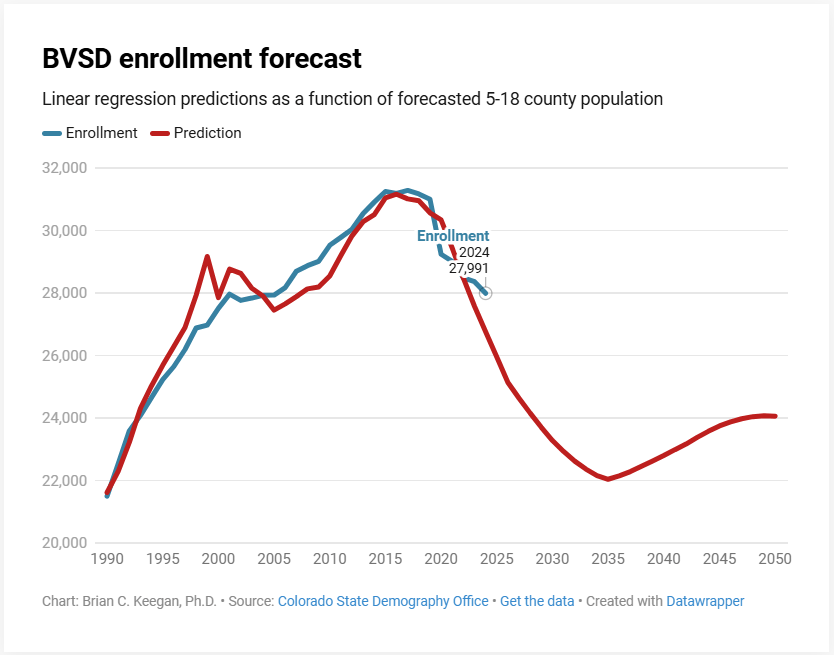


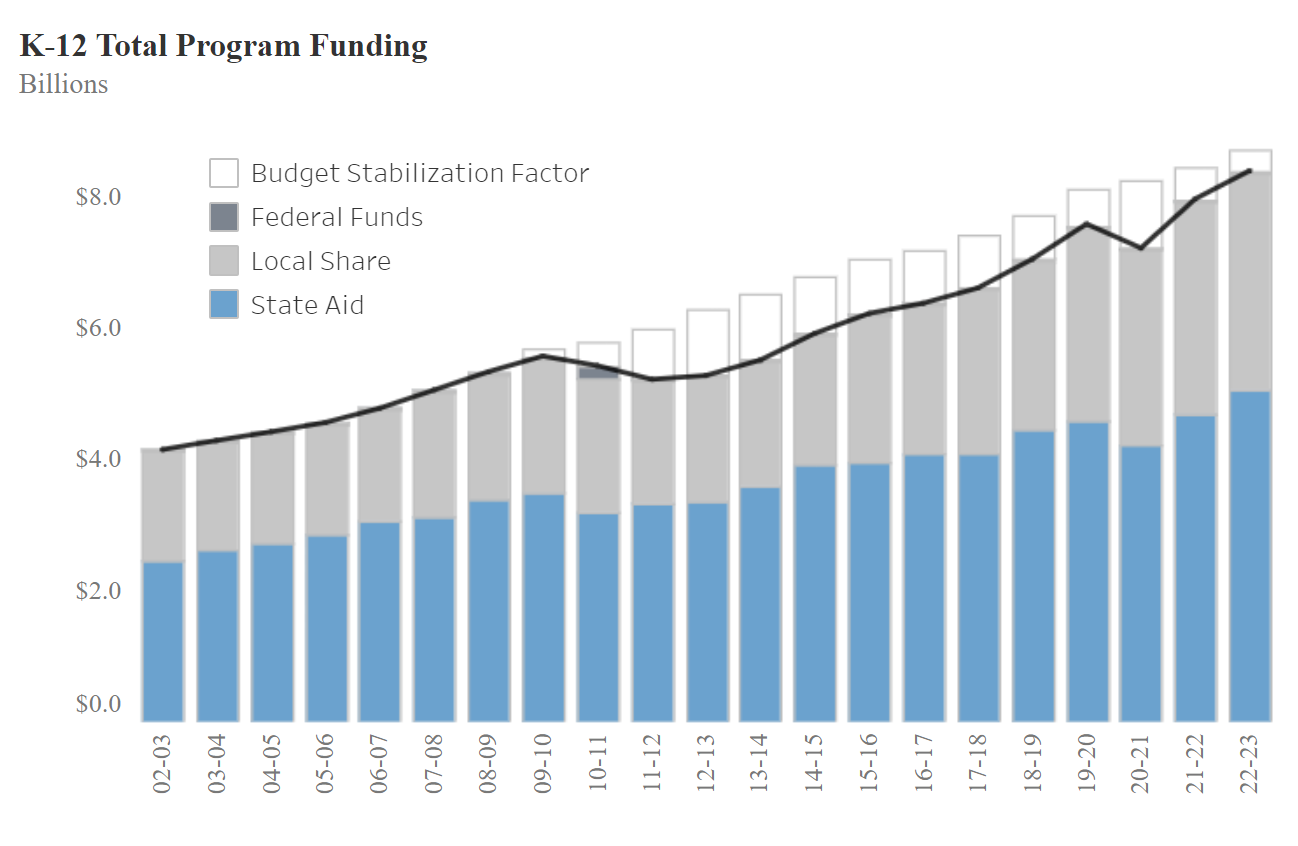




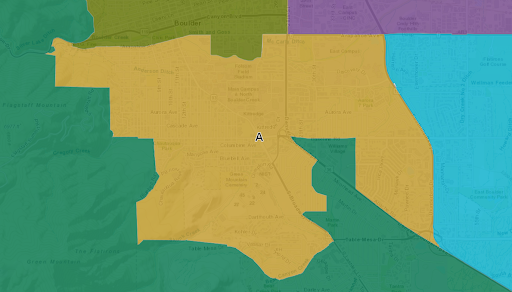

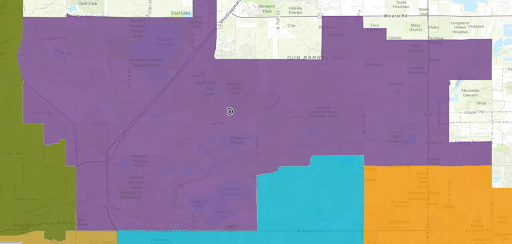
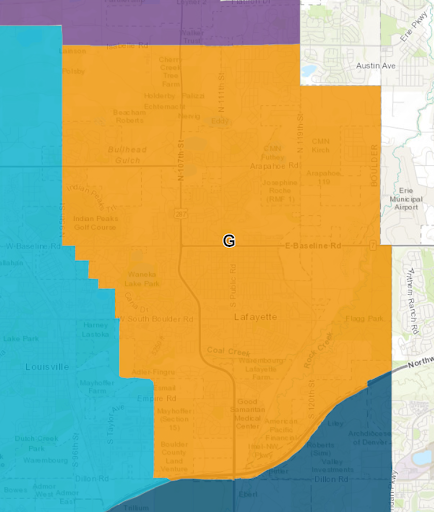
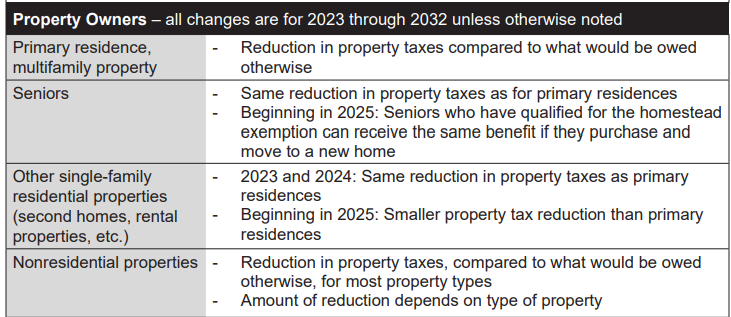
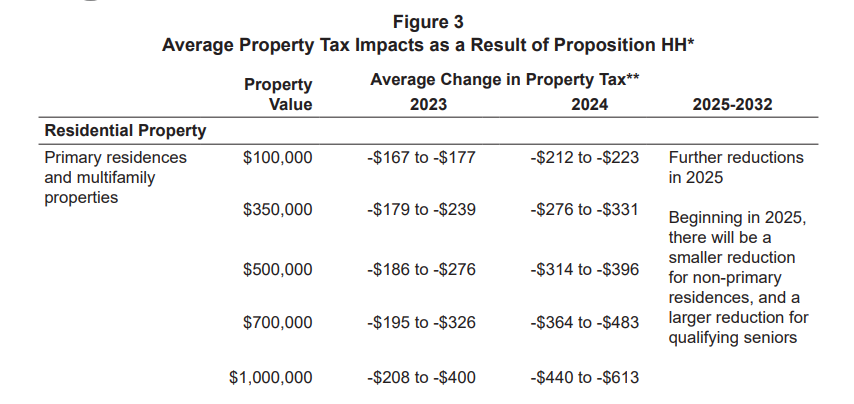

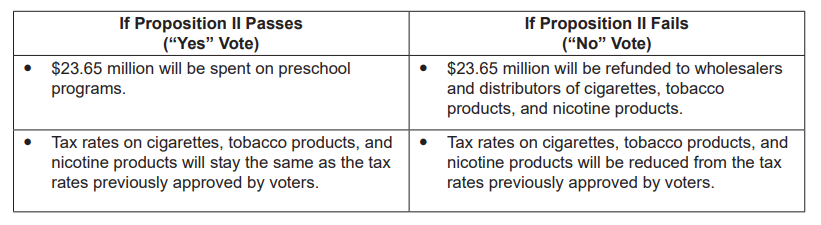



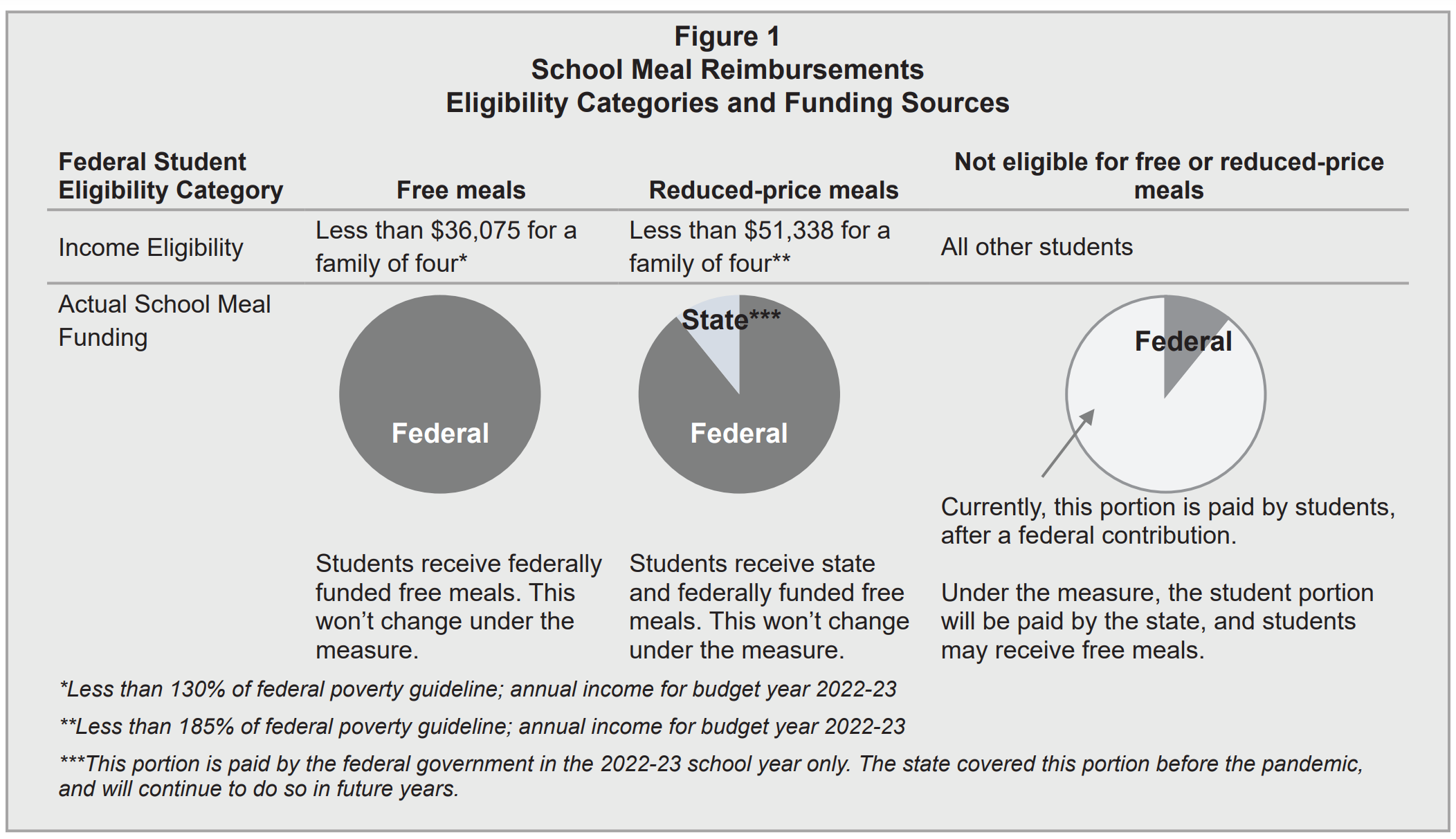
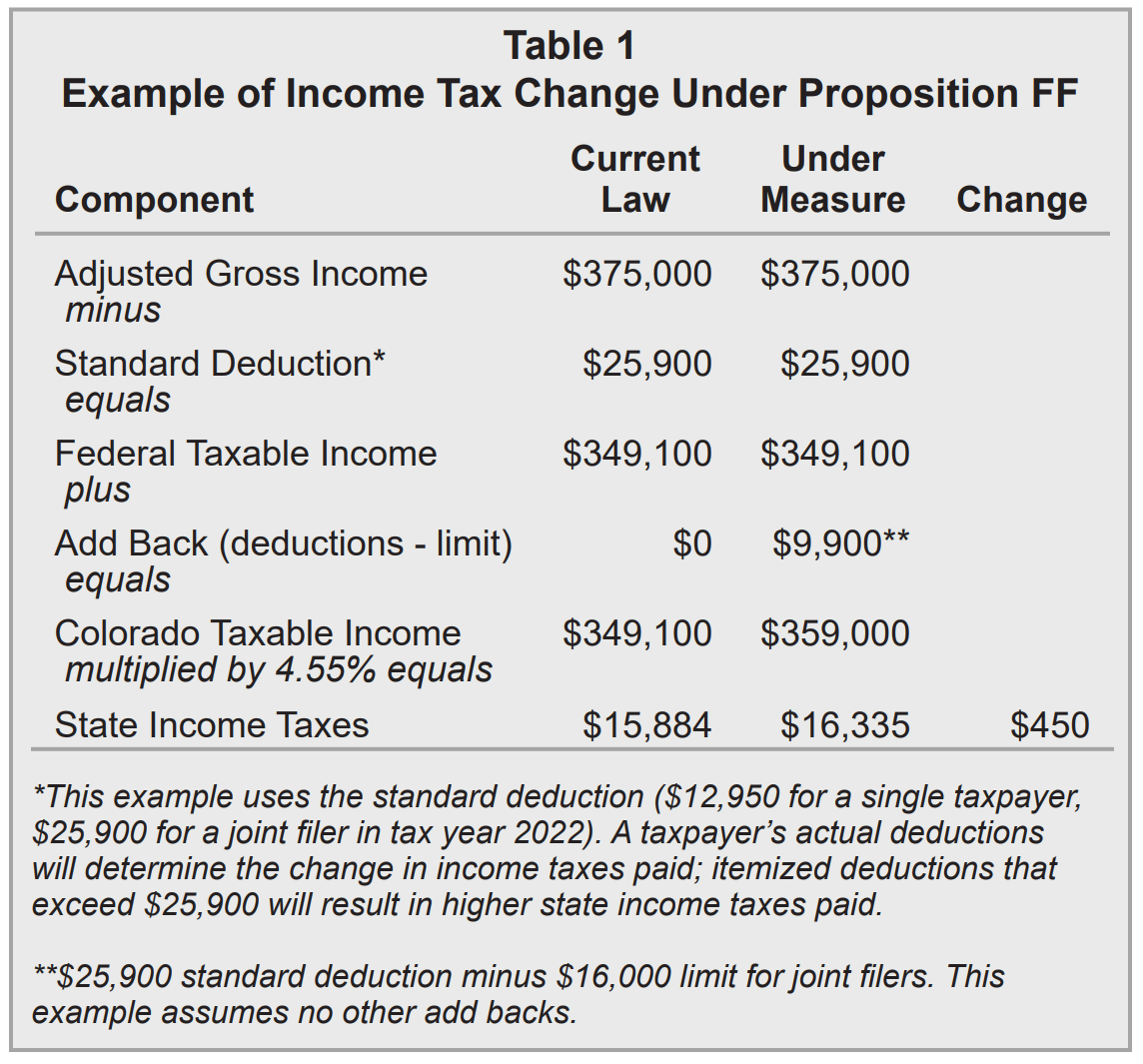
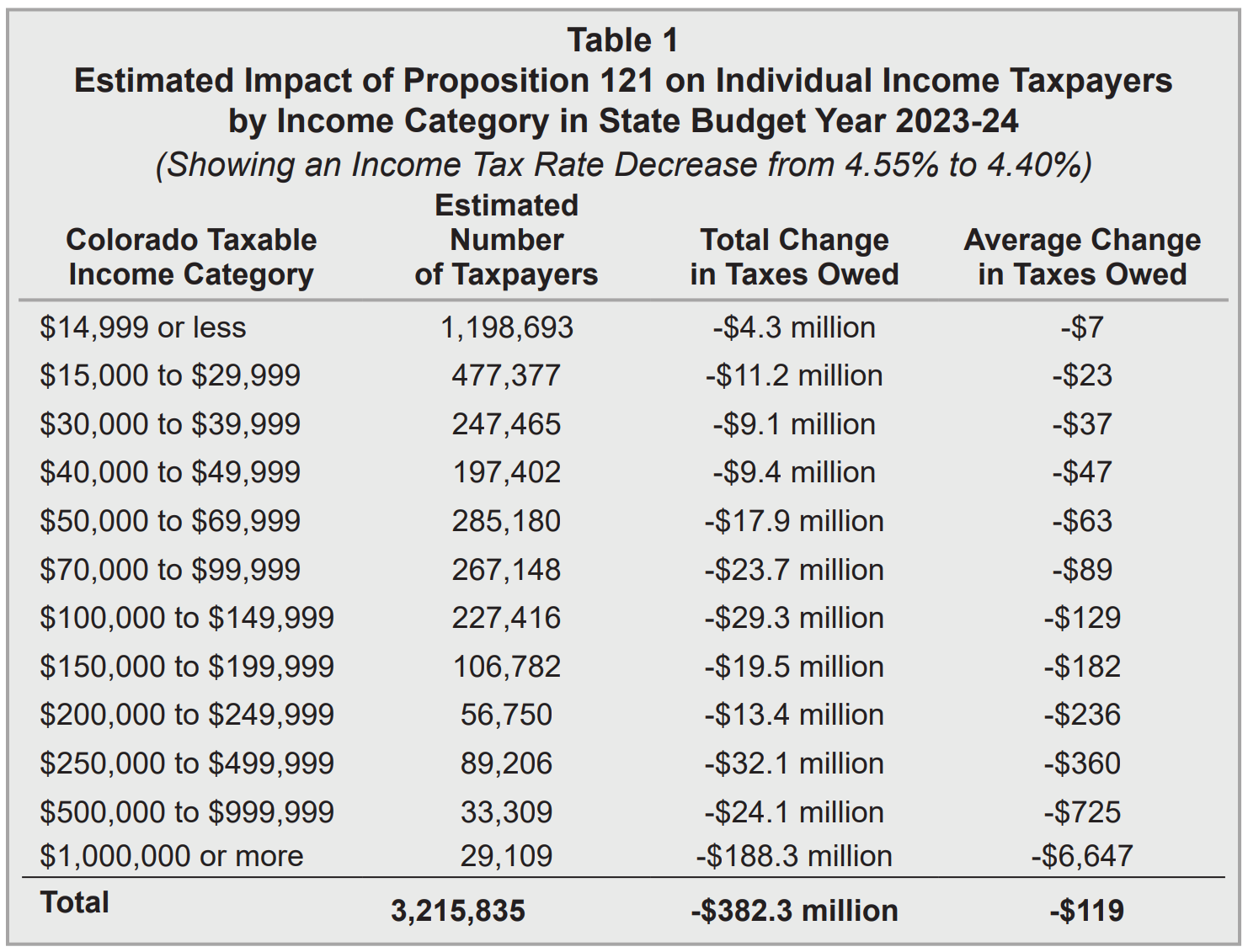
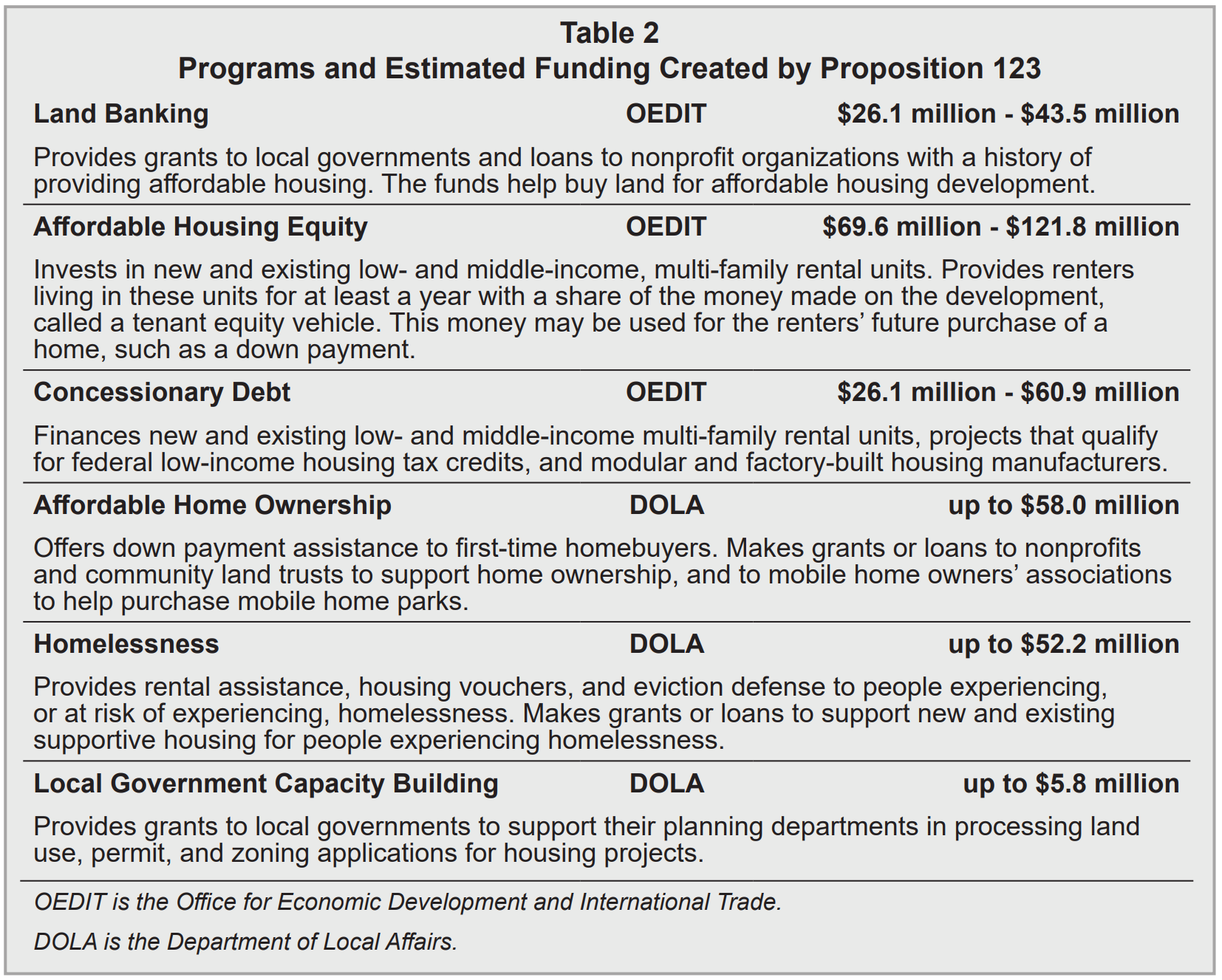
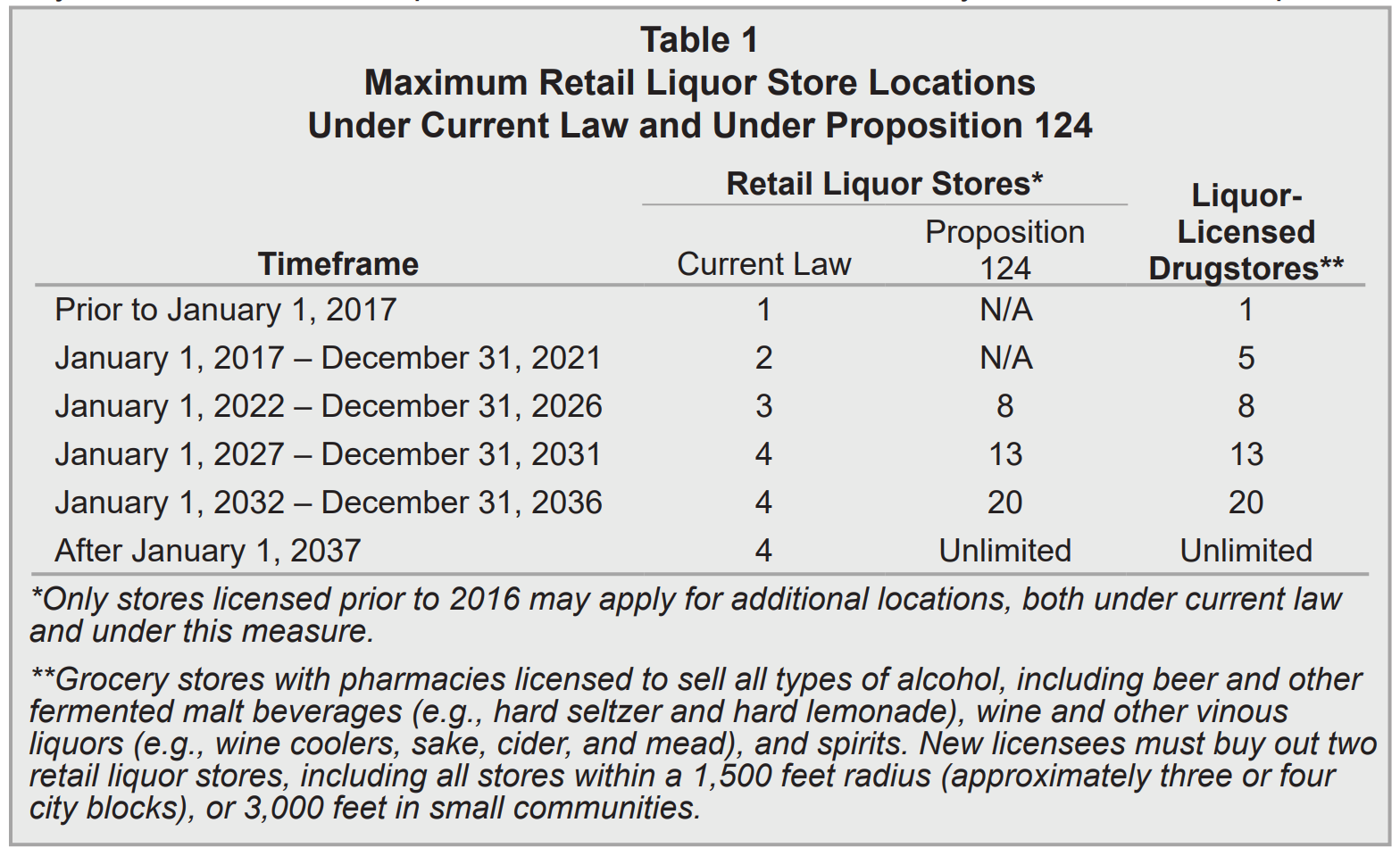
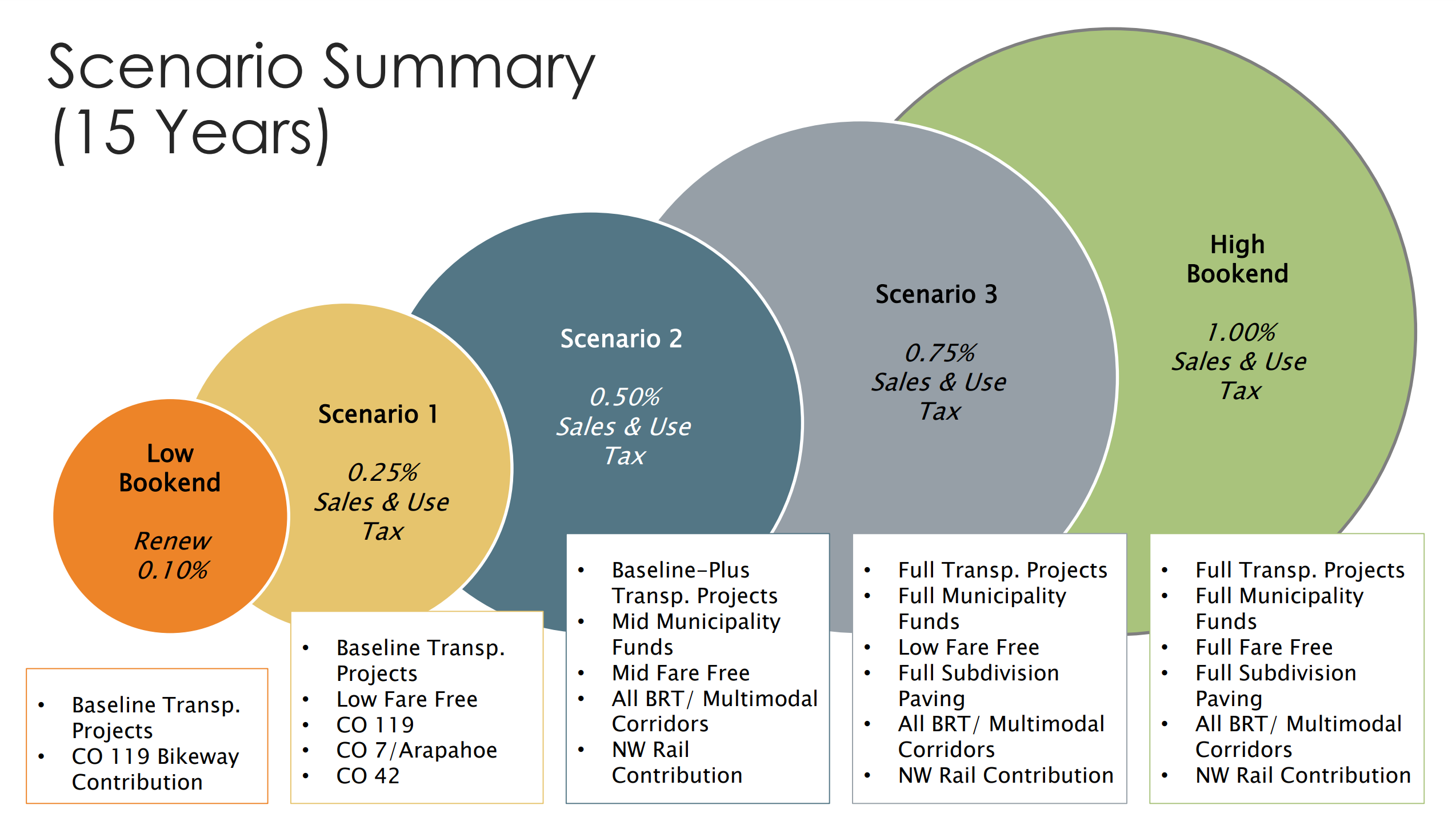


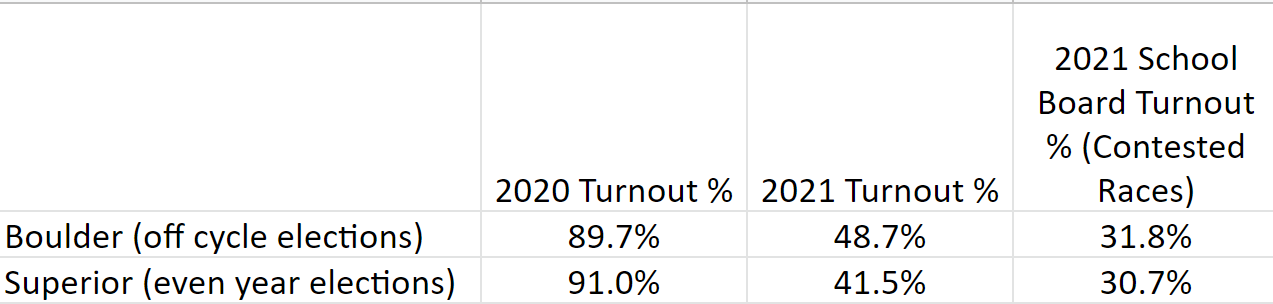
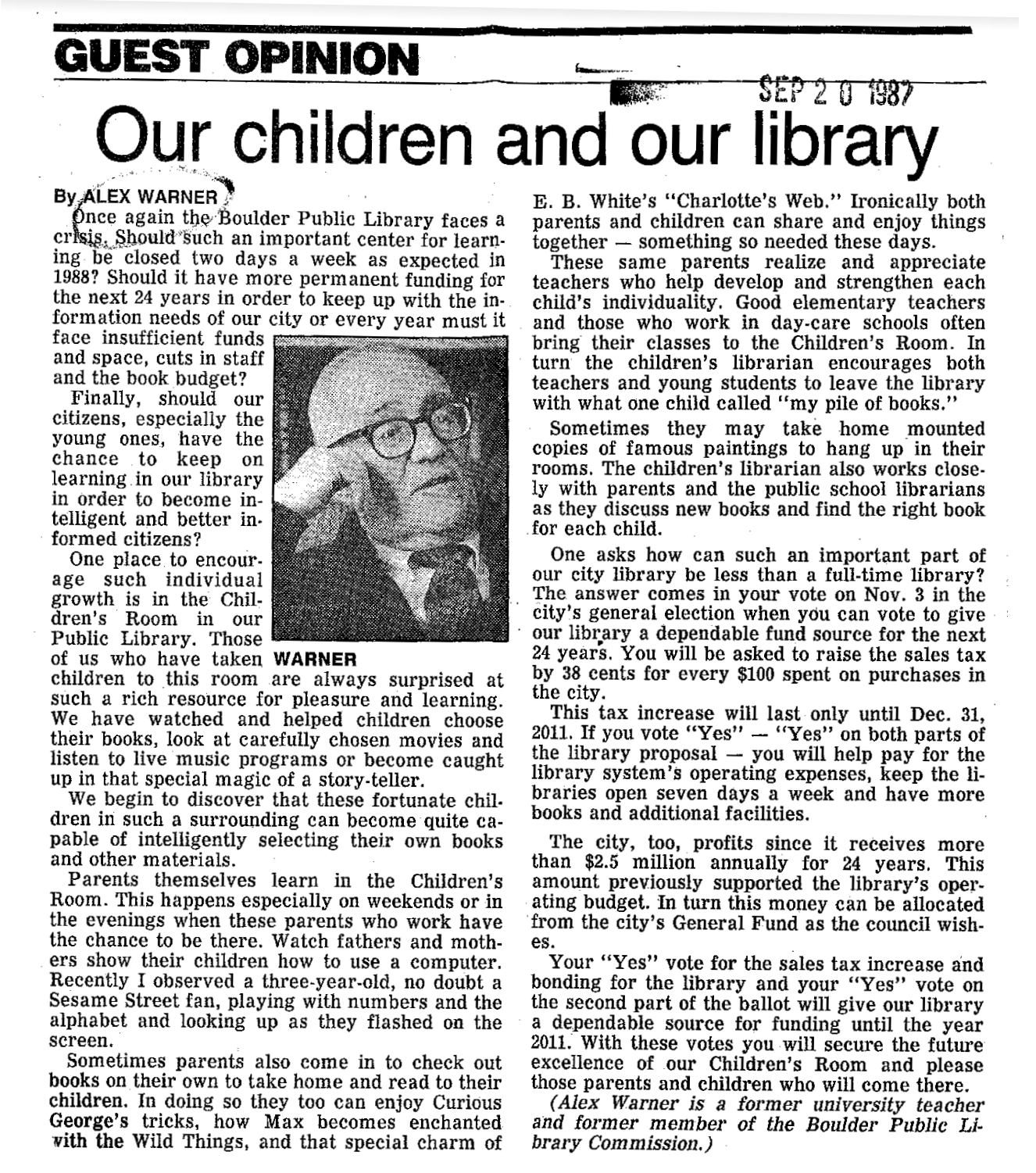
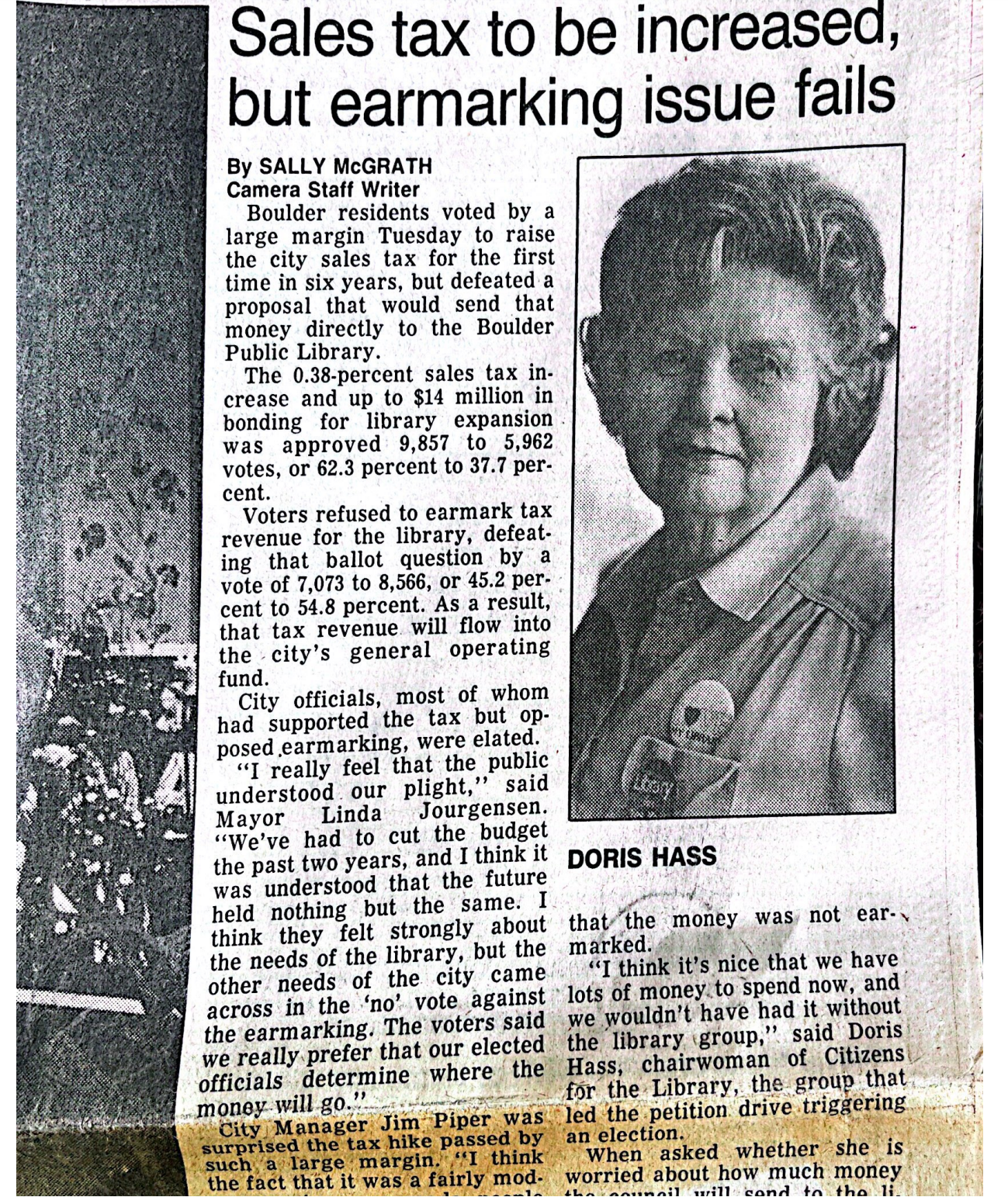

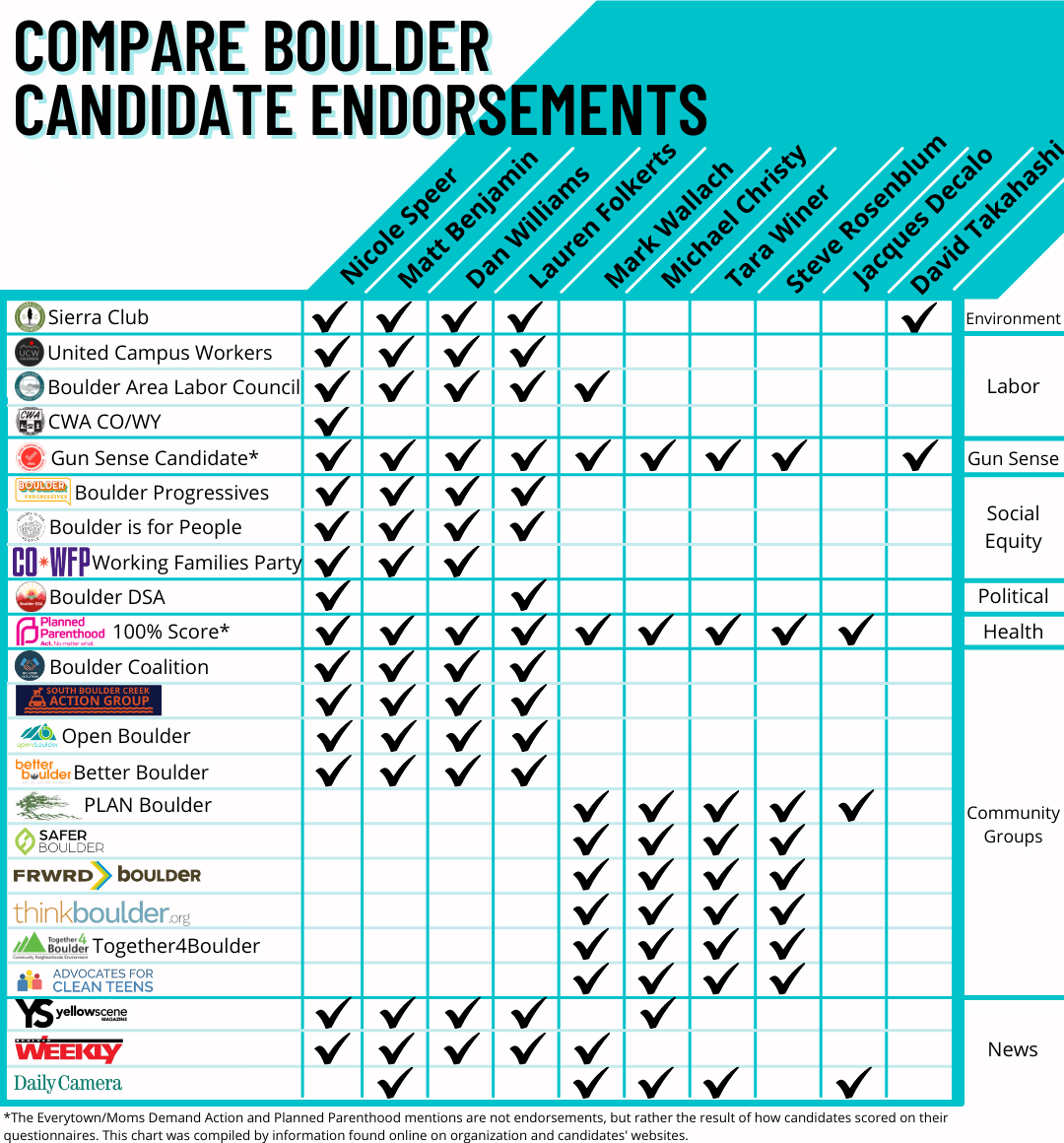
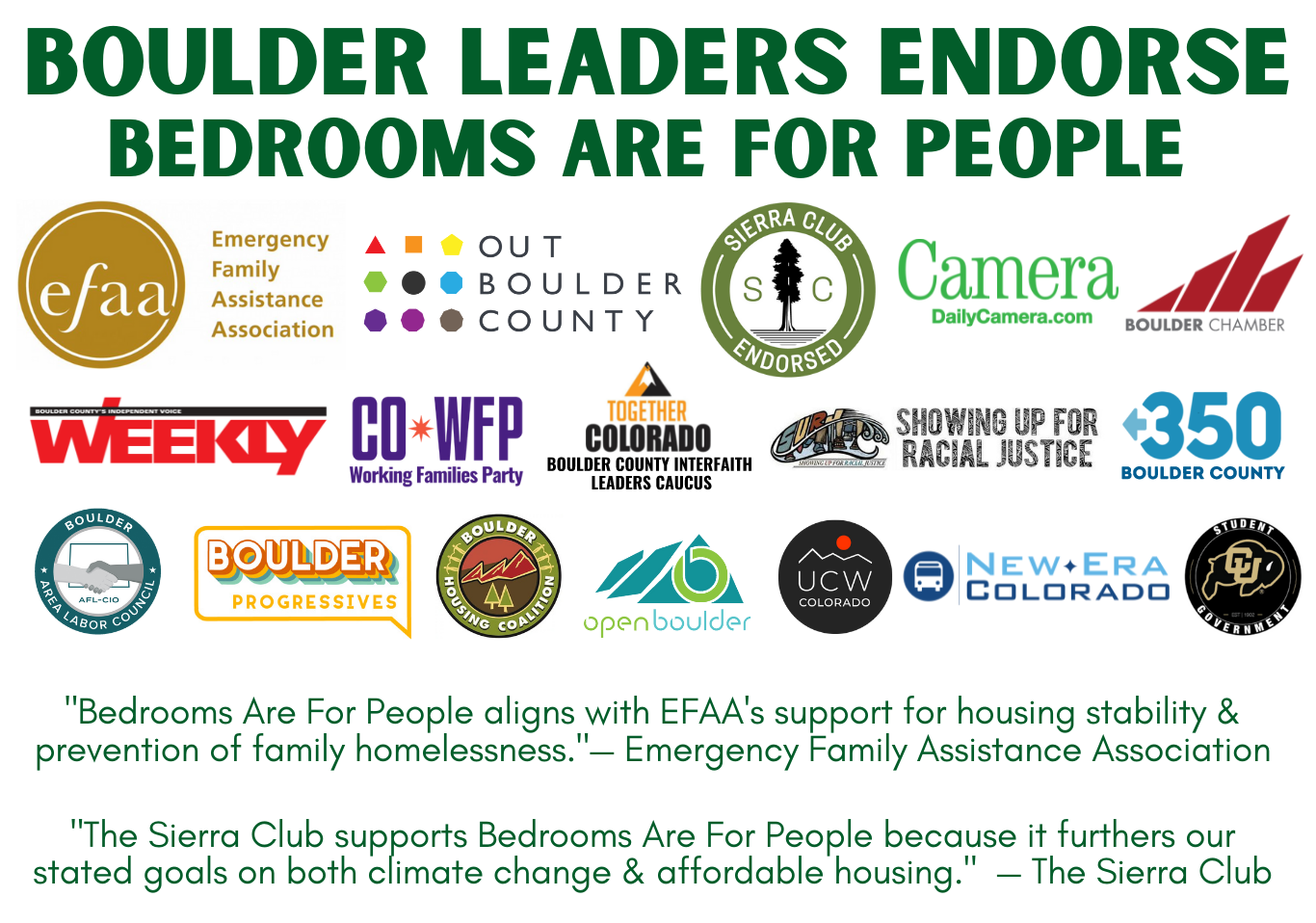

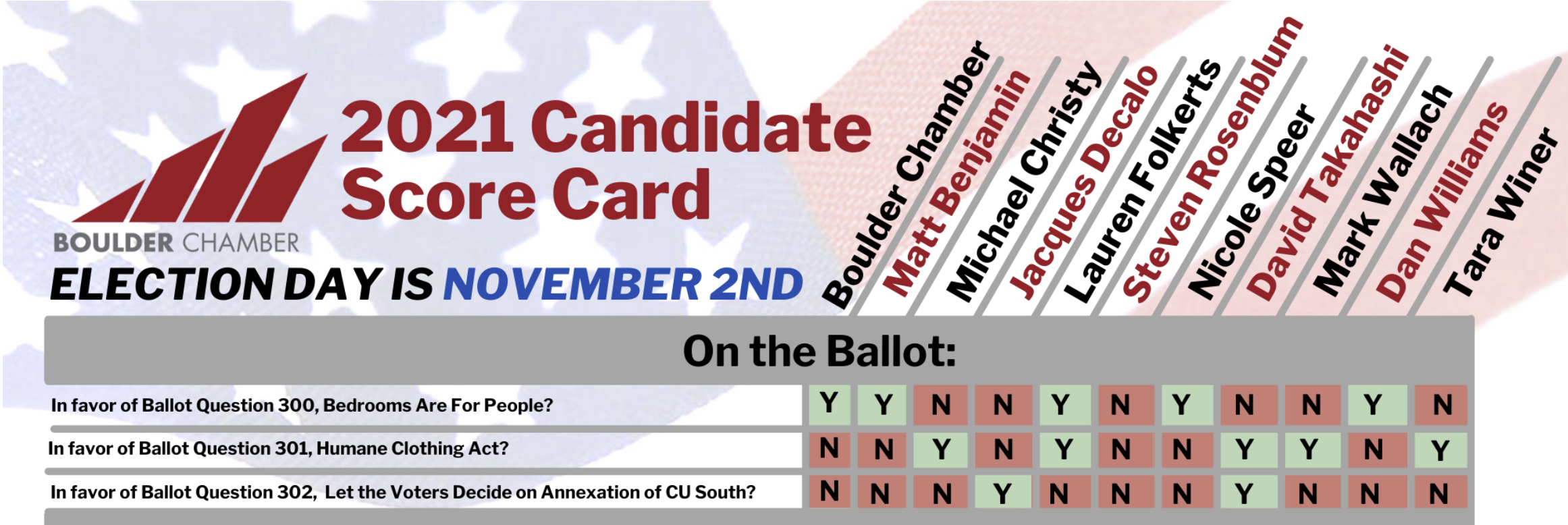
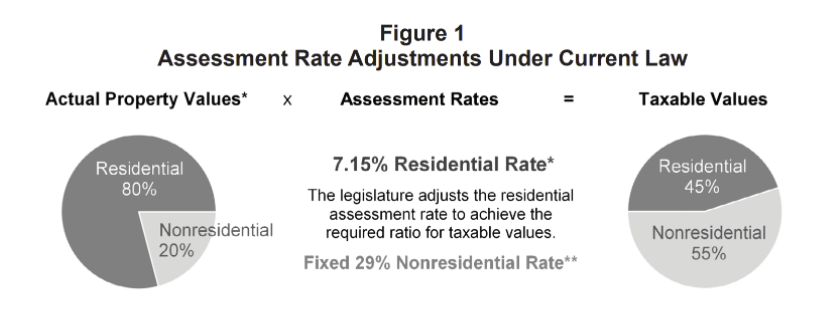


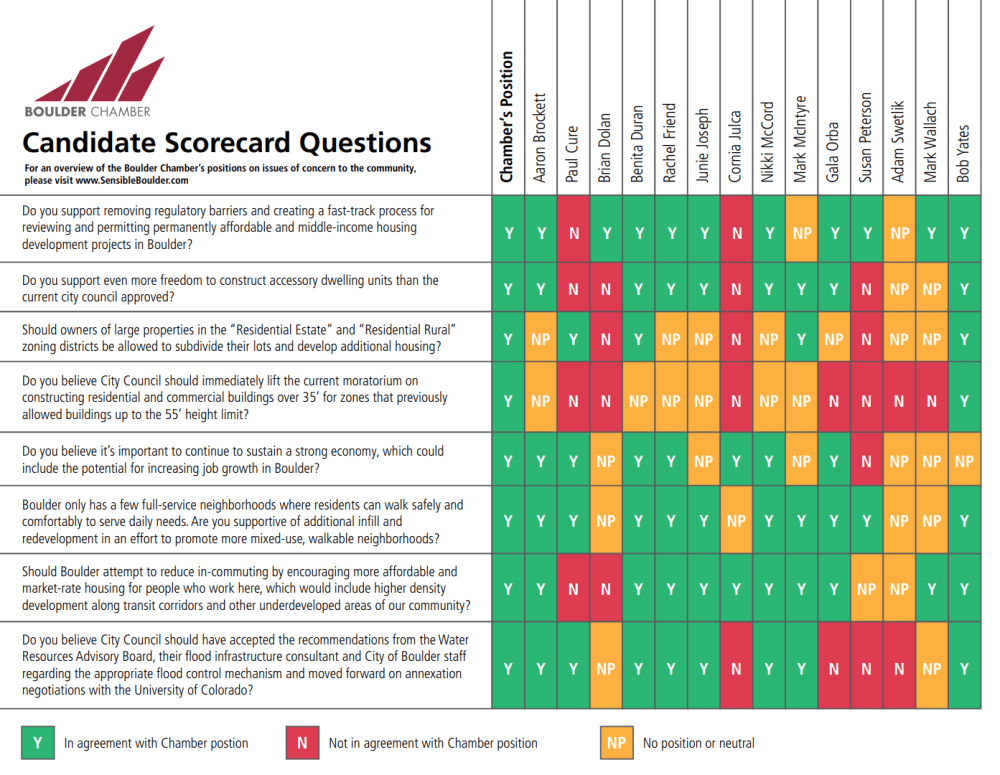 Boulder Valley School District RE-2 Director District A (Vote for One)
 Effective Discontent — Eric Budd